
History, Characteristics & Techniques of Tamba Ware
Beyond change, tradition lives on.
The unbroken beauty of handcraft over 850 years
Discover Tamba Ware
With a history of approximately 850 years, Tamba Ware has been handed down through generations and is counted as one of the Six Ancient Kilns of Japan, alongside Seto, Tokoname, Shigaraki, Bizen, and Echizen. Its origins are said to date back to the late Heian period (around the end of the 12th century).
–History–
History
The Founding of Tamba Ware
In recent years, it has been confirmed that Tamba Ware began in the late Heian period (around the end of the 12th century). For a long time, its origins remained unclear because no excavated works predating the mid-Kamakura period (early 13th century) had been identified.
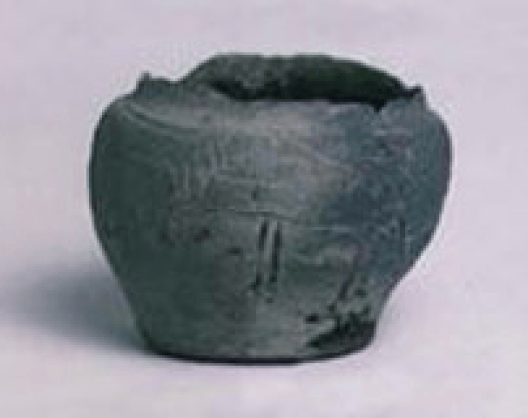
However, in 1977 (Showa 52), during road improvement work, the Hyogo Prefectural Board of Education conducted an excavation of a waste disposal site (monohara) at the Sambontoge Kita Kiln. In 2022, a reexamination of the excavated materials revealed jars and large storage vessels, including early Kamakura-period “illustrated Old Tamba” pieces (incised decorative jars), confirming their earlier production.
At the same time, some Tamba Ware pieces preserved in Japan appear to predate those from the Sambontoge Kita Kiln. From these findings, it is believed that the birthplace of Tamba Ware lies in this area and that its opening dates back to the late Heian period.
The Origins of Tamba Ware
The Sue Ware Theory
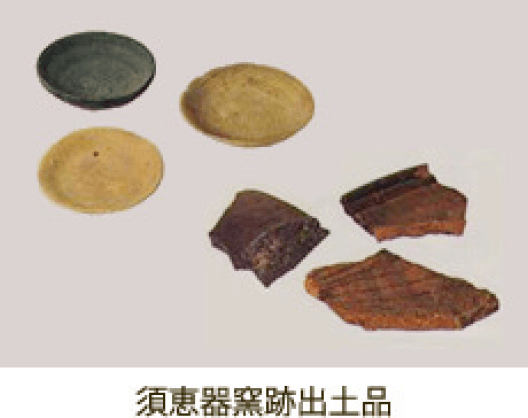
There are several theories suggesting that Tamba Ware originated from Sue ware. Sue ware is a type of high-fired, stoneware-like pottery introduced from the Asian continent around the 5th century and first produced in southern Osaka. From the mid-5th to 6th centuries, production spread nationwide. However, after the 13th century, with the rise of glazed ceramics, Sue ware production is said to have declined rapidly.
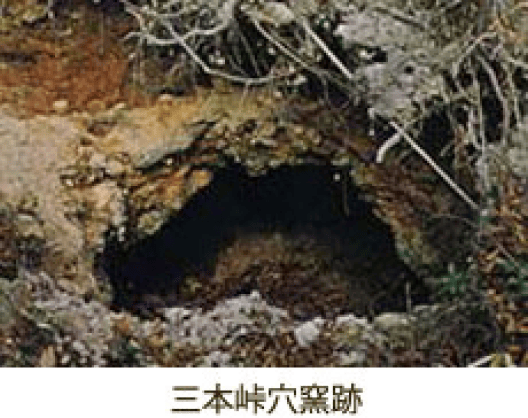
Kiln remains of Sue ware have been discovered in Suidani, Tatsumi, Konda, Tambasasayama City—about 5 km north of Tachikui, the present home of Tamba Ware—and many Sue ware pieces were reportedly excavated there. This has led some to argue that this site marks the birthplace of Tamba Ware. However, many researchers question this theory.
In addition, Sue ware kiln sites dating back to the 5th century have been found in the Sue district of Sanda City, about 10 km southeast of Tachikui. Groups of 10th-century Heian-period Sue ware kilns have also been discovered in the hills around Aino to the south. Due to this geographical proximity, some believe that Sue ware production in these areas provided the background for the emergence of Tamba Ware.
However, studies of the artifacts excavated from the Sambontoge Kita Kiln suggest that they were not produced using Sue ware techniques. As such, the true origins of Tamba Ware remain uncertain.
The Founding Potter of Tamba Ware
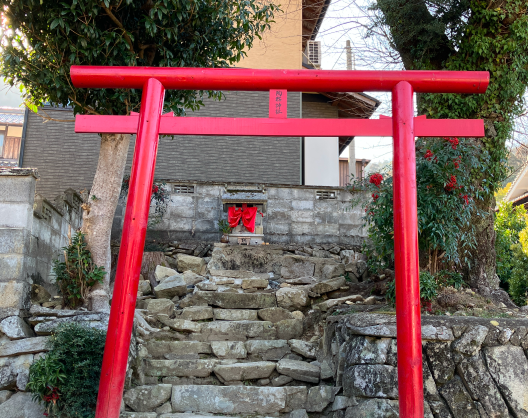
There are also various legends concerning the founding potter of Tamba Ware. One tradition tells of Sōtarō Furoyabu, a potter from Hagi in Nagato Province (present-day Hagi City, Yamaguchi Prefecture), who is said to have traveled throughout Japan. According to legend, he visited this area in 806 (the first year of the Daidō era) and transmitted pottery techniques here. Today, he is still enshrined as the founding figure of Tamba Ware at the pottery shrine in Kamitachikui.
A monument erected in 1616 (Genna 2) in the cemetery of Shimotachikui is also said to commemorate Sōtarō Furoyabu. Another theory claims it marks the title “Sanae Bungo no Kami,” granted to the master potter Sōtarō by the local lord (Maeda Shuzen-no-shō) before the construction of Sasayama Castle in the Keichō era (late 16th to early 17th century). While many such traditions exist, none have been conclusively proven.
The Products of Tamba Ware
Adapting Flexibly to Changes in Daily Life
The Anagama (Single-Chamber Kiln) Period(Late 12th century–16th century)
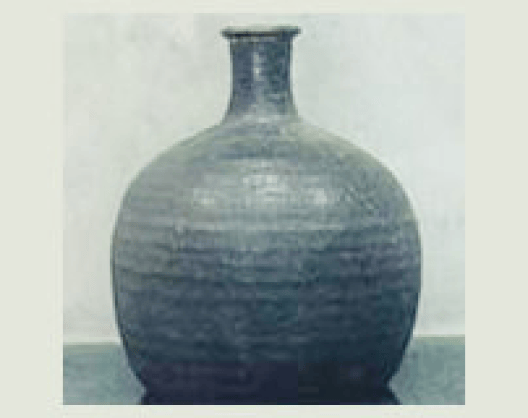
Large jars, storage vessels, and mortars
During the anagama period, the primary products were large, unglazed jars and storage vessels used for storing rice and water, as well as grinding bowls (suribachi) for crushing grains and kneading flour. Toward the end of this era, large sake bottles such as funadokkuri and rakkyō-dokkuri, along with buckets and trays, were also produced.
These works are also known for their natural deep green glass-like ash glaze, formed when wood ash adhered to the surface inside the kiln and reacted during firing.
Early Edo Period (Late 17th century)
The Introduction of the Climbing Kiln
Diversification through Technology
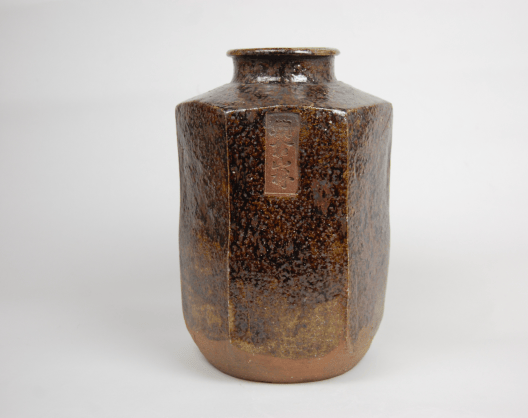
With the introduction of the more heat-efficient noborigama (climbing kiln), along with the use of kick wheels and artificial glazes, Tamba Ware diversified significantly. A distinctive feature was the use of red clay glaze, producing vividly colored red pieces.
Representative products included sanshō jars coated with iron or ash glaze. Large jars and storage vessels continued to be made, as in the anagama period. New forms such as spouted bowls (katakuchi), medicine grinders (yagen), various bowls, small oil and salt jars, and tea utensils also appeared.
Early Edo Period (Late 17th century)
Production of Tea Utensils
Nationwide Distribution of Mortars
In addition to jars and vessels, tea utensils such as tea bowls, tea caddies, water jars (mizusashi), and waste-water containers (kensui) began to be produced. Tea wares favored by tea masters and feudal lords such as Furuta Oribe and Kobori Enshū were created.
Works said to have been made under Kobori Enshū’s direction are known as “Enshū Tamba” and are highly prized by collectors. At the same time, the production of everyday mortars flourished, and fragments unearthed in Osaka, Kyoto, and even Edo reveal that Tamba mortars were shipped nationwide.

Mid-Edo Period (18th century)
The Flourishing of Tea Ceramics and the Golden Age of Tokkuri
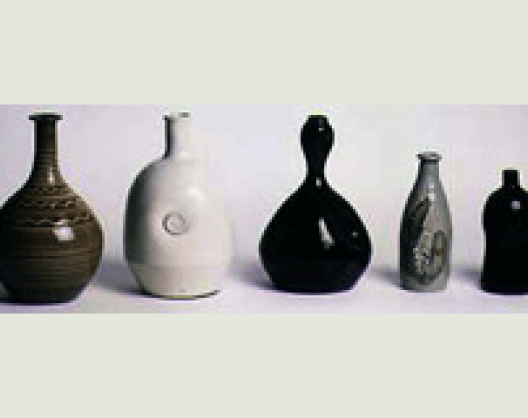
A wide range of tea utensils were produced, including tea caddies, water jars, tea bowls, kensui, incense burners, and lid rests. In particular, the tokkuri sake bottle—representative of Tamba Ware—entered a golden age.
More than 50 varieties were created, including gourd-shaped bottles, floating bottles, “ehen” bottles, candle bottles, umbrella-shaped bottles, shrimp-shaped bottles, crane-neck bottles, and cylindrical “binbō” bottles decorated with slip painting.
Other items included decorative jars, flower vases, bowls, plates, plant pots, flower holders for religious offerings, water droppers for calligraphy, and ceramic hot-water bottles.
Late Edo Period (Late 18th–Mid 19th century)
The Emergence of White “Shiro-Tamba”
In the late Edo period, white clay glaze was discovered around Tachikui, leading to an increase in white-glazed wares known as “Shiro-Tamba.” A wide range of products were made, including sake bottles, jars, rice bowls, bowls, and teacups.
Meiji & Taishō Periods (Mid 19th–Early 20th century)
From Large Sake Bottles to Medium-Sized Containers
During the Meiji period, large sake and soy sauce bottles became the main products, distributed from the Tōhoku region to Kyushu. With the spread of glass bottles in the Taishō era, production shifted from large bottles to medium-sized barrel-shaped containers holding 5.4, 9, or 18 liters.
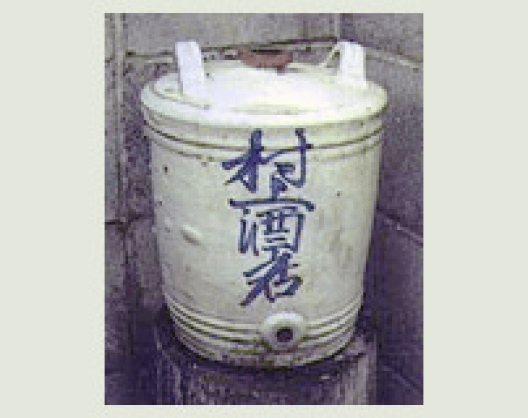
Early Shōwa Period (Early 20th century)
From Plant Pots to Wartime Production
In the early Shōwa era, demand for plant pots—especially for orchids, chrysanthemums, and morning glories—surged and became the main product line. However, the economic depression soon plunged the Tamba Ware industry into hardship.
During WWⅡ, military-use items such as sulfuric acid and chemical bottles were produced, and toward the end of the war, production was directed toward landmine casings.
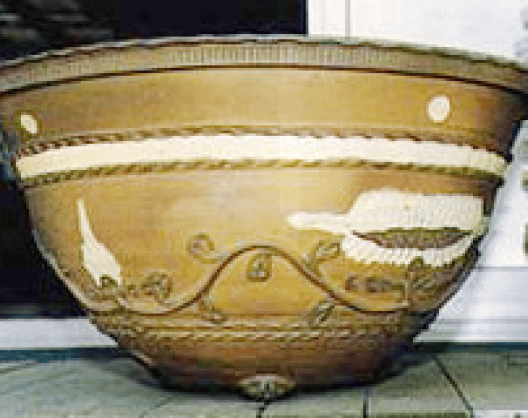
Postwar Period (Late 20th century)
Industrialization and the Rediscovery of “Beauty in Utility”
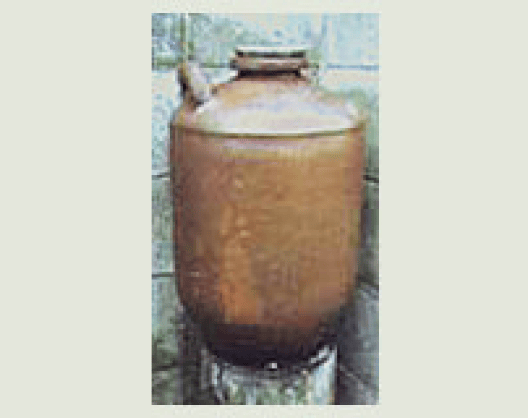
In the years following the war, shortages of daily necessities created strong demand for jars, storage vessels, and mortars, and production rose steadily. Eventually, however, the market became saturated, and difficulties returned.
With the spread of mechanical wheels, industrial products such as sulfuric acid bottles and clay pipes were mass-produced, along with train-station tea bottles, large bowls, ceramic blocks, roof tiles, and straw-wrapped sake barrels. Traditional Tamba Ware underwent significant transformation.
At the same time, everyday utilitarian wares—jars, bowls, and vessels—that had continued to be made modestly even before the war were rediscovered and reevaluated by Mingei movement leader Yanagi Sōetsu and foreign ceramic artists. Attention turned once again to the simple “beauty of use.”
The traditional techniques of building and firing climbing kilns were designated as a National Intangible Folk Cultural Property. The climbing kiln at Akasaka, Kamitachikui, was also designated as a Hyogo Prefectural Tangible Folk Cultural Property, recognizing the cultural value of these inherited techniques.
Present Day (21st Century)
Individual Craftsmanship and the Contemporary Revival of Tradition
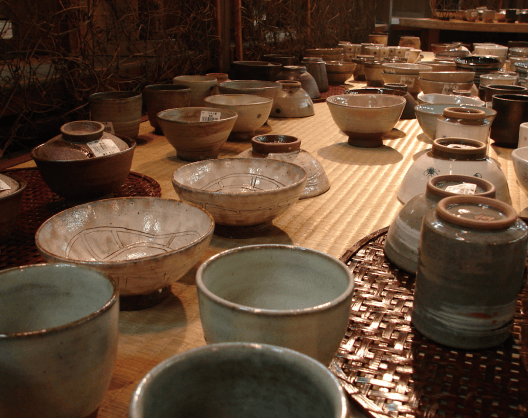
In the 21st century, kilns in the Tamba Ware village have shifted their focus from mass production back to individuality and handcraftsmanship. Some value the traditions of the Mingei movement; others explore new expressions rooted in tradition; still others seek to revive the ancient techniques of Old Tamba.
Bowls, plates, dishes, jars, and flower vessels are now produced as central works, and these handmade pieces have once again become the defining ceramics of the region.
The Six Ancient Kilns of Japan Recognized as Japan Heritage
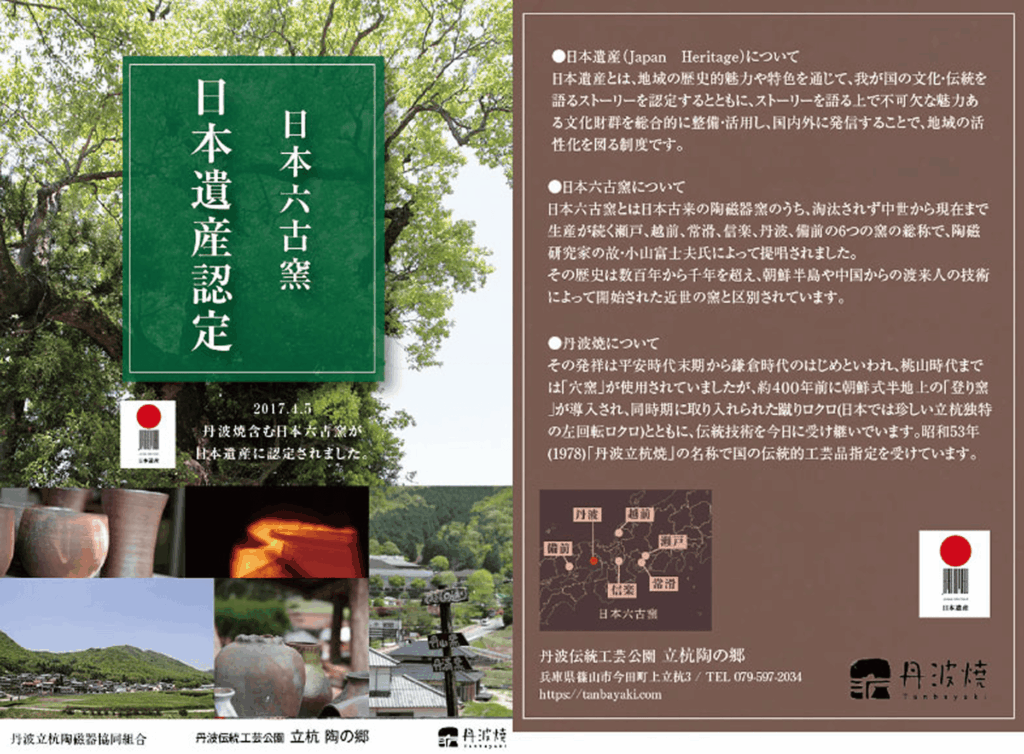
Chronological Table of History
| Heian Period | ||
|---|---|---|
| 1st year of Daidō era | 806 | It is said that Sōtarō Furoyabu (also read Sōtarō), a potter from Hagi in Nagato Province and now enshrined at the Pottery Shrine in Kamitachikui, transmitted pottery-making techniques to this area. |
| Around the 10th century | Sue ware kilns were established in Tatsumi (Konda, Tamba-Sasayama City), Kami-Aino, Shimo-Aino, Nishi-Aino, and Hanaori (Sanda City). | |
| From the late 12th to the early 13th century | The Sambontoge Kiln (located in the mountains of Bushigeta), regarded as one of the oldest kilns of Tamba Ware, was constructed under the influence of ceramic techniques from the Tokai region and began production. | |
| Late 12th century | Gachōchō Incised Jar (excavated from the sutra mound at Sekimine-dera Temple) | |
| Gachōchō incised jars decorated with spatula-carved designs, as well as three-handled jars with floral motifs, were produced. | ||
| Kamakura Period | ||
| In the Kamakura period, following the Sambontoge kiln sites, kilns such as Genbeiyama, Tokorari, and Tasaura were established in the surrounding area, and the production of jars, large storage vessels, and mortars began. | ||
| 1st year of Bunpō era | 1317 | In a document titled “Tanshū Taki-gun Onobara-shōnai Tōkōjiyama Keidai no Koto,” the phrase “Minami wa Tachikui no Kami-Ōtani-kagiri” contains the earliest recorded appearance of the name “Tachikui” (Wada-dera Documents). |
| Muromachi Period | ||
| Although the exact date is unknown, the Inariyama Kiln was established in the Muromachi period, where many large jars known as “Inariyama Ōtsubo” were produced, along with water basins, sake bottles, storage vessels, mortars, and spouted bowls. | ||
| Mid-15th century to late 16th century | A distinctive surface-finishing technique known as “nekogaki” (literally, “cat-scratching”) emerged. | |
| Momoyama Period | ||
| Bunroku 3 | 1594 | A clay pit map dated Bunroku 3 (1594). |
| Keichō 2 | 1597 | A jar inscribed “Keichō 2 (1597)” bearing the kiln mark “#.” |
| Edo Period | ||
| Keichō 14 | 1609 | The construction of Sasayama Castle under a nationwide feudal mobilization (tenka-bushin). |
| Around Keichō 16 | 1611 | Climbing kilns of Korean origin were built in Kamaya, Shimotachikui, and Kamitachikui, making large-scale production possible. |
| Kiln marks became smaller and standardized in form, and tea utensils such as katatsuki-shaped tea caddies began to appear. | ||
| At a tea gathering hosted by Oda Uraku, a “morning tea caddy, Tamba Ware katatsuki” was used (Urakutei Chanoyu Diary), marking the first appearance of the name “Tamba Ware” in historical documents. | ||
| Around this time. | Nagai Shinano-no-kami presented to Shogun Hidetada a katatsuki tea caddy inscribed “Kōuta,” bearing the appraisal of Furuta Oribe. | |
| (Itamiya Sōfu Hikki) | ||
| Keichō 18 | 1613 | A jar inscribed “Keichō 18, second month, auspicious day — Kamikichiemon, Genjūrō (with kaō seal).” |
| Genna 4 | 1618 | A red clay slip three-handled jar inscribed “Jōjō-kichi, Genna 4, fifth month, an auspicious summer day.” |
| Mid period | Ōji-yaki, Muramori-yaki, and Obetani-yaki (all in Tamba City) began production. | |
| Genna 6 | 1620 | An old clay pit map dated Genna 6 (1620) survives. |
| Genna 10 | 1624 | A jar inscribed “Genna 10, third month, 16th day — made as ordered. Tea jar, 5 kin capacity. This jar weighs 7 monme 5 bu.” A large four-handled jar with ash glaze inscribed “Tanba Onobara, Genna 10, Kinoe-ne year — made by Tsuboya Kyūzaemon.” |
| An ash-glazed four-handled jar inscribed “Kan’ei 1 (1624), Year of the Boar, third month, first day — an especially auspicious day — made by Tokusaemon of Tachikui Village.” | ||
| During the Kan’ei era | Under the guidance of Kobori Enshū, Tamba Ware tea utensils—such as tea bowls, tea caddies, water jars, and kensui—were produced and came to be known as “Enshū Tamba.” In particular, the tea caddy “Ikuno” became especially famous. | |
| Kan’ei8 | 1631 | Kobori Enshū used the tea caddy “Ikuno” (Enshū Dōgu Oki-awase). |
| Kan’ei15 | 1638 | Tokkuri with inscription: “Kanei 15 (1638), Ninth Month, Auspicious Day – Kijūrō”. |
| “Tamba Nonomura Tea Jar” (Kefukigusa, Vol. 4, “Section on Famous Products of the Provinces”). | ||
| Kan’ei18 | 1641 | Tamba Ware bowls and other vessels (Kefukigusa). |
| Kan’ei19 | 1642 | Matsudaira Izu-no-kami Nobutsuna used a Tamba Ware water jar (Ryūei Kōshiki Chaji-ki). |
| Shōhō 3 | 1646 | A Tamba Ware water dropper (kensui) was used (Ryūei Kōshiki Chaji-ki). |
| Jōō 2 | 1653 | Tachikui Village was established after separating from Onobara Village. |
| Jōō 3 | 1654 | The Sasayama domain appointed Ōtsuya Genbei of Osaka as the head merchant (zamoto) and began operating the Tamba Ware guild system, granting him exclusive rights to handle product distribution. |
| Around this time, Tamba Ware sanshō jars were produced for the locally renowned Asakura sanshō (Japanese pepper). In the diary Kakumeiki, written by the head priest of Kinkakuji, entries such as “one jar of simmered sanshō” can be found. | ||
| Meireki 3 | 1657 | A large red clay slip tokkuri with kiln effects, inscribed “Meireki 3 (1657), eighth month, auspicious day — made by Genbei, resident of Bizen Province.” |
| Manji 1 | 1658 | A large storage jar inscribed “Manji 1 (1658), ninth month, auspicious day — Hachizō of Tachikui Village (with kaō seal).” |
| During the Kanbun era | A domain kiln (Yamauchi Kiln) was built at the lord’s secondary residence north of Sasayama Castle. Tea utensils such as tea bowls, tea caddies, water jars, and kensui, as well as jars and bowls, were produced there. | |
| Tenna 1 | 1681 | A water jar inscribed “Tenna 1, Year of the Monkey — Kichibē.” |
| Kan’ei–Tenna era | Kilns were established in Kami-Aino (Tobiga-o; Kamaya [West and East]), Shimo-Aino (Kamaya), Yottsuji, and Tanaka (West), among other locations. | |
| Tenna 3 | 1683 | An ash-glazed and red clay slip jar inscribed “Tenna 3 (1683), Year of the Boar, eighth month, auspicious day — Nakanishi Shichirōbē of Yottsuji Village, Settsu Province.” |
| Jōkyō 1 | 1684 | A jar inscribed “Tenna 2 (1682), Year of the Monkey — made by Kichibē of Kamitachikui Village, Onobara-shō.” |
| Genroku6 | 1693 | A bucket inscribed “Genroku 6 (1693), third month, auspicious day — Tokusaemon (with kaō seal).” |
| Genroku7 | 1694 | A yuné inscribed “Genroku 7 (1694), Year of the Dog, seventh month, auspicious day — Tsuboya Kyūzaemon.” |
| Genroku9 | 1696 | Tachikui Village was divided into Kamitachikui Village and Shimotachikui Village (Hyōgo Prefectural History). |
| Genroku 15 | 1702 | A two-koku indigo storage jar (red clay slip applied with brush strokes) inscribed “Genroku 15 (1702), ninth month — made by Tsuboya Chūbē.” |
| Genroku 16 | 1703 | A red clay slip jar with bamboo-leaf-shaped handles inscribed “Sacred sake jar dedicated to the tutelary deity of Tachikui Village — Kichibē — Genroku 16 (1703), Year of the Sheep, ninth month, auspicious day.” |
| Hōei 3 | 1706 | On the reverse side of the “Old Clay Pit Map” dated Genna 6 (1620), a “Clay Pit Agreement Document” dated Hōei 3 (1706) is also recorded. |
| Hōei 7 | 1710 | A red clay slip jar with leaf motifs inscribed “Jōjō-kichi, Hōei 7 (1710), fifth month, auspicious day — made by Tsuboya Sōkichi.” |
| During the Shōtoku era | In Osaka, there was “one Tamba mortar wholesaler.” | |
| Kyōhō 2 | 1717 | The head merchant (zamoto) of the Tamba Ware kiln guild was replaced by Shibaya Tarōemon of Takasago. |
| Kyōhō 8 | 1723 | A storage jar (with stamped floral decoration) inscribed “Kyōhō 8 (1723), fourth month, 20th day — made by Jinbē.” |
| A storage jar inscribed “Kyōhō 8 (1723), Year of the Rabbit, third month — Kameyama Shōmyōji — Tsuboya Kichibē.” | ||
| Kyōhō 15 | 1730 | The management of the Tamba Ware guild system became a direct domain operation. |
| Kyōhō 17 | 1732 | The guild system was once again placed under the management of a head merchant (zamoto) through contract. |
| Kan’en 1 | 1748 | The Aoyama clan entered Sasayama from Kameyama in Tanba Province as the new lords of the Sasayama domain. |
| Hōreki 2 | 1752 | The opening of the Nakagama Kiln in Shimotachikui and the Kitagama Kiln in Kamitachikui is said to be recorded on a Tamba Ware miniature shrine inscribed, “Hōreki 2 (1752), the village kiln begun — Year of the Water Monkey, first month, auspicious day…” |
| Tenmei 4 | 1784 | The Tamba potter Kyūhachi was invited to the Izushi kiln (Old Documents of the Izushi Ware Kiln). |
| Kansei 8 | 1796 | A polychrome candle tokkuri with thistle motif (bearing the “Ichikono” seal, formerly handed down in the Kuki family, lords of the former Sanda domain; box inscription dated Kansei 8 [1796]). |
| Kansei 10 | 1798 | Kamaya Village separated from Shimotachikui Village and was established as an independent village. |
| Kansei 11 | 1799 | In Sanda, the Kyoto ware potter Kinkodō Kisuke was invited, and porcelain production began (including Sanda ware and Sanda celadon). |
| Bunka 5 | 1808 | The production of Furuichi ware (porcelain) began — “Permission granted for potters in Furuichi Village to undertake trial firing” (Domain Diary). |
| Bunka 12 | 1815 | A gosu (cobalt-blue) soy sauce ewer from Furuichi ware, inscribed Bunka 12 (1815). |
| Bunsei 1 | 1818 | Reform of the Tamba Ware guild system: the village-held guild was placed under direct domain control, and Sasayama merchants were appointed as official distributors of ceramics. |
| During the Bunsei era | In its first year, the Ōjiyama ware porcelain kiln began in Sasayama under the guidance of Kinkodō Kisuke. | |
| Bunsei 11 | 1828 | Tokkuri for Hōmeishu (medicinal liquor) from Tomonoura (Fukuyama City, Hiroshima Prefecture), noted as “ordered from Tachikui.” |
| Bunsei 13 | 1830 | The guild administration came under the jurisdiction of the district magistrate, and wealthy farmers within the domain were appointed as officials in charge of sales and management. |
| Kōka 3 | 1846 | Of the 146 households in the three Tachikui villages (Kamitachikui, Shimotachikui, and Kamaya), 111 were engaged in pottery production and 9 were brokers; the average cultivated landholding was 3 tan and 7 se. |
| Kaei 5 | 1852 | “Kamitachikui Village pottery workshops: the Main Kiln and North Kiln have existed since the previous generation; the South Kiln was built in the present generation — thus there are three kiln lines. Shimotachikui Village has four pottery kilns. Kamaya Village has three pottery kilns: the Nakagama, the South Kiln, and the New Kiln” (Taki District Detailed Record). |
| Around the end of the Edo period (1853 –1868). | From around the Bunsei era through the end of the Edo period, master potters such as Naosaku, Ichikono, Ichifusa, Kayu, and Ichisaku were active. Using carefully refined glazes and well-sieved clay, each produced outstanding works—particularly tokkuri sake bottles. | |
| Bunkyū 1 | 1861 | With the construction of the Noh stage at Sasayama Kasuga Shrine, a large storage jar inscribed “Made by Gensuke of Kamaya Village, Shimotachikui” was placed beneath its floor. |
| Genji 1 | 1864 | The Sasayama domain abolished the kiln guild system. |
| Meiji Period | ||
| Meiji 5 | 1872 | Kamitachikui, Shimotachikui, and Kamaya each operated three kilns. |
| Meiji 28 | 1895 | A climbing kiln was built in Akasaka, Kamitachikui (the oldest surviving kiln in Tachikui). |
| Meiji 29 | 1896 | Out of 150 households in the three Tachikui villages, 130 were engaged in pottery production. |
| Taishō Period | ||
| Taishō 2 | 1913 | Imamura Seisai of Sasayama began “Sasayama-yaki.” |
| Taishō 12 | 1924 | Tachikui Ware: 14 climbing kilns; 95 households (Sasayama Shimbun). |
| Late Taishō period | ||
| Shōwa Period | ||
| Early Shōwa period (1926–early 1930s) | Beginning with Yanagi Sōetsu, founder of the Mingei movement, figures such as Hamada Shōji, Kawai Kanjirō, and Bernard Leach visited Tachikui and had a significant influence. | |
| Shōwa 7 | 1932 | Due to rising demand for plant pots, mechanical wheels were introduced. |
| Shōwa 12 | 1937 | The Tamba Pottery Industrial Cooperative was established. |
| Of the 163 households in the three Tachikui villages, 51 were pottery workshops—about half the number compared to the late Edo period. | ||
| Shōwa 14 | 1939 | The production of wartime industrial ceramics, specifically sulfuric acid bottles, began. |
| WWⅡ begins. | ||
| Shōwa 20 | 1945 | The “Settan Weapons Manufacturing Plant” was established, and ceramic landmine casings for military use were produced. |
| WWⅡ ends. | ||
| Shōwa 23 | 1948 | A Prefectural Ceramic Testing Station was established in Kamitachikui. |
| Plaster mold-making techniques were introduced. | ||
| Shōwa 25 | 1950 | The Tamba Pottery Industrial Cooperative was dissolved and divided into the Tamba Ceramic Industrial Cooperative and the Tamba Pottery Cooperative; later that same year, they were unified to establish the Tamba Ceramic Cooperative, with 42 members. |
| Shōwa 26 | 1951 | Ceramic sake barrels were developed, later accounting for more than half of the industry’s total production value. |
| Shōwa 28 | 1953 | An academic research survey of the Tamba-Tachikui kilns was conducted by the Institute for Research in Humanities, Kyoto University. |
| Shōwa 30 | 1955 | Publication of Research on the Tachikui Kilns: Technology, Life, and People (Research Report of the Institute for Research in Humanities, Kyoto University; edited by Yabuuchi Kiyoshi). |
| Shōwa 32 | 1957 | The Tamba-Tachikui kilns (kiln-building and firing techniques) were designated (selected) as a National Intangible Cultural Property. |
| Shōwa 35 | 1960 | With the enforcement of the town system, Konda Village became Konda Town. |
| Shōwa 38 | 1963 | Construction of the cooperative clay-processing factory; joint purchase of raw materials began, and centralized clay refining was introduced. |
| Shōwa 40 | 1965 | The ceramic artists’ group “Saien” was formed. |
| Shōwa 43 | 1968 | The Prefectural Ceramic Guidance Center was abolished. |
| The mid-career ceramic artists’ group “Tamba Tōyūkai” was formed. | ||
| Shōwa 44 | 1969 | The municipal Tamba Ware Ceramic Art Hall was established on the former site of the Ceramic Guidance Center. |
| Shōwa 46 | 1971 | The Tamba Ware old kiln site at Bushigeta in Shimotachikui (Genbeiyama Old Kiln Site) was designated as a Prefectural Cultural Property (Historic Site). |
| Shōwa 48 | 1973 | The Tamba-Tachikui climbing kiln in Akasaka, Kamitachikui, was designated as a Prefectural Cultural Property (Important Tangible Folk Cultural Property). |
| Shōwa 52 | 1977 | During prefectural road improvement work, the ash dump of the Sambontoge North Kiln was discovered. An excavation was conducted by the Hyogo Prefectural Board of Education, and jars and incised-pattern ceramics (decorated pottery fragments) from the early Kamakura period were unearthed. |
| The young ceramic artists’ group “Group Kiln” was formed. | ||
| Shōwa 53 | 1978 | “Tamba-Tachikui Ware” was designated as a Traditional Craft of Japan. |
| The first certification of Traditional Craftspersons was conducted. | ||
| A pottery market was held; from the following year onward, it has been held annually as the “Tamba Tachikui Ware Pottery Festival.” | ||
| Shōwa 60 | 1985 | The Tamba Traditional Crafts Park was completed and opened under the name “Tachikui Sue-no-Sato.” |
| The Tamba Ceramic Cooperative was renamed the “Tamba Tachikui Ceramic Cooperative,” with 56 members. | ||
| Shōwa 63 | 1988 | Within Sue-no-Sato, a Tourism and Local Products Center was completed, and a cooperative pottery shop and ceramic workshop were opened. |
| At the Sue-no-Sato venue of Horonpia ’88 (Festival of Northern Settsu and Tanba), the “Great Tamba Ware Exhibition and the Six Ancient Kilns Alive Today Exhibition” was held. | ||
| The “Six Ancient Kilns of Japan Summit” was held in Konda Town. | ||
| Heisei Period | ||
| Heisei 6 | 1994 | The cooperative clay-processing factory was rebuilt, and the clay refining equipment was upgraded. |
| Heisei 11 | 1999 | The four towns of Sasayama, Nishi-ki, Tannan, and Konda merged to form the new city of Sasayama. |
| Heisei 12 | 2000 | The 50th anniversary commemorative project of the cooperative was carried out. |
| Heisei 17 | 2005 | In July, the Sue-no-Sato cooperative pottery shop was expanded and reopened as “Kammoto Yokocho.” |
| Heisei 17 | 2005 | In October,The Museum of Ceramic Art, Hyogo opened on the mid-slopes of Mount Kokūzō. |
| Heisei 22 | 2010 | In March, the Kamitachikui district was designated by the prefecture as a “Historic Scenic Area.” |
| Heisei 29 | 2017 | The Six Ancient Kilns of Japan, including Tamba Ware, were recognized as a Japan Heritage. |
| Heisei 30 | 2018 | “Tamba Ware” was registered as a regional collective trademark. |
| Heisei 30 | 2018 | The cooperative clay-processing factory upgraded its clay refining equipment. |
| Reiwa | ||
| 1st year of Reiwa era | 2019 | The city was renamed “Tambasasayama.” |
| Reiwa 4 | 2022 | The “Tamba Ware Village Creative Valley” initiative was formulated. |
| Reiwa 5 | 2023 | It was recognized as a core project under the Agency for Cultural Affairs’ Cultural Tourism Promotion Law. A five-year project was launched. |
| Reiwa 6 | 2024 | In April, the Sue-no-Sato cooperative pottery shop “Kamamoto Yokocho” reopened after renovation. |
| Reiwa 7 | 2025 | Winner of the CREATIVE TOURISM AWARDS 2025 – WORLD BEST CREATIVE JOURNEY. |
| Reiwa 7 | 2025 | In March, the Tamba Ware Information Center “kamanjyo” was opened. |
| Reiwa 8 | 2026 | The Training Hall was renovated: the first floor was redesigned for special exhibitions, and a café stand and kids’ space were added on the second floor. It reopened as the “TAMBA GATEWAY CENTER.” |
| Reiwa 9 | 2027 | Renovate Tamba Tachikui Ware Traditional Industry Hall. |
| Heian Period |
|---|
| 1st year of Daidō era 806 It is said that Sōtarō Furoyabu (also read Sōtarō), a potter from Hagi in Nagato Province and now enshrined at the Pottery Shrine in Kamitachikui, transmitted pottery-making techniques to this area. |
| Around the 10th century Sue ware kilns were established in Tatsumi (Konda, Tamba-Sasayama City), Kami-Aino, Shimo-Aino, Nishi-Aino, and Hanaori (Sanda City). |
| From the late 12th to the early 13th century The Sambontoge Kiln (located in the mountains of Bushigeta), regarded as one of the oldest kilns of Tamba Ware, was constructed under the influence of ceramic techniques from the Tokai region and began production. |
| Late 12th century Gachōchō Incised Jar (excavated from the sutra mound at Sekimine-dera Temple) |
| Gachōchō incised jars decorated with spatula-carved designs, as well as three-handled jars with floral motifs, were produced. |
| Kamakura Period |
| In the Kamakura period, following the Sambontoge kiln sites, kilns such as Genbeiyama, Tokorari, and Tasaura were established in the surrounding area, and the production of jars, large storage vessels, and mortars began. |
| 1st year of Bunpō era 1317 In a document titled “Tanshū Taki-gun Onobara-shōnai Tōkōjiyama Keidai no Koto,” the phrase “Minami wa Tachikui no Kami-Ōtani-kagiri” contains the earliest recorded appearance of the name “Tachikui” (Wada-dera Documents). |
| Muromachi Period |
| Although the exact date is unknown, the Inariyama Kiln was established in the Muromachi period, where many large jars known as “Inariyama Ōtsubo” were produced, along with water basins, sake bottles, storage vessels, mortars, and spouted bowls. |
| Mid-15th century to late 16th century A distinctive surface-finishing technique known as “nekogaki” (literally, “cat-scratching”) emerged. |
| Momoyama Period |
| Bunroku 3 1594 A clay pit map dated Bunroku 3 (1594). |
| Keichō 2 1597 A jar inscribed “Keichō 2 (1597)” bearing the kiln mark “#.” |
| Edo Period |
| Keichō 14 1609 The construction of Sasayama Castle under a nationwide feudal mobilization (tenka-bushin). |
| Around Keichō 16 1611 Climbing kilns of Korean origin were built in Kamaya, Shimotachikui, and Kamitachikui, making large-scale production possible. |
| Kiln marks became smaller and standardized in form, and tea utensils such as katatsuki-shaped tea caddies began to appear. |
| At a tea gathering hosted by Oda Uraku, a “morning tea caddy, Tamba Ware katatsuki” was used (Urakutei Chanoyu Diary), marking the first appearance of the name “Tamba Ware” in historical documents. |
| Around this time. Nagai Shinano-no-kami presented to Shogun Hidetada a katatsuki tea caddy inscribed “Kōuta,” bearing the appraisal of Furuta Oribe. |
| (Itamiya Sōfu Hikki) |
| Keichō 18 1613 A jar inscribed “Keichō 18, second month, auspicious day — Kamikichiemon, Genjūrō (with kaō seal).” |
| Genna 4 1618 A red clay slip three-handled jar inscribed “Jōjō-kichi, Genna 4, fifth month, an auspicious summer day.” |
| Mid period Ōji-yaki, Muramori-yaki, and Obetani-yaki (all in Tamba City) began production. |
| Genna 6 1620 An old clay pit map dated Genna 6 (1620) survives. |
| Genna 10 1624 A jar inscribed “Genna 10, third month, 16th day — made as ordered. Tea jar, 5 kin capacity. This jar weighs 7 monme 5 bu.” A large four-handled jar with ash glaze inscribed “Tanba Onobara, Genna 10, Kinoe-ne year — made by Tsuboya Kyūzaemon.” |
| An ash-glazed four-handled jar inscribed “Kan’ei 1 (1624), Year of the Boar, third month, first day — an especially auspicious day — made by Tokusaemon of Tachikui Village.” |
| During the Kan’ei era Under the guidance of Kobori Enshū, Tamba Ware tea utensils—such as tea bowls, tea caddies, water jars, and kensui—were produced and came to be known as “Enshū Tamba.” In particular, the tea caddy “Ikuno” became especially famous. |
| Kan’ei8 1631 Kobori Enshū used the tea caddy “Ikuno” (Enshū Dōgu Oki-awase). |
| Kan’ei15 1638 Tokkuri with inscription: “Kanei 15 (1638), Ninth Month, Auspicious Day – Kijūrō” |
| “Tamba Nonomura Tea Jar” (Kefukigusa, Vol. 4, “Section on Famous Products of the Provinces”). |
| Kan’ei18 1641 Tamba Ware bowls and other vessels (Kefukigusa). |
| Kan’ei19 1642 Matsudaira Izu-no-kami Nobutsuna used a Tamba Ware water jar (Ryūei Kōshiki Chaji-ki). |
| Shōhō 3 1646 A Tamba Ware water dropper (kensui) was used (Ryūei Kōshiki Chaji-ki). |
| Jōō 2 1653 Tachikui Village was established after separating from Onobara Village. |
| Jōō 3 1654 The Sasayama domain appointed Ōtsuya Genbei of Osaka as the head merchant (zamoto) and began operating the Tamba Ware guild system, granting him exclusive rights to handle product distribution. |
| Around this time, Tamba Ware sanshō jars were produced for the locally renowned Asakura sanshō (Japanese pepper). In the diary Kakumeiki, written by the head priest of Kinkakuji, entries such as “one jar of simmered sanshō” can be found. |
| Meireki 3 1657 A large red clay slip tokkuri with kiln effects, inscribed “Meireki 3 (1657), eighth month, auspicious day — made by Genbei, resident of Bizen Province.” |
| Manji 1 1658 A large storage jar inscribed “Manji 1 (1658), ninth month, auspicious day — Hachizō of Tachikui Village (with kaō seal).” |
| During the Kanbun era “A domain kiln (Yamauchi Kiln) was built at the lord’s secondary residence north of Sasayama Castle. Tea utensils such as tea bowls, tea caddies, water jars, and kensui, as well as jars and bowls, were produced there.” |
| Tenna 1 1681 A water jar inscribed “Tenna 1, Year of the Monkey — Kichibē.” |
| Kan’ei–Tenna era Kilns were established in Kami-Aino (Tobiga-o; Kamaya [West and East]), Shimo-Aino (Kamaya), Yottsuji, and Tanaka (West), among other locations. |
| Tenna 3 1683 An ash-glazed and red clay slip jar inscribed “Tenna 3 (1683), Year of the Boar, eighth month, auspicious day — Nakanishi Shichirōbē of Yottsuji Village, Settsu Province.” |
| Jōkyō 1 1684 A jar inscribed “Tenna 2 (1682), Year of the Monkey — made by Kichibē of Kamitachikui Village, Onobara-shō.” |
| Genroku6 1693 A bucket inscribed “Genroku 6 (1693), third month, auspicious day — Tokusaemon (with kaō seal).” |
| Genroku7 1694 A yuné inscribed “Genroku 7 (1694), Year of the Dog, seventh month, auspicious day — Tsuboya Kyūzaemon.” |
| Genroku9 1696 Tachikui Village was divided into Kamitachikui Village and Shimotachikui Village (Hyōgo Prefectural History). |
| Genroku 15 1702 A two-koku indigo storage jar (red clay slip applied with brush strokes) inscribed “Genroku 15 (1702), ninth month — made by Tsuboya Chūbē.” |
| Genroku 16 1703 A red clay slip jar with bamboo-leaf-shaped handles inscribed “Sacred sake jar dedicated to the tutelary deity of Tachikui Village — Kichibē — Genroku 16 (1703), Year of the Sheep, ninth month, auspicious day.” |
| Hōei 3 1706 On the reverse side of the “Old Clay Pit Map” dated Genna 6 (1620), a “Clay Pit Agreement Document” dated Hōei 3 (1706) is also recorded. |
| Hōei 7 1710 A red clay slip jar with leaf motifs inscribed “Jōjō-kichi, Hōei 7 (1710), fifth month, auspicious day — made by Tsuboya Sōkichi.” |
| During the Shōtoku era In Osaka, there was “one Tamba mortar wholesaler.” |
| Kyōhō 2 1717 The head merchant (zamoto) of the Tamba Ware kiln guild was replaced by Shibaya Tarōemon of Takasago. |
| Kyōhō 8 1723 A storage jar (with stamped floral decoration) inscribed “Kyōhō 8 (1723), fourth month, 20th day — made by Jinbē.” |
| A storage jar inscribed “Kyōhō 8 (1723), Year of the Rabbit, third month — Kameyama Shōmyōji — Tsuboya Kichibē.” |
| Kyōhō 15 1730 The management of the Tamba Ware guild system became a direct domain operation. |
| Kyōhō 17 1732 The guild system was once again placed under the management of a head merchant (zamoto) through contract. |
| Kan’en 1 1748 The Aoyama clan entered Sasayama from Kameyama in Tanba Province as the new lords of the Sasayama domain. |
| Hōreki 2 1752 The opening of the Nakagama Kiln in Shimotachikui and the Kitagama Kiln in Kamitachikui is said to be recorded on a Tamba Ware miniature shrine inscribed, “Hōreki 2 (1752), the village kiln begun — Year of the Water Monkey, first month, auspicious day…” |
| Tenmei 4 1784 The Tamba potter Kyūhachi was invited to the Izushi kiln (Old Documents of the Izushi Ware Kiln). |
| Kansei 8 1796 A polychrome candle tokkuri with thistle motif (bearing the “Ichikono” seal, formerly handed down in the Kuki family, lords of the former Sanda domain; box inscription dated Kansei 8 [1796]). |
| Kansei 10 1798 Kamaya Village separated from Shimotachikui Village and was established as an independent village. |
| Kansei 11 1799 In Sanda, the Kyoto ware potter Kinkodō Kisuke was invited, and porcelain production began (including Sanda ware and Sanda celadon). |
| Bunka 5 1808 The production of Furuichi ware (porcelain) began — “Permission granted for potters in Furuichi Village to undertake trial firing” (Domain Diary). |
| Bunka 12 1815 A gosu (cobalt-blue) soy sauce ewer from Furuichi ware, inscribed Bunka 12 (1815). |
| Bunsei 1 1818 Reform of the Tamba Ware guild system: the village-held guild was placed under direct domain control, and Sasayama merchants were appointed as official distributors of ceramics. |
| During the Bunsei era In its first year, the Ōjiyama ware porcelain kiln began in Sasayama under the guidance of Kinkodō Kisuke. |
| Bunsei 11 1828 Tokkuri for Hōmeishu (medicinal liquor) from Tomonoura (Fukuyama City, Hiroshima Prefecture), noted as “ordered from Tachikui.” |
| Bunsei 13 1830 The guild administration came under the jurisdiction of the district magistrate, and wealthy farmers within the domain were appointed as officials in charge of sales and management. |
| Kōka 3 1846 Of the 146 households in the three Tachikui villages (Kamitachikui, Shimotachikui, and Kamaya), 111 were engaged in pottery production and 9 were brokers; the average cultivated landholding was 3 tan and 7 se. |
| Kaei 5 1852 Kamitachikui Village pottery workshops: the Main Kiln and North Kiln have existed since the previous generation; the South Kiln was built in the present generation — thus there are three kiln lines. Shimotachikui Village has four pottery kilns. Kamaya Village has three pottery kilns: the Nakagama, the South Kiln, and the New Kiln” (Taki District Detailed Record). |
| Around the end of the Edo period (1853 –1868). From around the Bunsei era through the end of the Edo period, master potters such as Naosaku, Ichikono, Ichifusa, Kayu, and Ichisaku were active. Using carefully refined glazes and well-sieved clay, each produced outstanding works—particularly tokkuri sake bottles. |
| Bunkyū 1 1861 With the construction of the Noh stage at Sasayama Kasuga Shrine, a large storage jar inscribed “Made by Gensuke of Kamaya Village, Shimotachikui” was placed beneath its floor. |
| Genji 1 1864 The Sasayama domain abolished the kiln guild system. |
| Meiji Period |
| Meiji 5 1872 Kamitachikui, Shimotachikui, and Kamaya each operated three kilns. |
| Meiji 28 1895 A climbing kiln was built in Akasaka, Kamitachikui (the oldest surviving kiln in Tachikui). |
| Meiji 29 1896 Out of 150 households in the three Tachikui villages, 130 were engaged in pottery production. |
| Taishō Period |
| Taishō 2 1913 Imamura Seisai of Sasayama began “Sasayama-yaki.” |
| Taishō 12 1924 Tachikui Ware: 14 climbing kilns; 95 households (Sasayama Shimbun). |
| Late Taishō period |
| Shōwa Period |
| Early Shōwa period (1926–early 1930s) Beginning with Yanagi Sōetsu, founder of the Mingei movement, figures such as Hamada Shōji, Kawai Kanjirō, and Bernard Leach visited Tachikui and had a significant influence. |
| Shōwa 7 1932 Due to rising demand for plant pots, mechanical wheels were introduced. |
| Shōwa 12 1937 The Tamba Pottery Industrial Cooperative was established. |
| Of the 163 households in the three Tachikui villages, 51 were pottery workshops—about half the number compared to the late Edo period. |
| Shōwa 14 1939 The production of wartime industrial ceramics, specifically sulfuric acid bottles, began. |
| WWⅡ begins. |
| Shōwa 20 1945 The “Settan Weapons Manufacturing Plant” was established, and ceramic landmine casings for military use were produced. |
| WWⅡ ends. |
| Shōwa 23 1948 A Prefectural Ceramic Testing Station was established in Kamitachikui. |
| Plaster mold-making techniques were introduced. |
| Shōwa 25 1950 The Tamba Pottery Industrial Cooperative was dissolved and divided into the Tamba Ceramic Industrial Cooperative and the Tamba Pottery Cooperative; later that same year, they were unified to establish the Tamba Ceramic Cooperative, with 42 members. |
| Shōwa 26 1951 Ceramic sake barrels were developed, later accounting for more than half of the industry’s total production value. |
| Shōwa 28 1953 An academic research survey of the Tamba-Tachikui kilns was conducted by the Institute for Research in Humanities, Kyoto University. |
| Shōwa 30 1955 Publication of Research on the Tachikui Kilns: Technology, Life, and People (Research Report of the Institute for Research in Humanities, Kyoto University; edited by Yabuuchi Kiyoshi). |
| Shōwa 32 1957 The Tamba-Tachikui kilns (kiln-building and firing techniques) were designated (selected) as a National Intangible Cultural Property. |
| Shōwa 35 1960 With the enforcement of the town system, Konda Village became Konda Town. |
| Shōwa 38 1963 Construction of the cooperative clay-processing factory; joint purchase of raw materials began, and centralized clay refining was introduced. |
| Shōwa 40 1965 The ceramic artists’ group “Saien” was formed. |
| Shōwa 43 1968 The Prefectural Ceramic Guidance Center was abolished. |
| The mid-career ceramic artists’ group “Tamba Tōyūkai” was formed. |
| Shōwa 44 1969 The municipal Tamba Ware Ceramic Art Hall was established on the former site of the Ceramic Guidance Center. |
| Shōwa 46 1971 The Tamba Ware old kiln site at Bushigeta in Shimotachikui (Genbeiyama Old Kiln Site) was designated as a Prefectural Cultural Property (Historic Site). |
| Shōwa 48 1973 The Tamba-Tachikui climbing kiln in Akasaka, Kamitachikui, was designated as a Prefectural Cultural Property (Important Tangible Folk Cultural Property). |
| Shōwa 52 1977 During prefectural road improvement work, the ash dump of the Sambontoge North Kiln was discovered. An excavation was conducted by the Hyogo Prefectural Board of Education, and jars and incised-pattern ceramics (decorated pottery fragments) from the early Kamakura period were unearthed. |
| The young ceramic artists’ group “Group Kiln” was formed. |
| Shōwa 53 1978 “Tamba-Tachikui Ware” was designated as a Traditional Craft of Japan. |
| The first certification of Traditional Craftspersons was conducted. |
| A pottery market was held; from the following year onward, it has been held annually as the “Tamba Tachikui Ware Pottery Festival.” |
| Shōwa 60 1985 The Tamba Traditional Crafts Park was completed and opened under the name “Tachikui Sue-no-Sato.” |
| The Tamba Ceramic Cooperative was renamed the “Tamba Tachikui Ceramic Cooperative,” with 56 members. |
| Shōwa 63 1988 Within Sue-no-Sato, a Tourism and Local Products Center was completed, and a cooperative pottery shop and ceramic workshop were opened. |
| At the Sue-no-Sato venue of Horonpia ’88 (Festival of Northern Settsu and Tanba), the “Great Tamba Ware Exhibition and the Six Ancient Kilns Alive Today Exhibition” was held. |
| The “Six Ancient Kilns of Japan Summit” was held in Konda Town. |
| Heisei Period |
| Heisei 6 1994 The cooperative clay-processing factory was rebuilt, and the clay refining equipment was upgraded. |
| Heisei 11 1999 The four towns of Sasayama, Nishi-ki, Tannan, and Konda merged to form the new city of Sasayama. |
| Heisei 12 2000 The 50th anniversary commemorative project of the cooperative was carried out. |
| Heisei 17 2005 In July, the Sue-no-Sato cooperative pottery shop was expanded and reopened as “Kammoto Yokocho.” |
| Heisei 17 2005 In October, The Museum of Ceramic Art, Hyogo opened on the mid-slopes of Mount Kokūzō. |
| Heisei 22 2010 In March, the Kamitachikui district was designated by the prefecture as a “Historic Scenic Area.” |
| Heisei 29 2017 The Six Ancient Kilns of Japan, including Tamba Ware, were recognized as a Japan Heritage. |
| Heisei 30 2018 “Tamba Ware” was registered as a regional collective trademark. |
| Heisei 30 2018 The cooperative clay-processing factory upgraded its clay refining equipment. |
| Reiwa Period |
| 1st year of Reiwa era 2019 The city was renamed “Tambasasayama.” |
| Reiwa 4 2022 The “Tamba Ware Village Creative Valley” initiative was formulated. |
| Reiwa 5 2023 It was recognized as a core project under the Agency for Cultural Affairs’ Cultural Tourism Promotion Law. A five-year project was launched. |
| Reiwa 6 2024 In April, the Sue-no-Sato cooperative pottery shop “Kamamoto Yokocho” reopened after renovation. |
| Reiwa 7 2025 Winner of the CREATIVE TOURISM AWARDS 2025 – WORLD BEST CREATIVE JOURNEY. |
| Reiwa 7 2025 In March, the Tamba Ware Information Center “kamanjyo” was opened. |
| Reiwa 8 2026 The Training Hall was renovated: the first floor was redesigned for special exhibitions, and a café stand and kids’ space were added on the second floor. It reopened as the “TAMBA GATEWAY CENTER.” |
| Reiwa 9 2027 Renovate Tamba Tachikui Ware Traditional Industry Hall. |
– Characteristics –
How Tamba Ware Is Made
What Is Tamba Ware
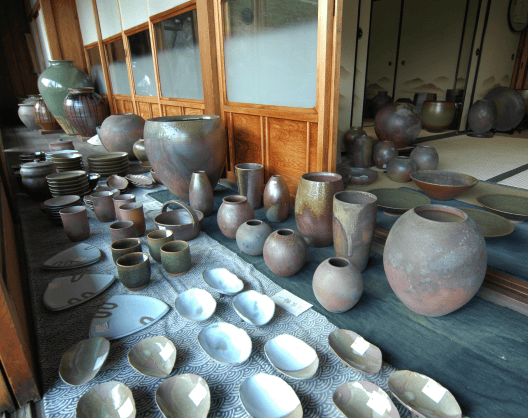
Tamba Ware is a traditional Japanese pottery produced mainly in the Tachikui district of Tamba-Sasayama City, Hyogo Prefecture, with a history spanning approximately 850 years since the late Heian period. It is counted among the Six Ancient Kilns of Japan—alongside Seto, Tokoname, Shigaraki, Bizen, and Echizen—and has been recognized as a Japan Heritage. One of its defining characteristics is the beautiful, one-of-a-kind natural ash glaze created when firewood is burned in anagama (single-chamber) and noborigama (climbing) kilns built into the valley landscape. As ash melts during firing, it forms unique surface effects known as “natural glaze.” Another distinctive feature of Tamba Ware is its adaptability. Rather than adhering to a single technique or form, it has continued to produce the everyday vessels required by each era, resulting in stylistic differences depending on the period. In earlier times, large jars, storage vessels, and grinding bowls were central products. From the 17th century (Edo period), many outstanding tea utensils—such as tea caddies, water jars, and tea bowls—were created. In the late Edo period, under the patronage of the Sasayama domain, master potters such as Naosaku, Ichifusa, Kayu, and Ichikono competed in skill and elevated the name of Tamba Ware.
In the Meiji period (from 1868 onward), one-shō sake and soy sauce bottles became key products. In the early Showa period (from 1926), plant pots were produced in large numbers. During wartime (from around 1939), sulfuric acid bottles were made; after 1945, everyday household wares that were in short supply were produced. Today, tableware and flower vessels form the core of production, along with tea utensils and other works that combine simple practicality with artistic expression. At the same time that the climbing kiln was introduced in the 17th century, a distinctive technique—the kick wheel—was adopted. While most Japanese wheels rotate clockwise, the Tachikui wheel uniquely rotates counterclockwise, a tradition still preserved today.
Regarding its name, during the anagama period it was also called “Onobara-yaki.” After the introduction of the climbing kiln, it became known as “Tamba Ware” or “Tachikui Ware.” In 1978 (Showa 53), it was officially designated as a Traditional Craft of Japan under the name “Tamba-Tachikui Ware.”
Devoted to Everyday Vessels
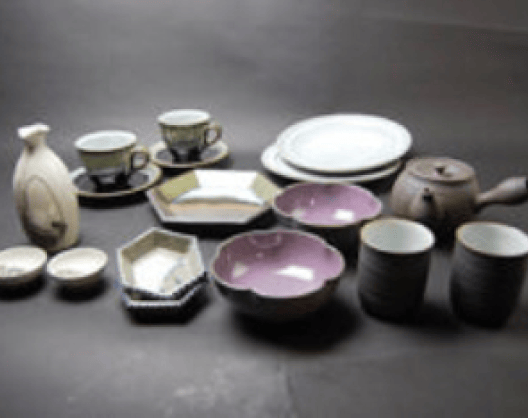
For approximately 850 years since its founding, Tamba Ware has consistently focused on practical wares for daily life. Teacups, plates, bowls, sake bottles, small sake cups, jars, and vases—finished with simple ash or iron glazes and characterized by an unadorned, rustic beauty—remain at the heart of its production as true “vessels for living.”
Anagama Period (Late 12th century–16th century)
During the anagama period, pieces were formed using coil-building with wheel finishing. No artificial glazes were used. Instead, during the long firing process in the anagama kiln, ash from the burning firewood fell naturally onto the vessels and fused with the iron contained in the clay, producing green and brownish tones. This naturally formed glaze, known as bidoro (glass-like) glaze, became a defining feature of Tamba Ware in this era.
The Beauty of Kiln Effects
Firing in the climbing kiln, introduced in the 17th century, continues for approximately 60 hours and reaches temperatures of up to 1300°C. During this process, ash from pine firewood settles onto the vessels, fusing with the glaze or transforming through variations in flame exposure. Effects such as “haikaburi” (ash covering) create distinctive colors and patterns unique to each piece. These dramatic kiln effects became widely appreciated by ceramic enthusiasts, and Tamba Ware came to be admired not only for use but also for display. The true essence of Tamba Ware may lie in how the surface deepens in character over time—the more one lives with it, the more its colors and expressions subtly change.
How Tamba Ware Is Made
1.Clay Collection
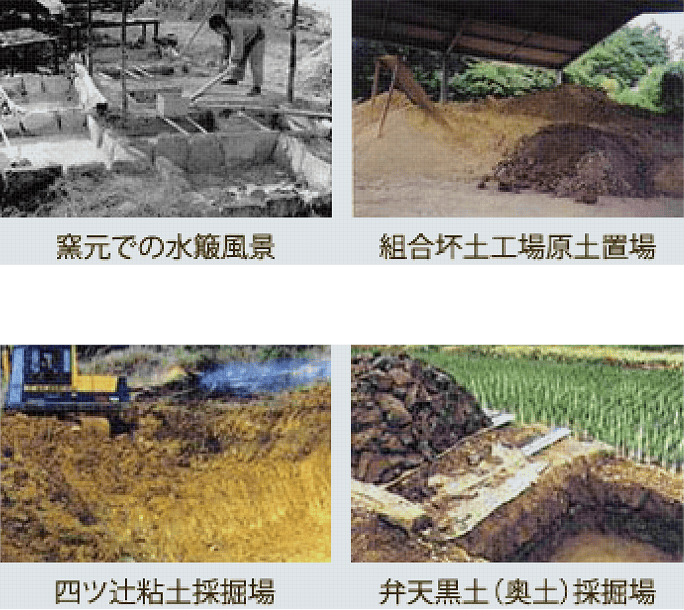
The raw clay used for Tamba Ware is sourced within a radius of about 15 km from Tachikui. This includes Yottsuji clay (mountain soil from Yottsuji in Sanda City) and Benten kurotsuchi (rice-field clay found around JR Sasayamaguchi Station). Historical illustrations show that mountain clay was also once collected in areas such as Honjo in Sanda City and around Aino and Aimoto.
2. Clay Refining (Suihi)
In the past, each kiln refined its own clay. Today, the cooperative’s clay processing factory mixes Yottsuji clay, Benten black clay, kibushi clay, and feldspar in fixed proportions with water and grinds them in a mill. The mixture is then sieved to remove impurities and soaked in settling tanks.
3. Preparing the Clay (Haido)
The clay that settles in the tank is stirred, pumped up, and pressed to remove excess water, producing clay of suitable firmness for forming.
4. Kneading
The prepared clay is thoroughly kneaded in a pug mill to even out particle density and moisture content. It is then further kneaded by hand (a process known as nejimomi or kikumomi) to remove air bubbles completely. Insufficient kneading can cause warping, cracking, or blistering during firing.
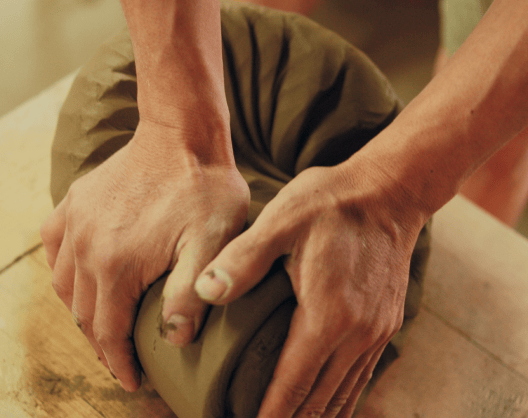
5. Forming
Various forming methods are used depending on the shape and type of piece. Round forms are created on the potter’s wheel, with kick wheels and electric wheels commonly used in Tamba-Tachikui. A distinctive feature is that the wheel rotates counterclockwise. Complex shapes, such as square forms or figurative works, are made using plaster molds through slip casting. Other methods include slab building, press molding, mold forming, and hand building.
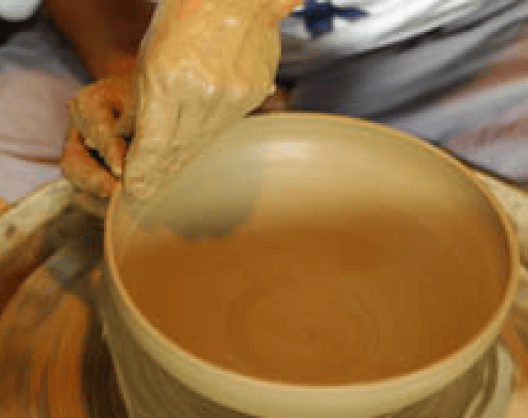
6. Trimming
While the clay still retains some moisture, finishing work is carried out using tools such as obigane (metal trimming tools) and bamboo knives. This includes trimming the foot ring, refining the exterior, and shaping the rim. Details such as attaching teapot knobs or incense burner legs are also completed at this stage.
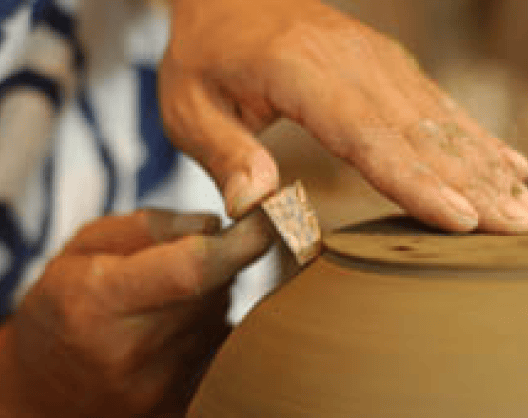
7. Drying
Pieces are dried in the sun for three to four days. Residual heat from the kiln may also be used for drying.

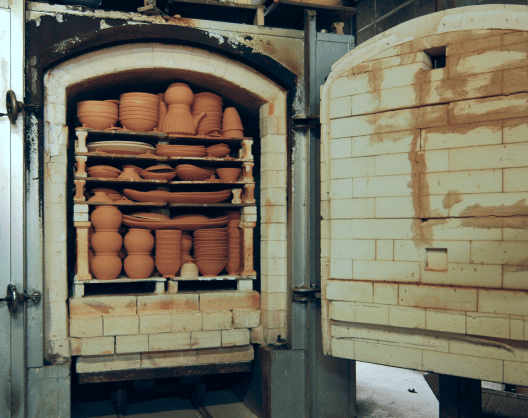
8. Bisque Firing
After thorough drying, pieces are fired once at 750–900°C. This ensures that the glaze will adhere properly during the final firing.
9. Glazing
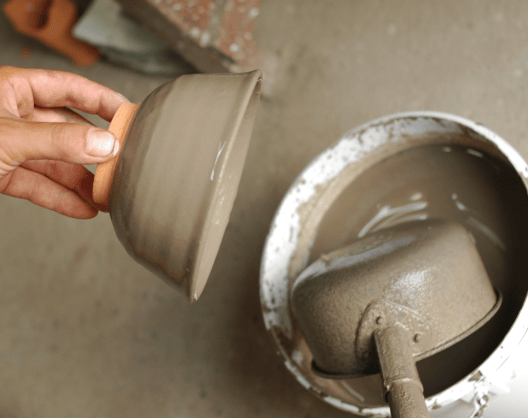
After bisque firing, glazes such as ash glaze, clay-ash glaze, iron glaze (black glaze), or white glaze are applied. In some cases, a technique known as nama-gake is used, in which glaze is applied directly onto leather-hard clay before bisque firing.
10. Loading the Kiln
Glazed pieces are carefully loaded into the kiln. Some works are fired without glaze to achieve a natural, high-fired finish.
11. Final Firing
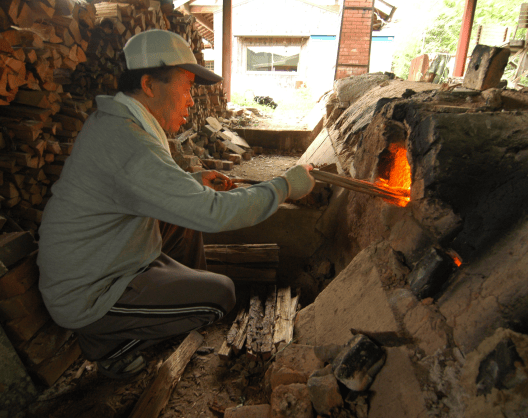
Firewood—primarily pine—is fed into the kiln over several days, and pieces are fired at temperatures between 1250°C and 1300°C. Today, gas and electric kilns are also used alongside traditional wood firing.
12. Unloading the Kiln
After firing, the kiln is allowed to cool for several days before the finished works are removed. Each piece is inspected before shipment.
– Techniques of Tamba Ware–
– Techniques of Tamba Ware –
Clay
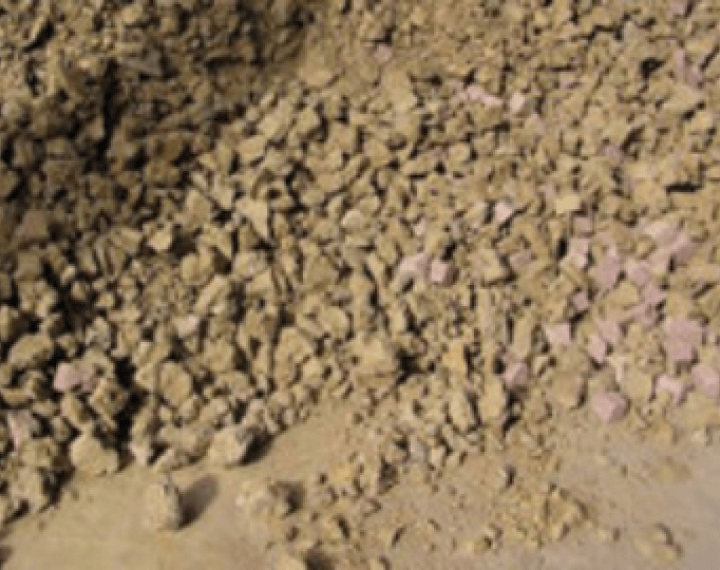
The clay used for Tamba Ware is sourced within a radius of approximately 15 km from Tachikui. This includes Yottsuji clay (mountain soil from Yottsuji in Sanda City) and Benten black clay (rice-field clay from around JR Sasayamaguchi Station), or materials of the same quality. Traditionally, both mountain soil and rice-field soil have been used, with mountain soil being the principal material since ancient times. During the Anagama period, clay was taken from areas surrounding the kiln sites. Later, soil from Honjo, Aino, and Aimoto in Sanda City came into use. The use of rice-field soil is said to have begun in the early 17th century, with the advent of the climbing kiln. Over time, clay extraction sites shifted. During the Anagama period (late 12th century–16th century), clay was gathered from mountains near the kilns. As production expanded with the introduction of climbing kilns, clay began to be sourced from more distant locations.
Mountain Soil
Mountain soil was extracted from wide-ranging clay pits in Kami-Aino, Shimo-Aino, Nishi-Aino, Aimoto, Higashi-Honjo, and surrounding areas in Sanda City, Hyogo Prefecture. Today, mountain soil from Yottsuji in Sanda City is used.
Rice-Field Soil
Originally sourced around Aimoto in Sanda City, extraction gradually moved northward, passing through Furuichi in Tambasasayama City, and eventually centering on rice-field soil from Benten (present-day Tannan district of Tambasasayama City), which continues to be used today. All clay was extracted by open-pit mining. In the past, each kiln refined its own clay through sieving and water purification (suihi). Because clay preparation required nearly half of the total production effort, it was an extremely labor-intensive process. However, after a cooperative clay-processing factory began operating in 1963 (Showa 38), individual kilns no longer carried out this work themselves.

Forming
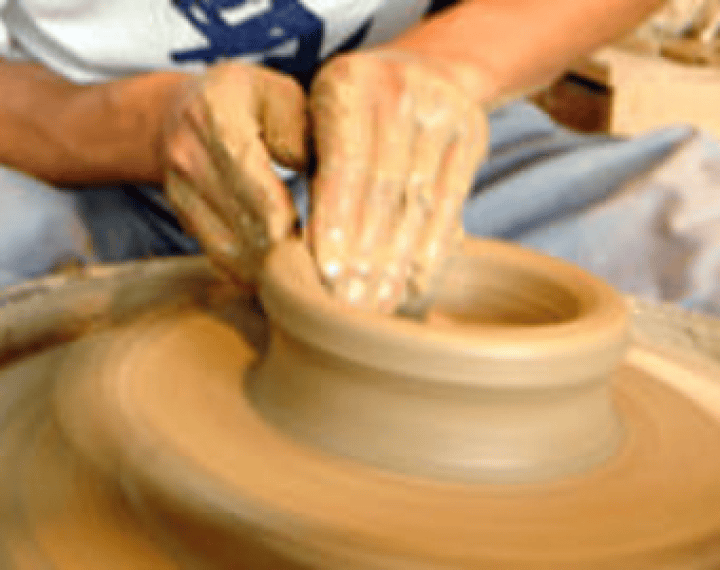
Wheel forming (for round shapes) is the primary method, but slip casting using plaster molds is employed for complex forms such as square vessels and figurative works. Other methods include slab building, hand forming, and press molding. In all cases, the basic principle is “one-piece making,” in which each work is individually finished on the wheel or worktable.
Patterns and Decoration
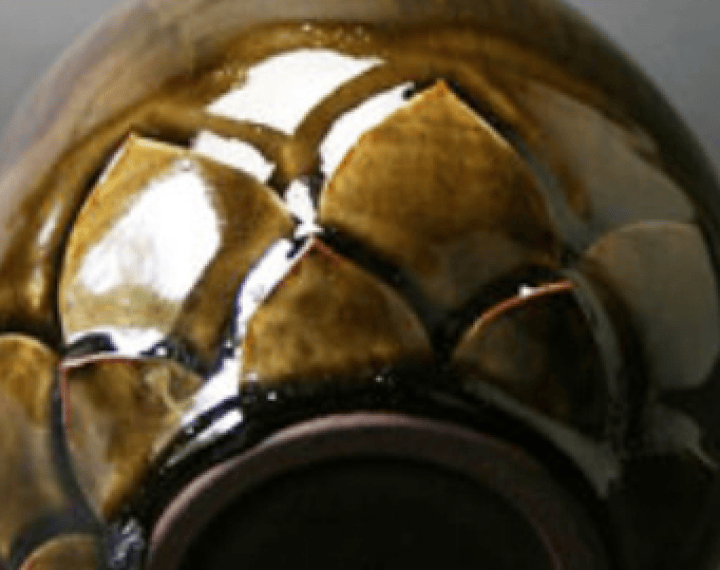
Various decorative techniques have been used since ancient times. Among those distinctive to Tamba Ware and still practiced today are leaf resist, appliqué, nail carving, poured glaze (nagashi-gusuri), ink-marbling (suminagashi), figurative appliqué (ningyōde), and tube drawing (itchin).
Leaf resist(Leaf design)
Leaves are pressed onto the surface of freshly formed clay before it dries. Glaze is then applied and the piece is fired. During firing, the leaf burns away, leaving its silhouette impressed on the surface. Many types of leaves are used, including fig, fatsia, parsley, wood sorrel, maple, fern, ivy, and nandina. Ranging from large to small, these motifs form one of the most original decorative expressions of Tamba Ware.
Appliqué
This technique involves attaching strips or shapes of clay onto the surface before drying. The same clay (tomotsuchi) or white clay may be used. Along with leaf impressions, appliqué is a distinctive decorative method of Tamba Ware. In the early Edo period (17th century), wide-mouthed jars were often decorated with motifs such as lotus flowers, pine, plum, willow, persimmon, fish, and deer, combined with characters representing mountains, water, flowers, and wind. In the mid-Edo period, this technique appeared on “heso-tokkuri” (appliqué sake bottles), and in the Meiji period it continued in plant pots decorated with arabesque patterns.
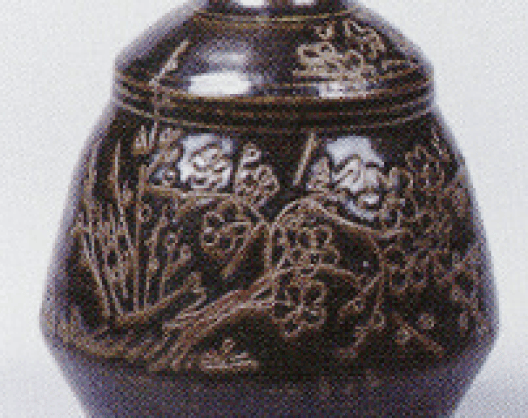
Nail Carving
This technique uses sharpened bamboo or wood tools to incise patterns into the clay surface. It is commonly seen in works from the mid-Edo period. In some cases, glaze is applied before carving floral designs to create contrast between clay and glaze; in others, carving is done before glazing. Nail carving is one of the classic techniques of Tamba Ware.
Poured Glaze (Nagashi-gusuri)
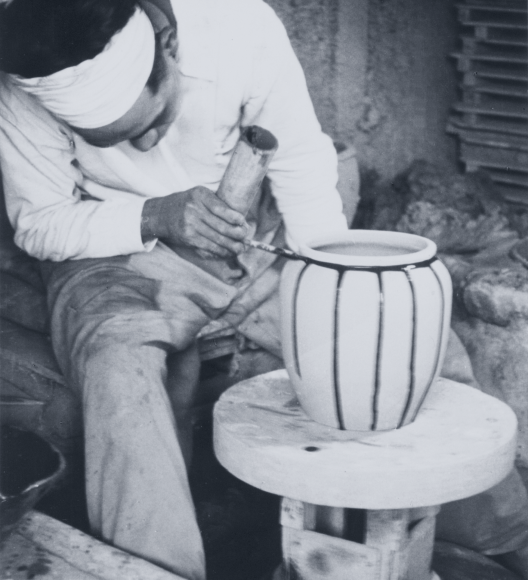
Tamba glazes developed from natural ash glaze and clay-based glazes. Originally used separately, these were later combined by applying red clay slip as a base and pouring ash glaze over it for decoration. This method, known as nagashi-gusuri, involves slowly turning the wheel while ladling glaze over the surface or pouring glaze at intervals from a bamboo tube. In addition to pouring downward in straight lines, glaze may also be flicked upward in a technique known as tobikake.
Ink-Marbling (Suminagashi)
Named for its resemblance to the spreading patterns of ink dropped onto water, this technique involves applying iron glaze over white slip before it dries, then gently moving the piece to create flowing, marbled patterns. It came into use in the late Edo period.
Figurative Appliqué (Ningyōde)
In Tamba Ware, small molded figures such as Daikoku, Hotei, chrysanthemums, or karahana motifs are attached to the center of sake bottles. Those known as “Heso(Belly button)-tokkuri” have a slightly recessed appliqué at the center.
Tube Drawing (Itchin)
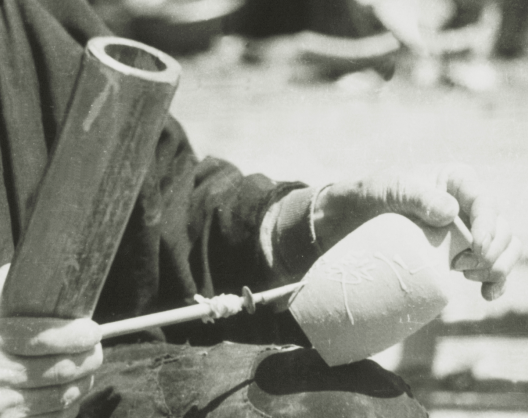
Tube drawing is a technique in which glaze is used to create letters, images, or lines. A bamboo tube fitted with a narrow nozzle allows glaze to flow out in controlled lines. Though widely practiced in Japan from the 17th century onward, Tamba Ware is considered one of its leading examples. In some cases, metal tips were attached to the nozzle to produce finer lines, enabling the depiction of sake brands or shop names on one-shō bottles. Another method uses a funnel-shaped paper cone with a metal tip to squeeze out glaze by hand. Originally adapted from textile dyeing tools, this technique became known as itchin drawing. Today, rubber applicators are often used.
Faceting (Mentori)
This technique flattens sections of a vessel’s surface and is used in representative works such as sanshō jars.
Shinogi
A technique in which special carving tools are used to shave the surface and create linear decorative patterns.
Glazes
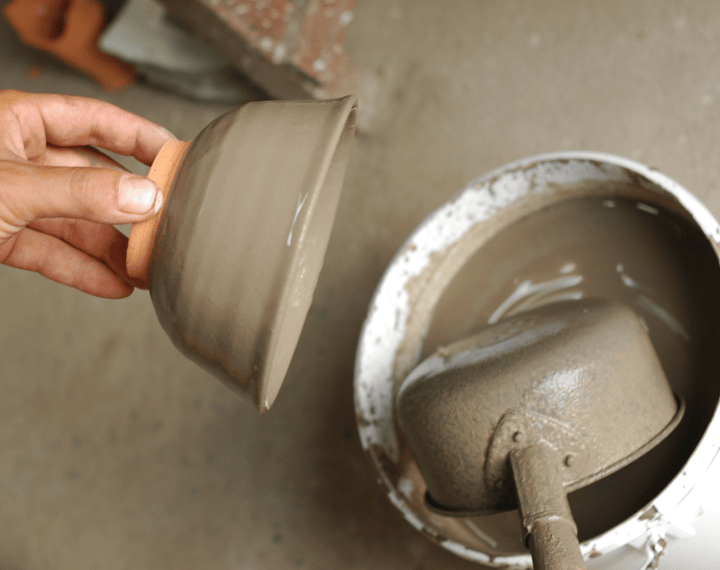
With the introduction of climbing kilns, artificial ash glazes inspired by natural ash effects were developed and became widely used. Wood-ash glaze is central, alongside straw ash, rice-husk ash, chestnut burr ash, and bamboo leaf ash. These remain the primary glazes of Tamba Ware today. Clay-ash glaze, iron glaze (black glaze), and white glaze are also used.
Natural Ash Glaze (Bidoro Glaze)
In the anagama period, pieces were unglazed. During firing, pine ash fused with the iron in the clay, producing natural green or brownish tones. This natural glaze effect characterizes Tamba Ware of the anagama period (late 12th century–16th century).
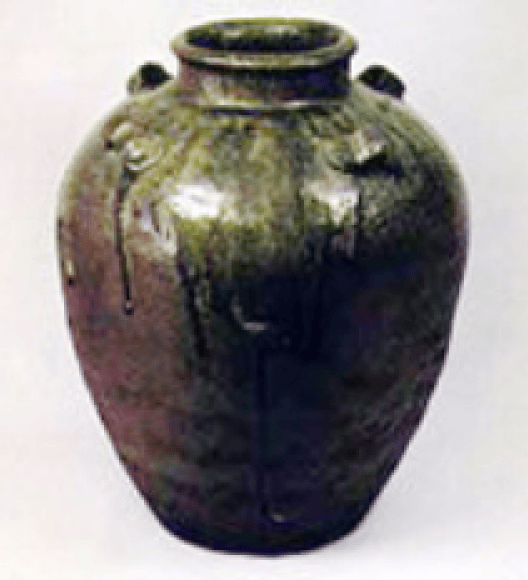
Ash Glaze (Hai-gusuri / Kaiyū)
In the 17th century, artificial ash glazes inspired by natural ash effects were devised. Wood-ash glaze, often mixed with yellow earth, became common. Later, straw ash, rice-husk ash, chestnut burr ash, and bamboo leaf ash were introduced. Ash glaze remains one of the representative glazes of Tamba Ware.
Clay-Ash Glaze (Dobaiyū)
Used from around the mid-19th century (late Edo period), this glaze is made by leaching impurities from mixed-wood ash and refining it through water purification before use.
Red Clay Slip Glaze (Akadobe-yū)
Originally applied to prevent water leakage, this clay-based glaze transforms into vivid red or purplish-red tones during firing. In the early 17th century, it became one of the representative glazes of Tamba Ware, widely used on jars and storage vessels.
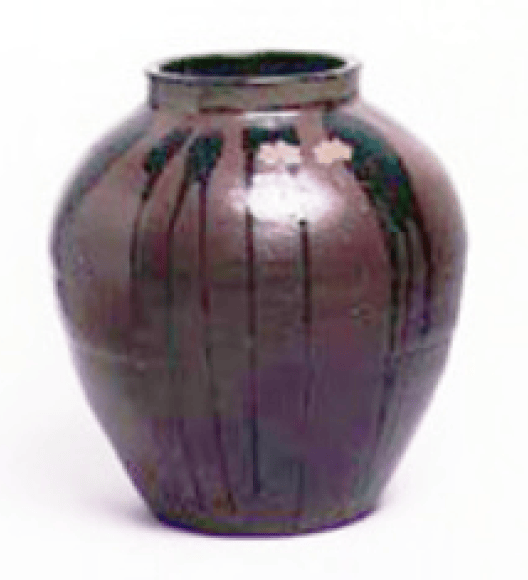
Iron Glaze
Created by refining iron-rich red clay, this glaze produces a range of colors depending on thickness and firing, from fox-brown to chestnut and deep glossy black.
White Glaze
Made from white clay dissolved in water, this glaze began to be used in the late 18th century. It served as a decorative slip and was also used for white tube-drawn or itchin designs.
Manganese / Ame-guro (Candy Black)
Manganese glaze is widely used today. Darker and glossier than black ash glaze, it is often poured over bowls and jars to create rich black finishes.
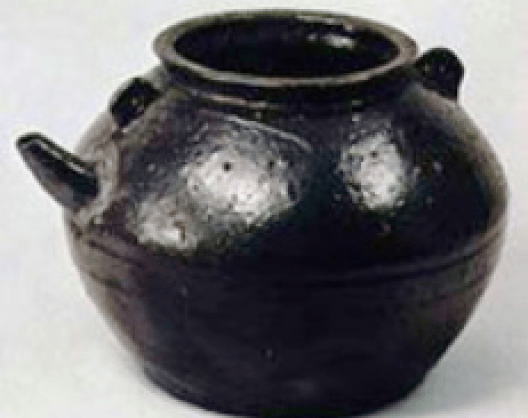
Kimachi
Formerly used extensively for mass-produced sulfuric acid bottles and storage jars, this glaze is still used today for full-surface dipping applications.
Firing
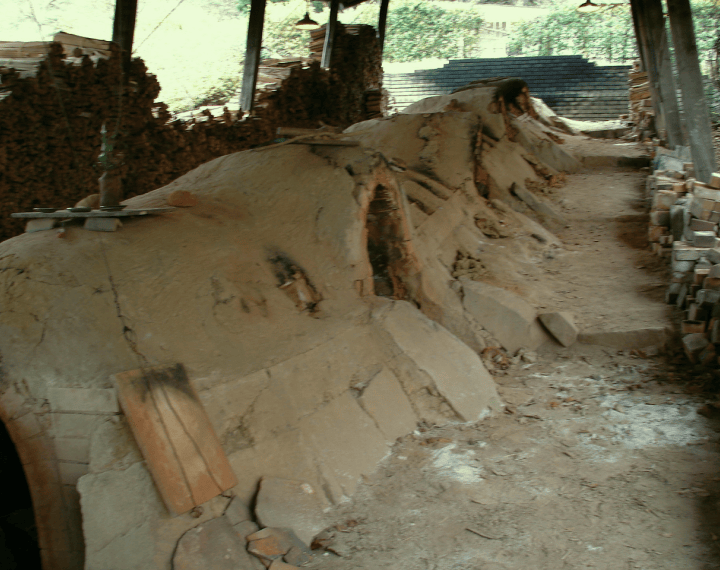
Firing is carried out in climbing kilns, anagama kilns, gas kilns, or electric kilns. Unglazed “yakishime” works are fired in climbing or anagama kilns.

Source: https://tanbayaki.com/tanbayaki/