
TAMBA GATEWAY CENTER
Gateway to the home of Tamba pottery,
an 850-year tradition
Your first step to enjoying Tamba Ware country.
Sue no Sato stands in Tachikui, the home of Tamba Ware, in Tamba-Sasayama City, Hyogo Prefecture. On its grounds, TAMBA GATEWAY CENTER is your doorway into the world of Tamba Ware and the starting point for visiting the kilns.
Exhibits that bring you close to some 850 years of history and the work of today’s potters. Tile art that captures the many moods of Tamba Ware. A café where Tamba Ware comes to your table. Here we invite you into the world beyond the vessel, one you might never notice just by looking.

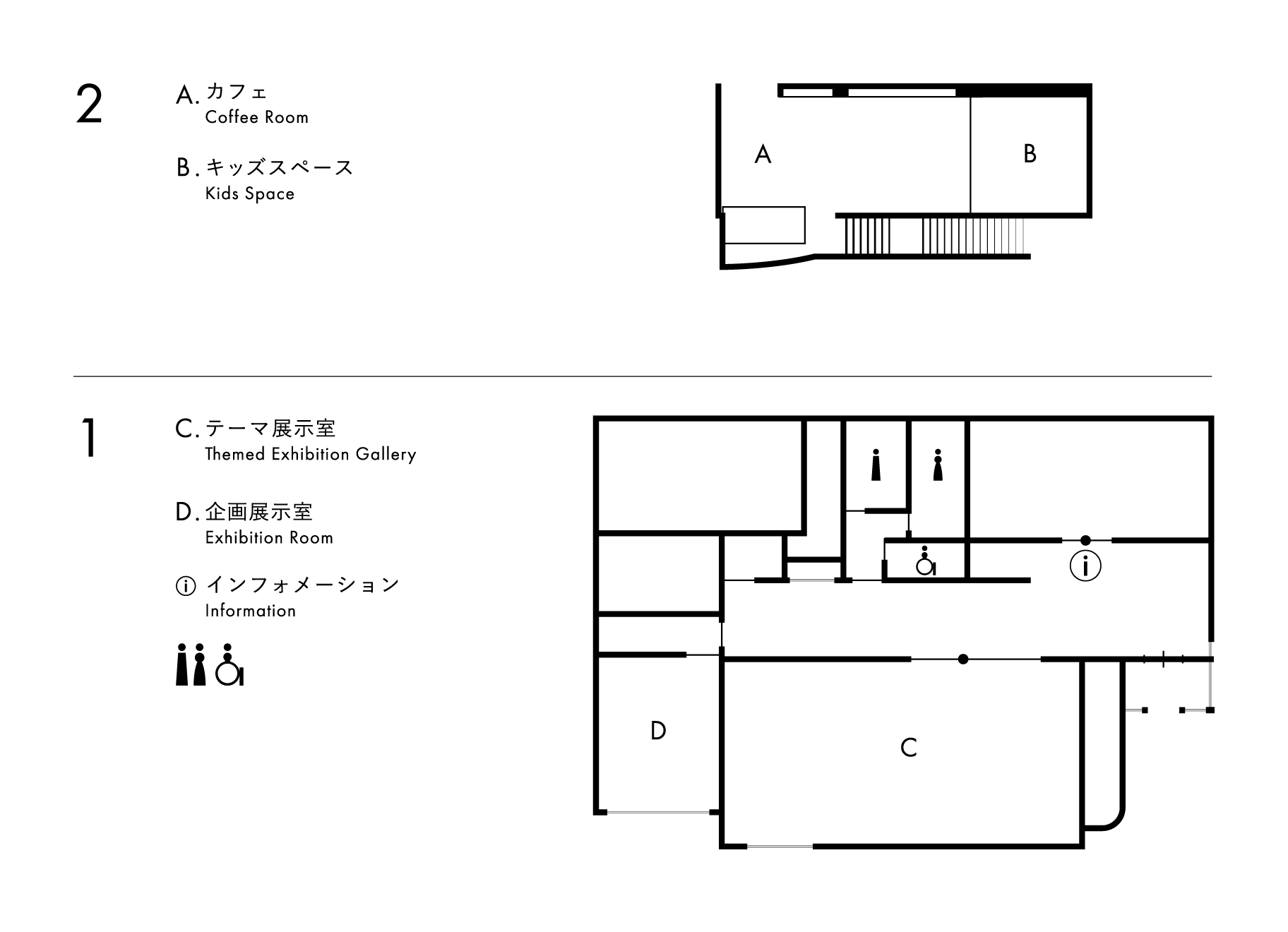
TAMBA GATEWAY CENTER Floor Map
This two-story building takes you through Tamba Ware’s past and present. On 1F, you’ll find the Theme Exhibition Room, the tile art, and an exhibition and community space; on 2F, the café Koharu Biyori and a kids’ space. From exhibits to a relaxing break, enjoy your time here in your own way.
1F Entrance
All Tamba Ware,
yet no two alike.
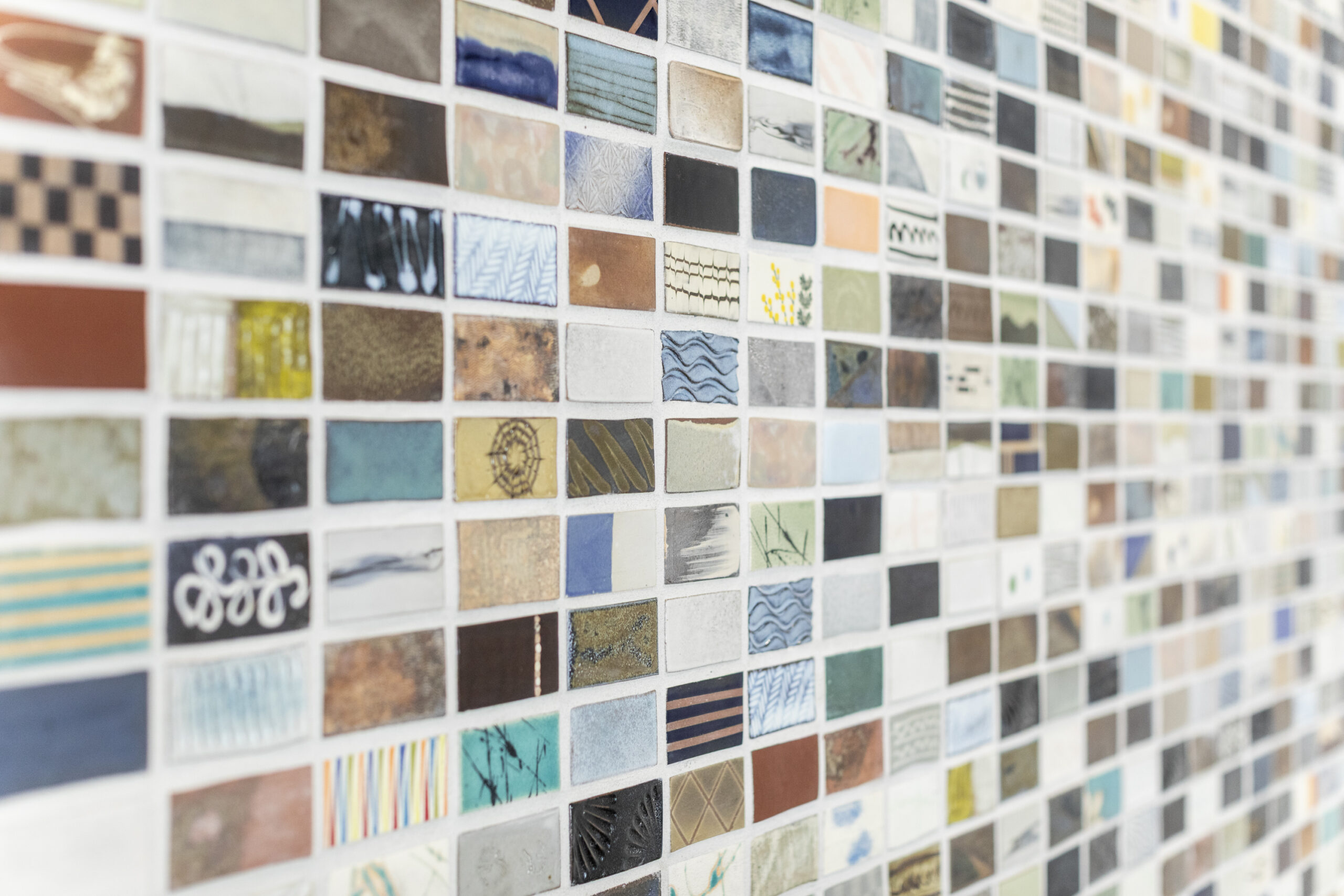
The Living Spiral Tile Art
Welcoming you at the entrance is a mosaic tile artwork that brings together the many faces of Tamba Ware. More than 60 potters from 50 kilns took part in making it. Glazes, decoration, firing methods: every tile is different, and each one reflects the particular vision of the potter who made it.
Step closer and take your time with a single tile.
Step back and enjoy the harmony of the whole.
Enjoy it however you like, and try asking your companions, “Which tile is your favorite?”
1F Theme Exhibition
Beyond the vessel, the lives of its makers come into view.
Exhibition: The Living Spiral
Tamba Ware has never stood still. While treasuring what it has inherited, it has transformed itself through encounters with changing times, society, and the world beyond. The Living Spiral likens the movement of clay changing shape on the potter’s wheel to the way Tamba Ware has evolved over some 850 years. This theme exhibition celebrates both Tamba Ware, a tradition that keeps reinventing itself with the times, and the potters who live and work in Tachikui.
Theme 1: The Work of Contemporary Potters
48 kilns, 62 potters, 98 works. One pottery village, alive with the many voices of today.
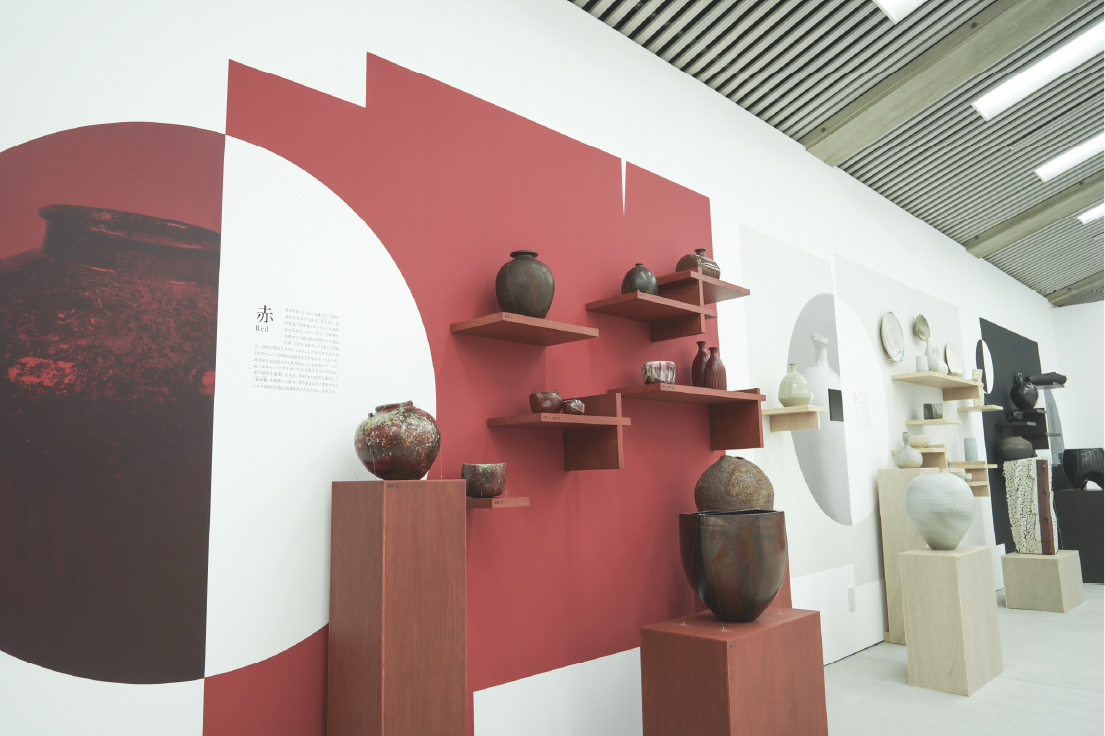
Every piece in the first area is the work of a contemporary potter.
Taking part are 62 potters from 48 kilns working in the home of Tamba Ware. Their 98 works are presented from three perspectives: “Inheritance,” “Fusion,” and “Development.”
Though born of the same clay and landscape of Tamba, these works are astonishingly varied. Why do vessels so different from one another come from a single pottery village? What has each potter inherited, what have they encountered, and what are they trying to change? Look closely at those differences, and you will find that the question “What is Tamba Ware?” has more than one answer.
Theme 2: Life and the Making of Pottery
Where the work is born, the maker’s daily life unfolds.
Finished vessels line the exhibition room. What kind of everyday life lies behind them? In the village of Tamba Tachikui, family workshops still keep the handcraft tradition alive. Kneading the clay, turning the wheel, firing the kiln: here, making pottery and living from day to day are inseparable.
This area focuses not on the works themselves but on “scenes of a life lived around pottery-making.”
Through an installation of three films with sound, you can sense the rhythms of a way of life that has gone on here for hundreds of years: the fire of the kiln, the sounds of the workshop, the scenery of the village. Also on display are well-worn kiln tools and freshly fired pottery waiting to be taken out of the kiln.
We invite you to listen closely to the everyday work behind each vessel, which no finished piece can show on its own: the potters’ physical labor, the time they devote, and the lives they lead.
Theme 3: History
From 850 years of history to the Tamba Ware of tomorrow.
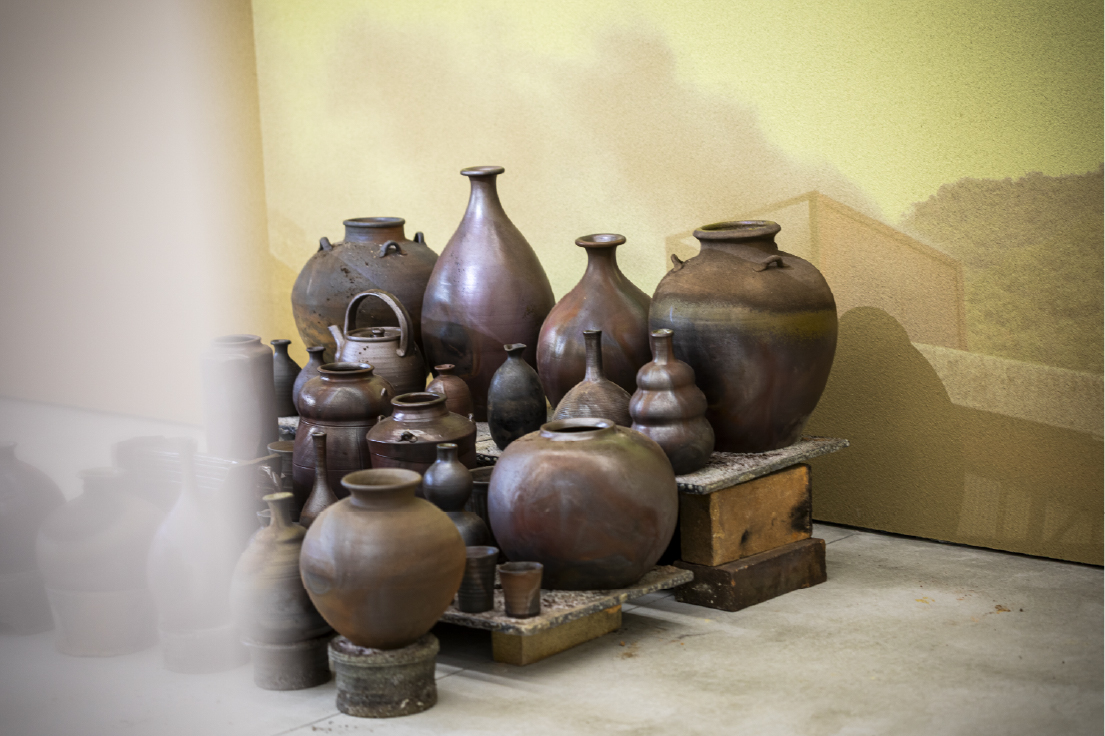
The final area traces Tamba Ware’s journey of some 850 years through rare archaeological finds.
These are more than just old vessels. Each one carries the ingenuity of the potters of its day, who sought to respond to a changing society and changing ways of life.
Another key to reading this history is “TAMBA Co-Temporary.” “Temporary” means fleeting or provisional. Even a history spanning 850 years did not begin as a single, finished story. Each potter faced the “now” they lived in, responding to the techniques, ways of life, aesthetics, and outside influences of their day. Countless such “temporary nows,” layered one upon another, have shaped the history of Tamba Ware that continues today.
As you take in the full story of a culture passed down and transformed over more than 850 years, let your thoughts travel to the Tamba Ware yet to come, further along the spiral.
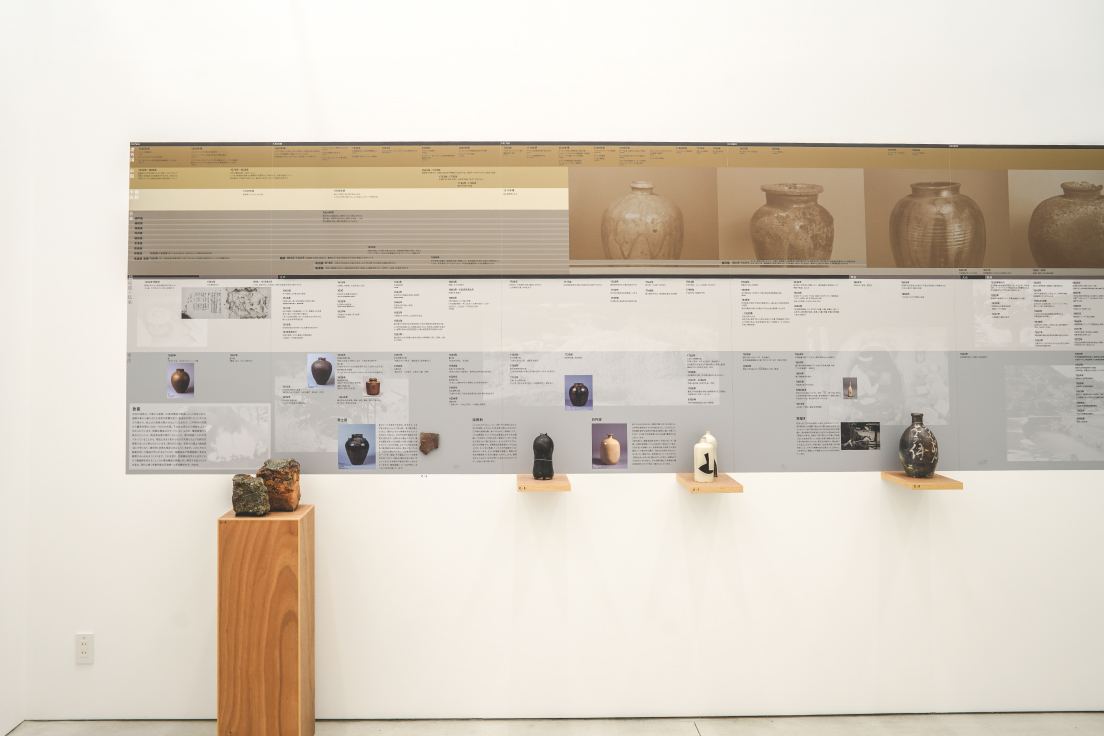
A Visitor Favorite: Exhibition Tours with Our Staff
Our staff members also lead guided tours of The Living Spiral. As you walk through the exhibition together, they share what you can’t see just by looking at the works: the potters’ techniques and ways of thinking, and what Tamba Ware has carried forward and changed over its 850-year history.
Once you learn why a piece was made the way it was, every vessel starts to look different. Recommended for anyone who wants to explore Tamba Ware in more depth.
Tours are held at 1:30 p.m. on Saturdays, Sundays, and public holidays in Japan.
Separate guided tours can be arranged for travel agencies and school groups.
| Venue | Theme Exhibition Room, 1F |
|---|---|
| Admission | Adults (high school students and older): ¥500 / Elementary and junior high school students: ¥120 / Preschool children: Free |
| Hours | 10:00–17:00 (last admission 16:30) |
| Closed | Tuesdays (open on national holidays), year-end/New Year holidays (Dec 29–Jan 1) |
2F Café
Talk about your favorite pieces over something sweet.
Koharu Biyori, a Japanese-style café serving sweets in okamochi boxes
After the exhibition, take a café break with Tamba Ware on the table.
At Koharu Biyori, you can enjoy sweets and drinks made with carefully chosen, wholesome ingredients. The Japanese-style afternoon tea, created by a shop loved for its wooden-box lunches, is served in an okamochi, a traditional wooden carrying box. Even the moment it is carried to your table is a little thrill. Savor each bite while admiring the colors and shapes of the tableware.
You may even find yourself thinking, “I’d love to use pottery like this at home.”
| Hours | 11:00–16:30 (last order 16:00) |
|---|---|
| Closed | Tuesdays (open on national holidays), year-end/New Year holidays (Dec 29–Jan 1) |
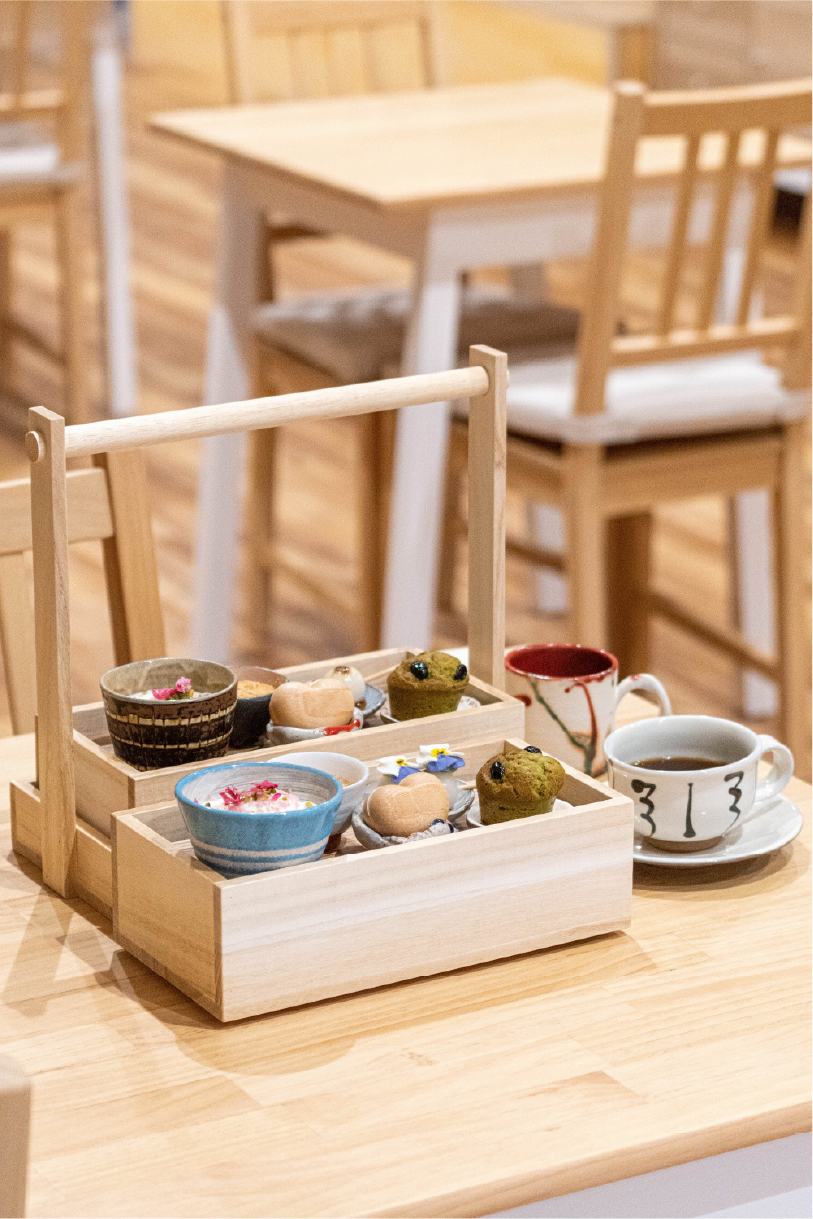
Café time begins the moment you choose your cup.
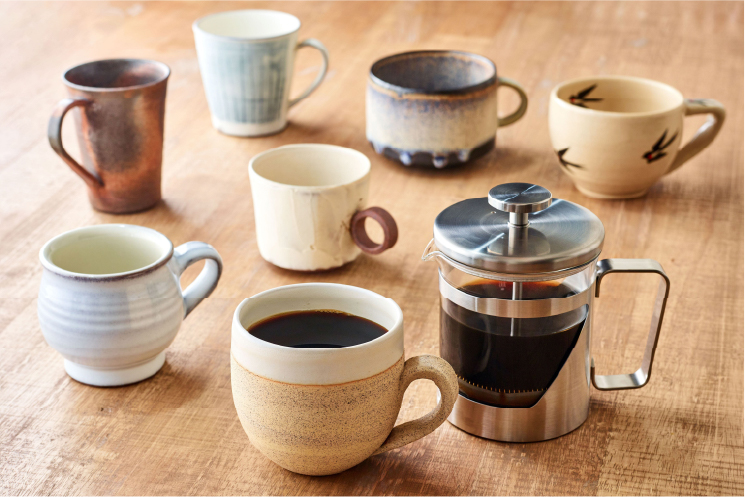
When you order coffee or tea, you can choose whichever Tamba Ware cup you like from the selection lined up in the café. Each one differs in color, shape, the character of its glaze, and the way it feels in your hand, so take your time and pick the one that suits your mood today. Using Tamba Ware, not just looking at it, brings its charm that much closer to you.
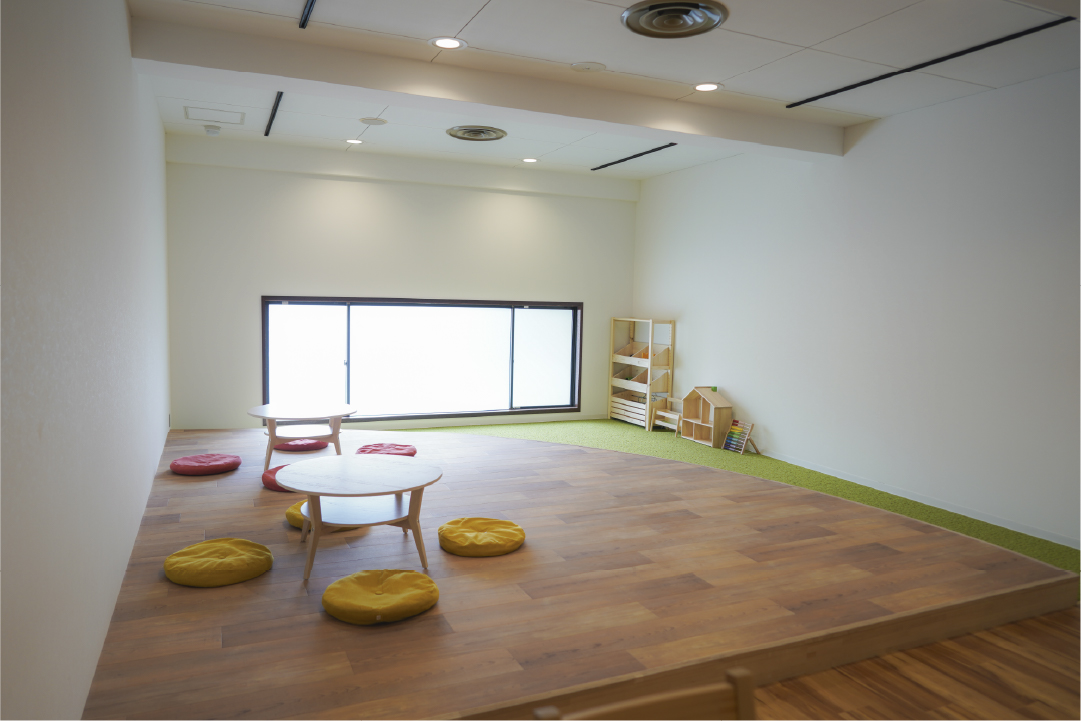
2F Kids Space
With your little ones, at your own pace.
On 2F, you’ll find a kids’ space and a nursing room. Enjoy the exhibits and the café at a pace that suits your child.
Back to Sue no Sato