
TOC
OKUMA-GAMA
profile
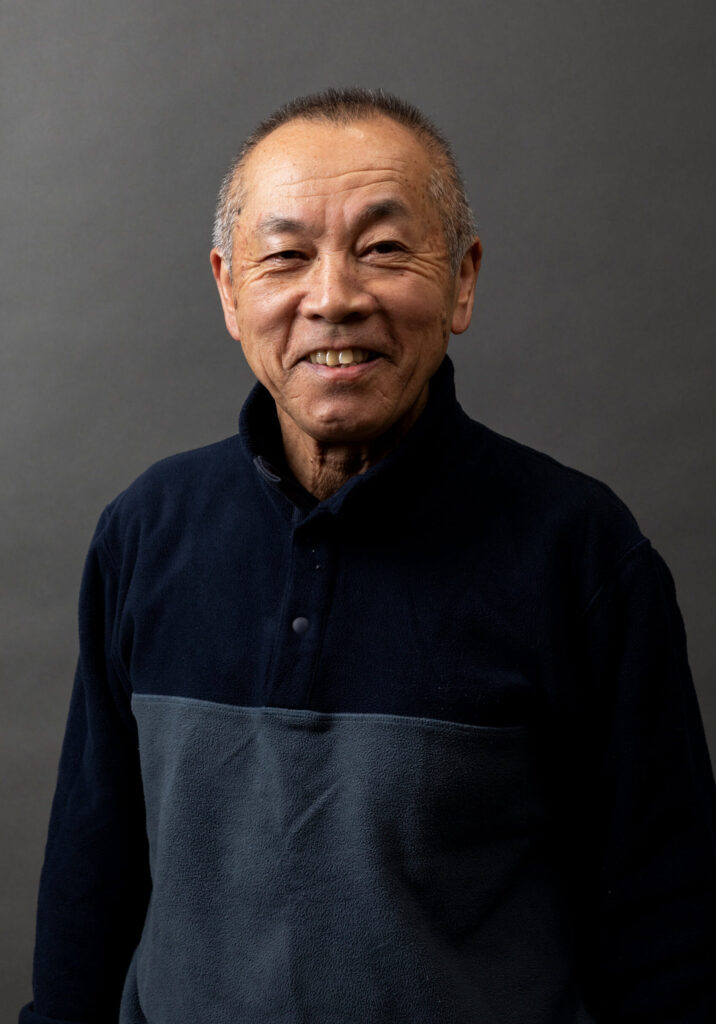
Takumi Ogami
profile
Takumi Ogami
Established over 200 years ago
Year of Birth:1951
Year Began Pottery:1974
Education / Training Background
Graduated from Otemon Gakuin University
Studied under the 2nd and 3rd generations of Tozan Miyanaga (Kyoto)
Major Awards
Hyogo Prefecture Distinguished Skills Award
Hyogo Prefecture Cultural Award
Order of the Sacred Treasure, Silver Rays
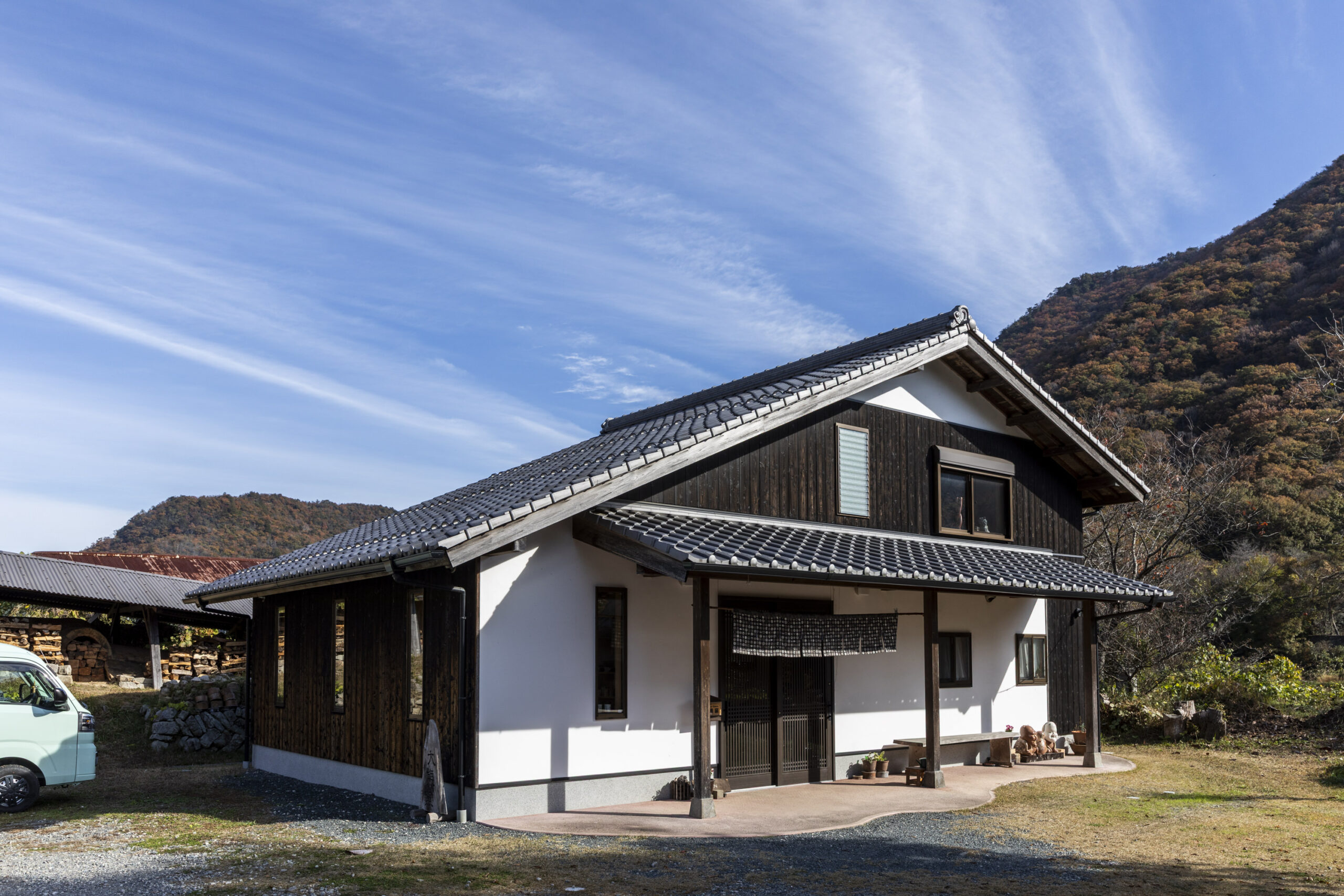
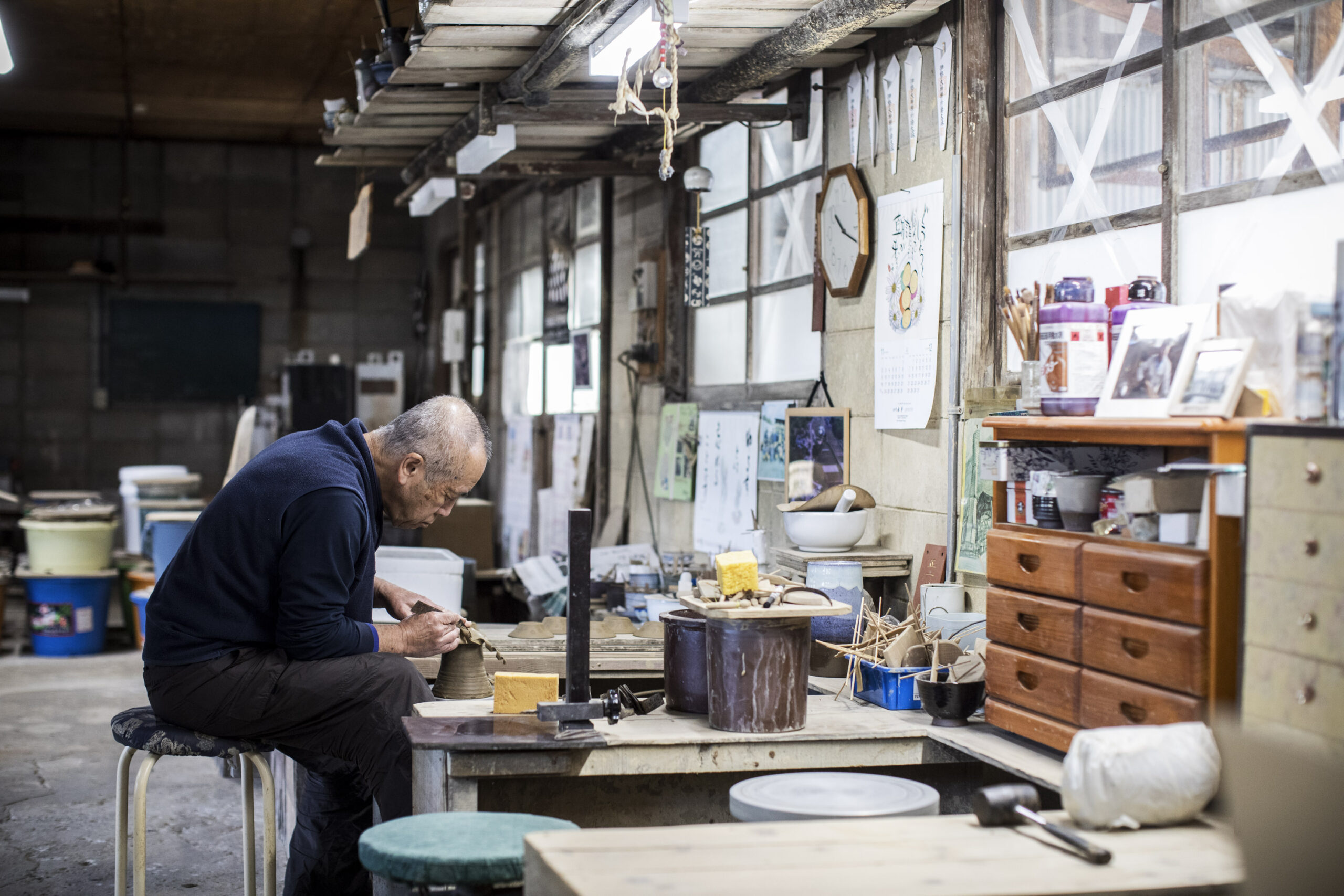
The state of the workshop
スクロールできます
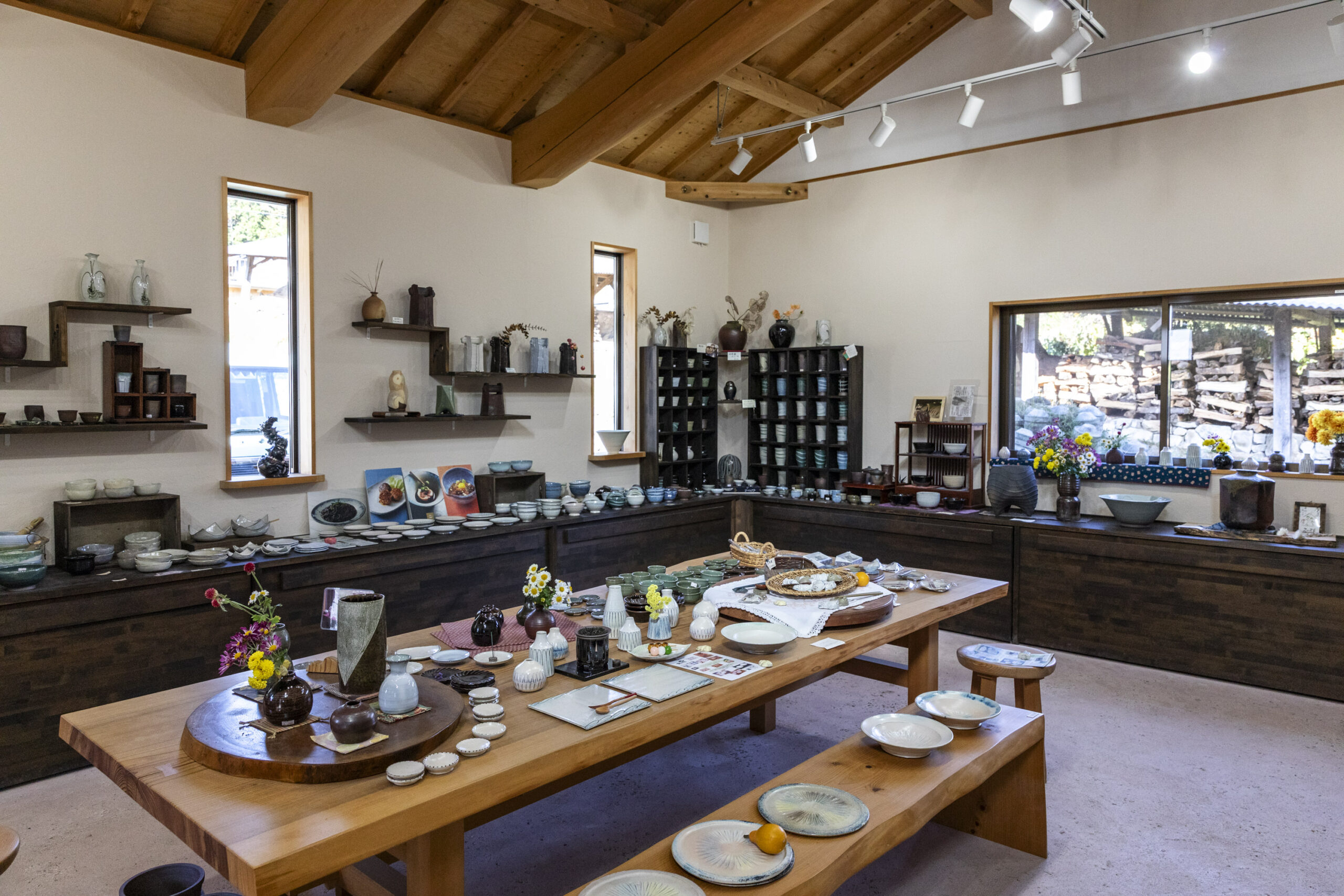
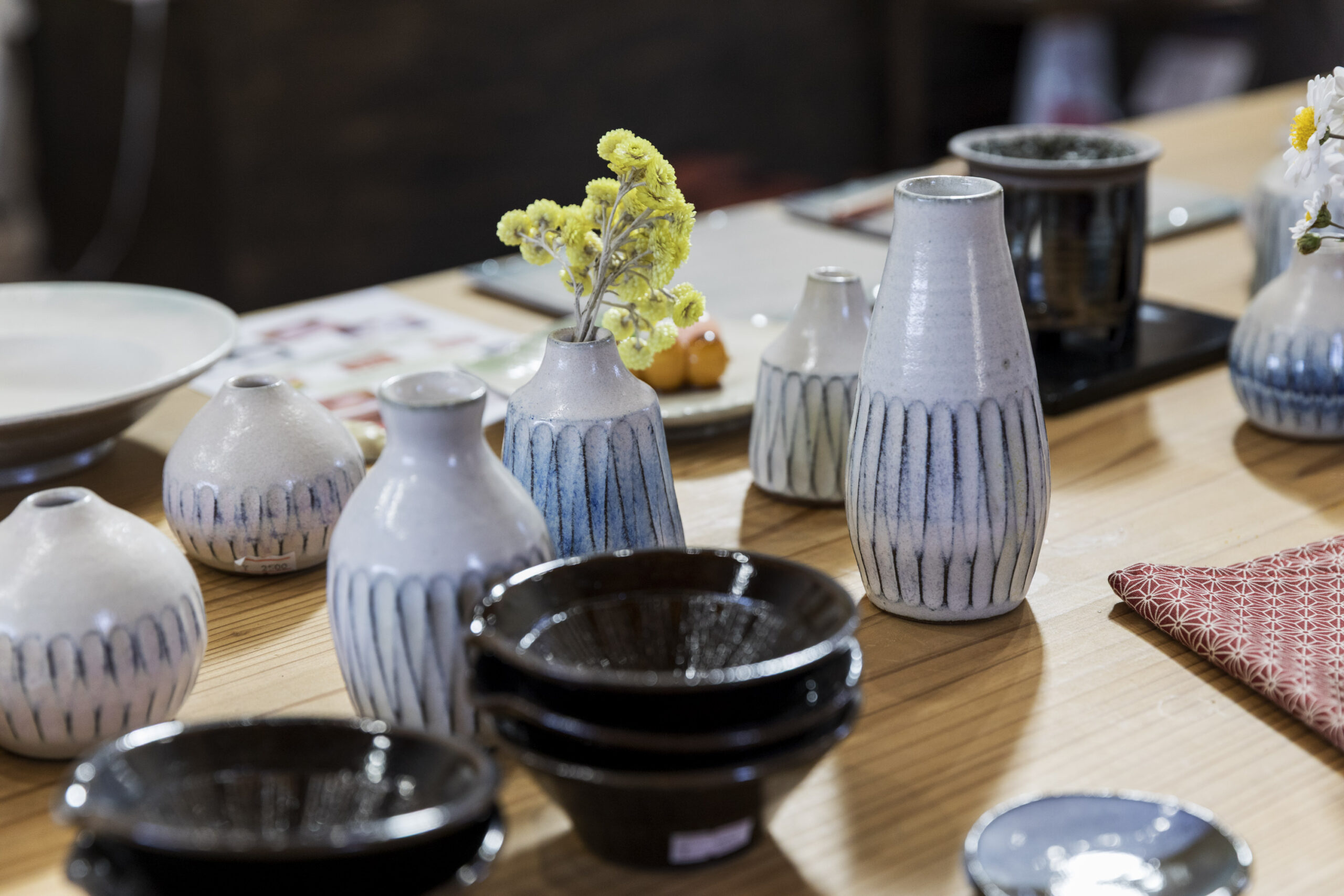
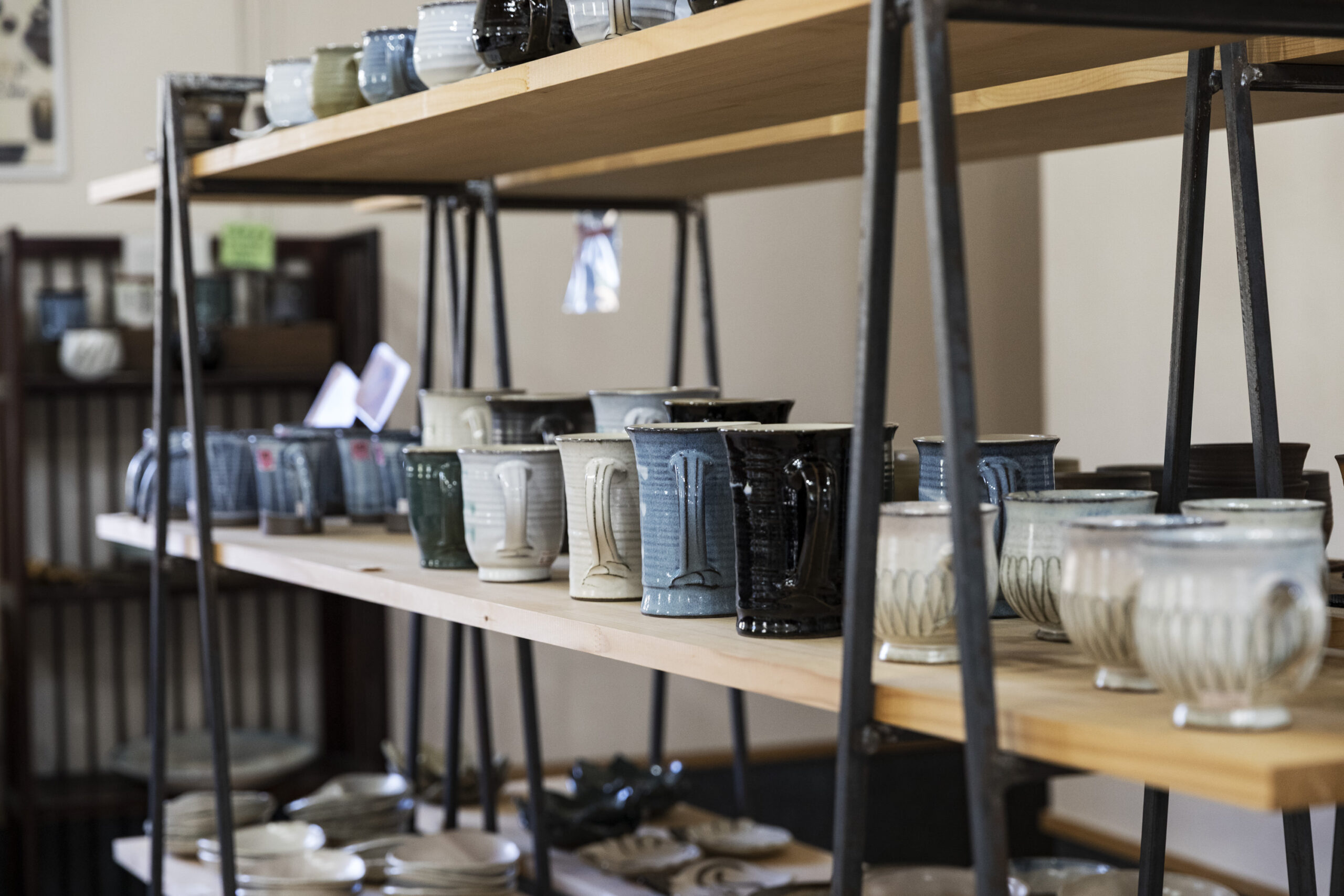
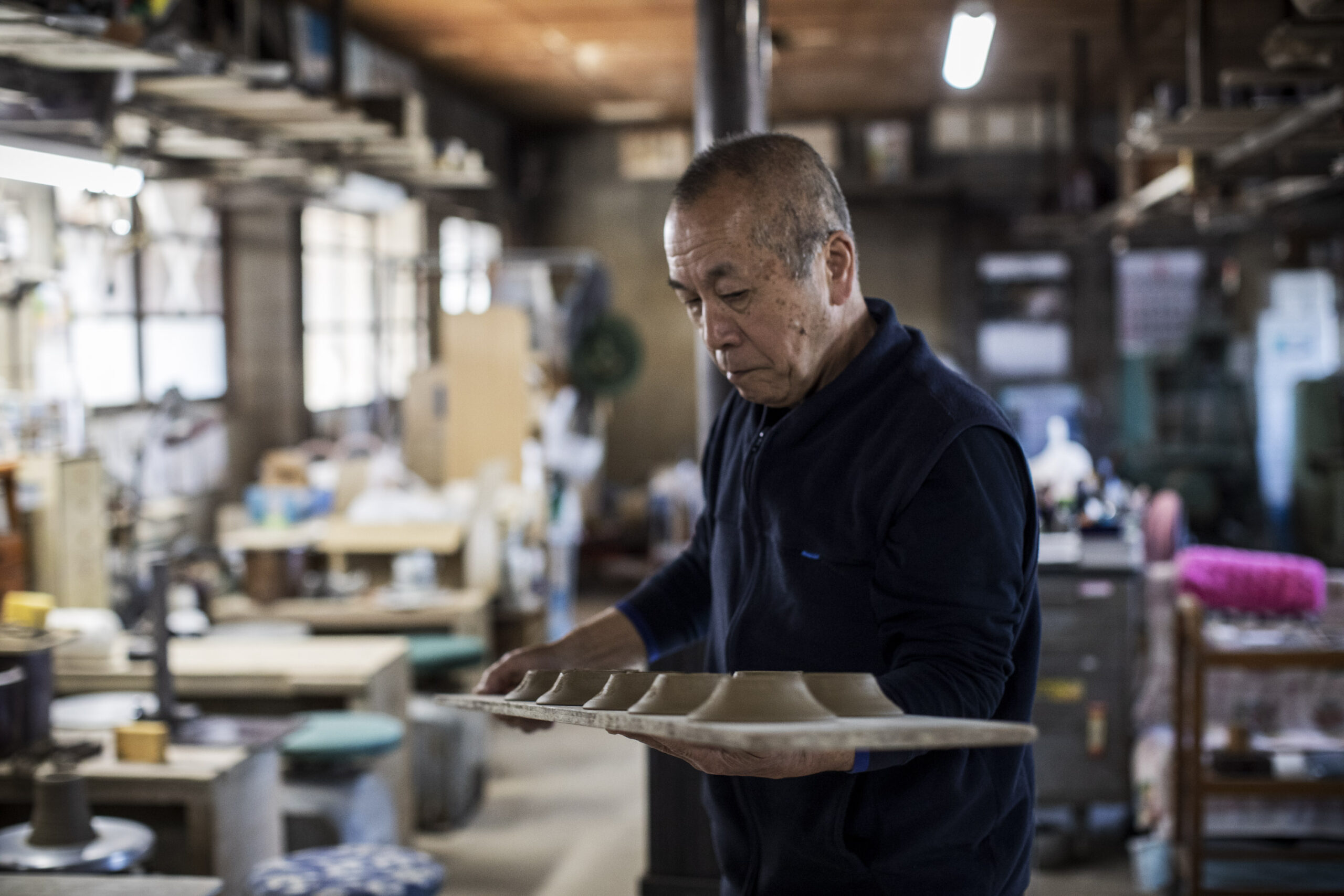


Works
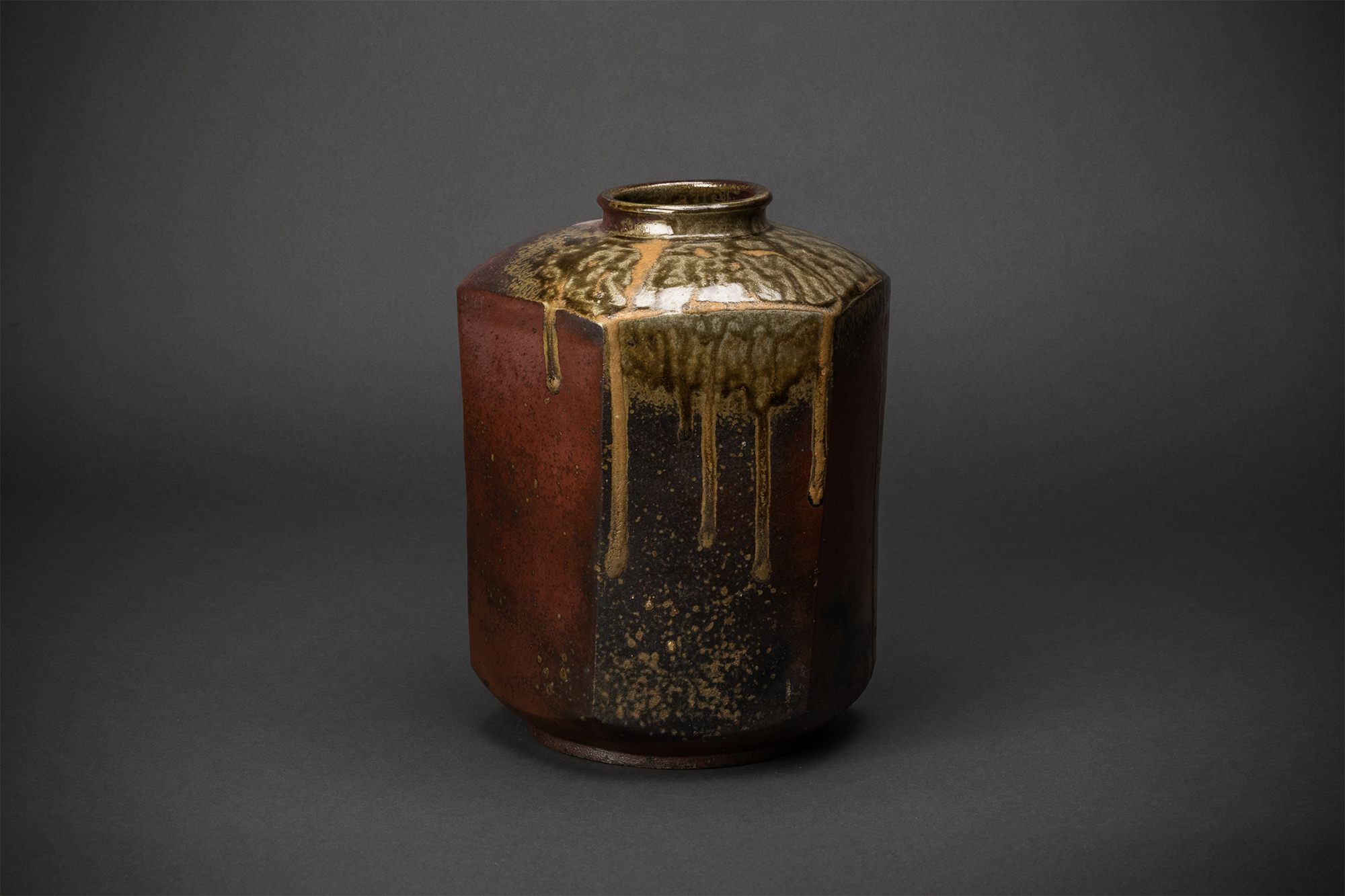
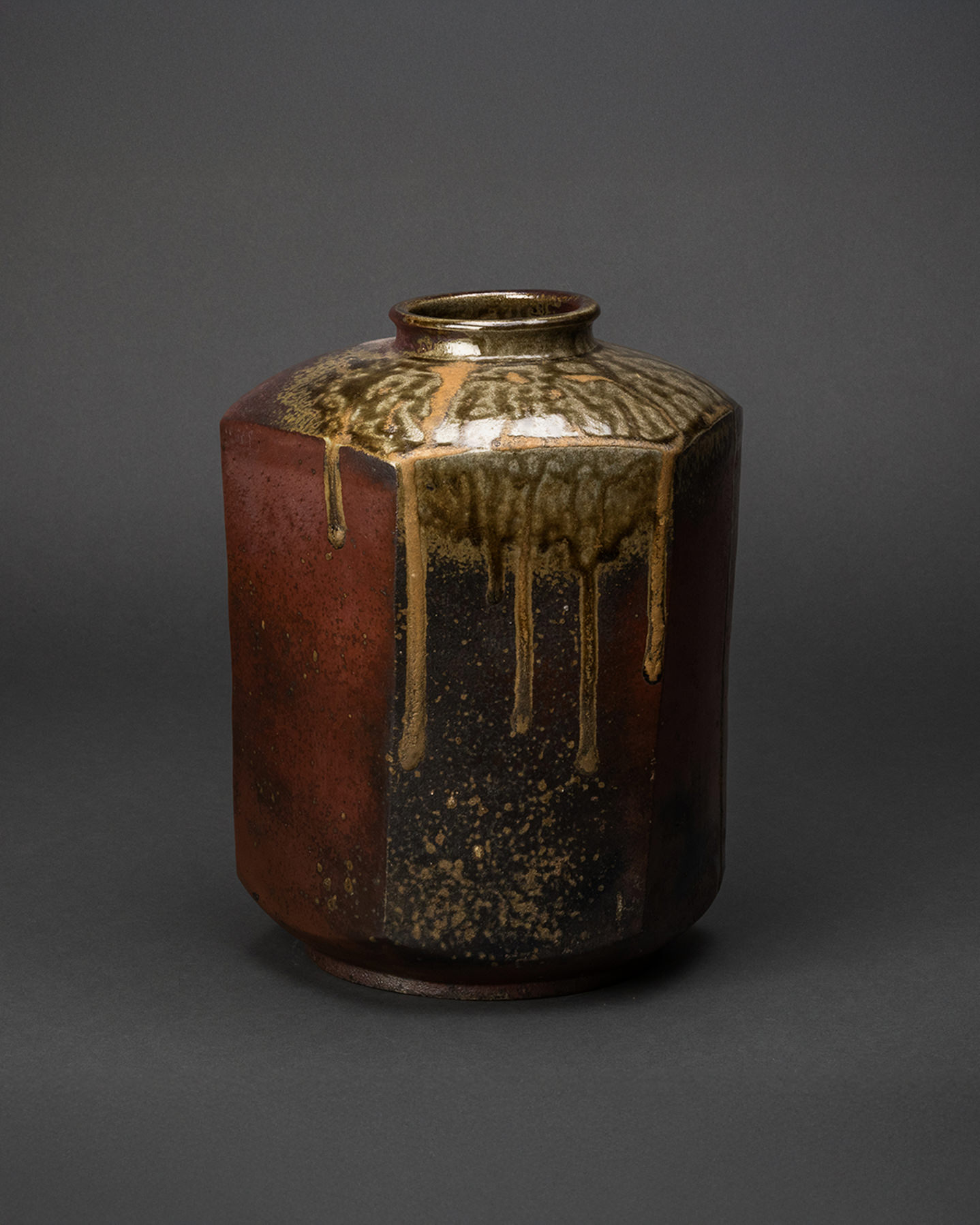
photo:AOTANI Takeru
Interview
Passing on not only clay and flame, but even the air of the village.
The work Takumi Ogami of OKUMA-GAMA has continued in order to convey the climate and spirit of Tamba through all five senses
Creating pottery rooted in ease of use that blends naturally into everyday life
Driving along the prefectural road that serves as the main street, you will see a long climbing kiln stretching toward the river. It is OKUMA-GAMA.
Takumi Ogami (hereafter, Takumi) inherits a potter that has continued for generations—“so many that we no longer know how many”—dating back to the days when families balanced farming and pottery. The forms he creates have the calm presence of old Tamba ware, with a rich clay texture you can clearly feel. Subtle variations in glaze create expressive surfaces, while traces of careful handwork are quietly embedded in each piece.
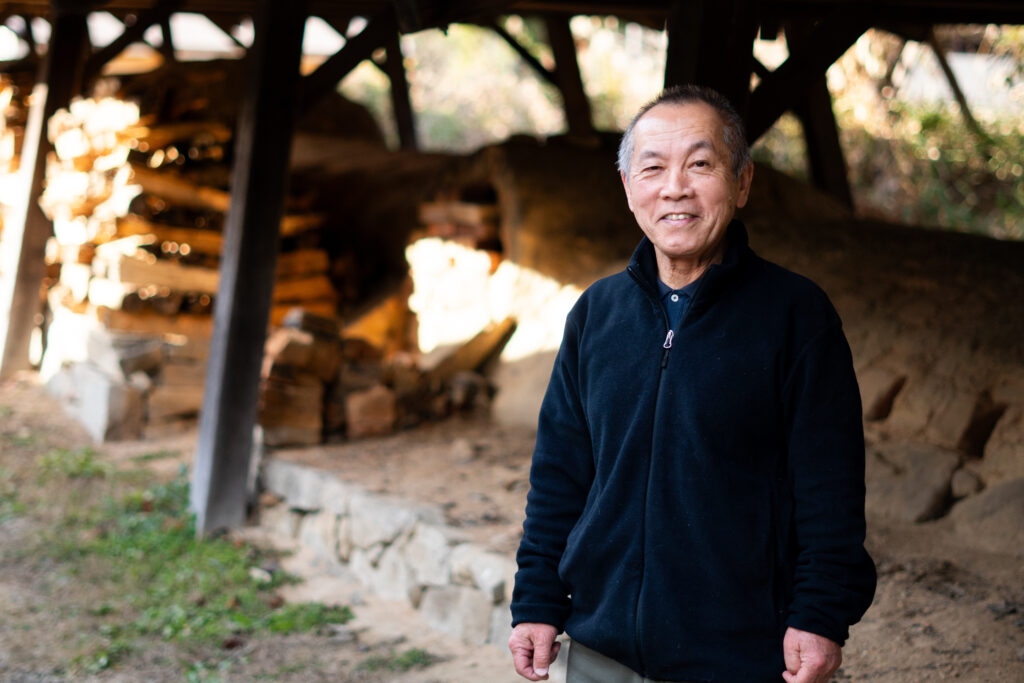
Takumi’s philosophy of pottery making is simple: ease of use that naturally blends into everyday life. This perspective is also nurtured through his own nightly ritual of enjoying a drink.
“I feel that if someone who doesn’t drink alcohol makes drinking forms, something doesn’t quite work. Because I can truly enjoy a good drink myself, I can share that enjoyment with others. For example, a wood-fired beer cup produces finer, longer-lasting foam than glass. The tiny air pockets in the clay create just the right head when you pour a beer. In summer, if you chill the form itself in the freezer, it tastes even better.”
This attention to usability extends beyond Japanese customers. Seeing that visitors from overseas often prefer large mugs that feel comfortable in their hands, Takumi has flexibly expanded his lineup.
“Even if a size feels too big for Japanese customers, people from abroad are happy to buy it. Everyone has a different lifestyle depending on where they’re from. I want to make pieces that fit many kinds of lives.”
At the same time, he continues to produce works that incorporate traditional motifs, such as sake flasks and cups decorated with shrimp designs created using the icchin slip-trailing technique passed down since the Edo period. Respecting history while avoiding excessive ornamentation, this steady approach may well be the true essence of Takumi as a certified traditional craftsman.
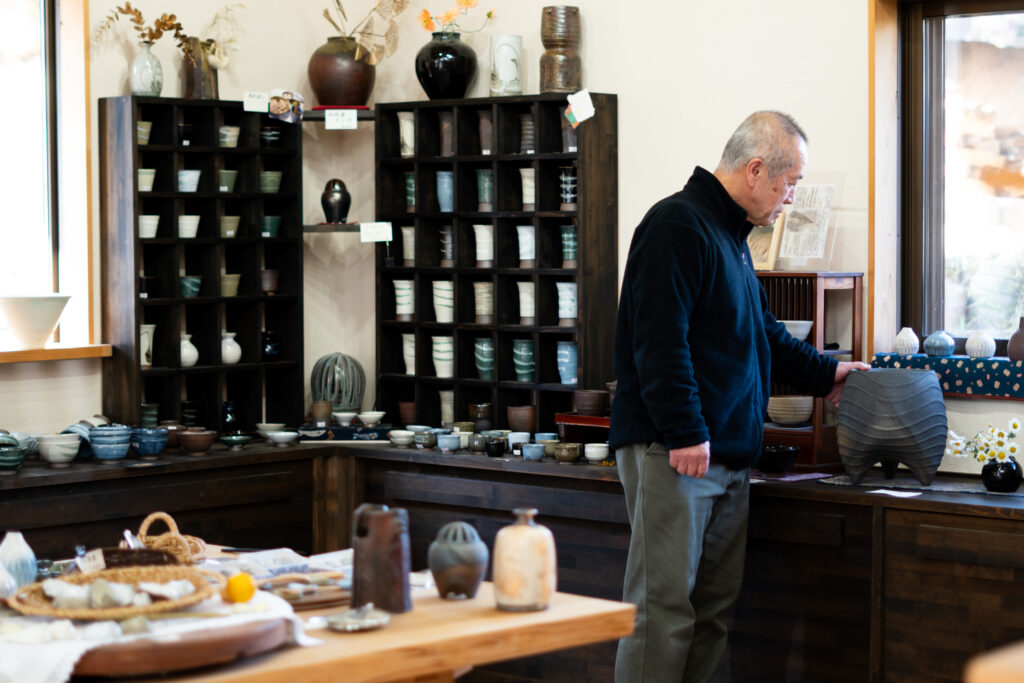
The origins of the pottery festival he helped launch in his twenties
“When I was a kid, I played in the mountains with friends and went fishing. I sometimes stopped by the workshop after school and touched the clay, but that’s so long ago I barely remember it (laughs).”
Takumi first truly felt the fascination of pottery while helping with the family business during high school. At the time, many craftsmen came and went at OKUMA-GAMA, and production of mass-produced items such as bowls using plaster molds was thriving.
“Back then, it wasn’t about highly individual artistic pieces like today. It was an era of making practical daily wares accurately and in large quantities. I think I found it interesting to watch the movements of the hands and see objects gradually take shape.”
After graduating from university, he trained in Kyoto and returned home in 1977. From then on, Takumi’s activities went beyond those of a single potter. At age twenty-six, together with seven colleagues, he planned and organized a precursor event to what would later become the Tamba Ware Pottery Festival, now a signature event of the region.
“I wanted people to know directly what kind of place Tamba ware comes from and how it is made within this landscape. At the very first event, about 10,000 people came.”
The passion he poured into revitalizing the production area became the foundation for the vibrancy of Tamba ware today.
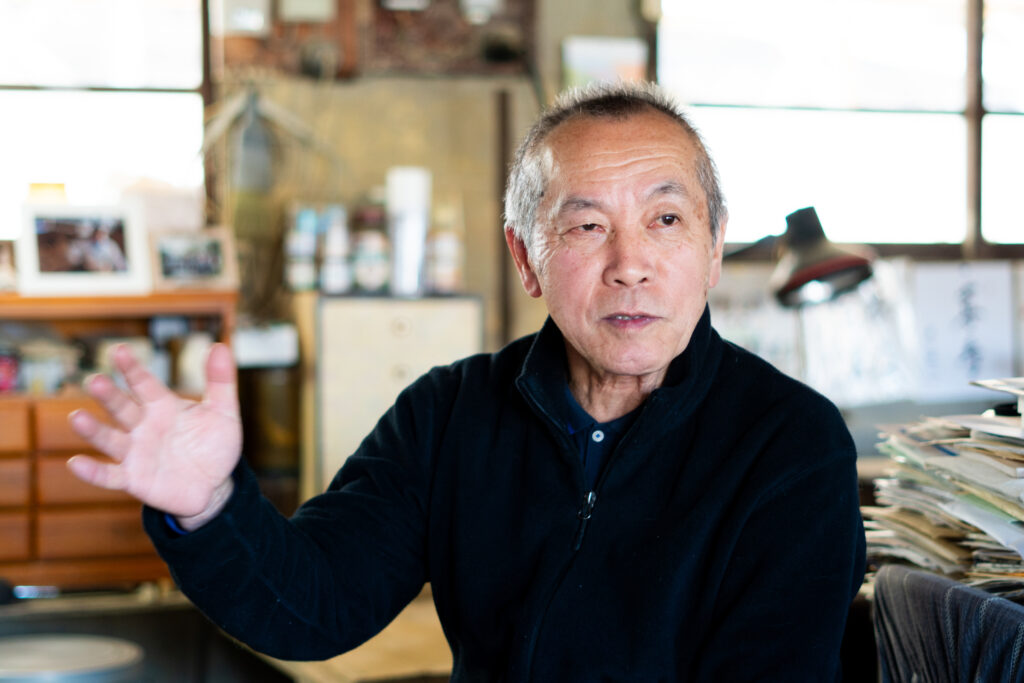
Learning from international visitors about the allure of flame and a five-senses approach to forms
OKUMA-GAMA has long welcomed many visitors from overseas who love pottery, including students from the United States and enthusiasts from Brazil. Some even trained there for half a year, taking Japanese kick wheels back to their home countries to begin making pottery themselves.
“They were especially drawn to the traditional method of firing with firewood in climbing kilns. What is ordinary for us—the culture of fire and this agricultural way of making things—appears fresh and beautiful to them. Seeing their delighted expressions makes me realize it all over again.”
Takumi adds that enjoying forms is also a way of experiencing Japanese culture itself. He especially hopes people will rediscover kaiseki cuisine.
“Kaiseki is a wonderful food culture where you can experience all aspects of Japan’s Traditional Form Culture at once—ceramics, porcelain, glass, and lacquerware. Chefs carefully consider how each dish pairs with the form. Rather than simply eating, I hope people will enjoy the textures and combinations of forms with all five senses.”
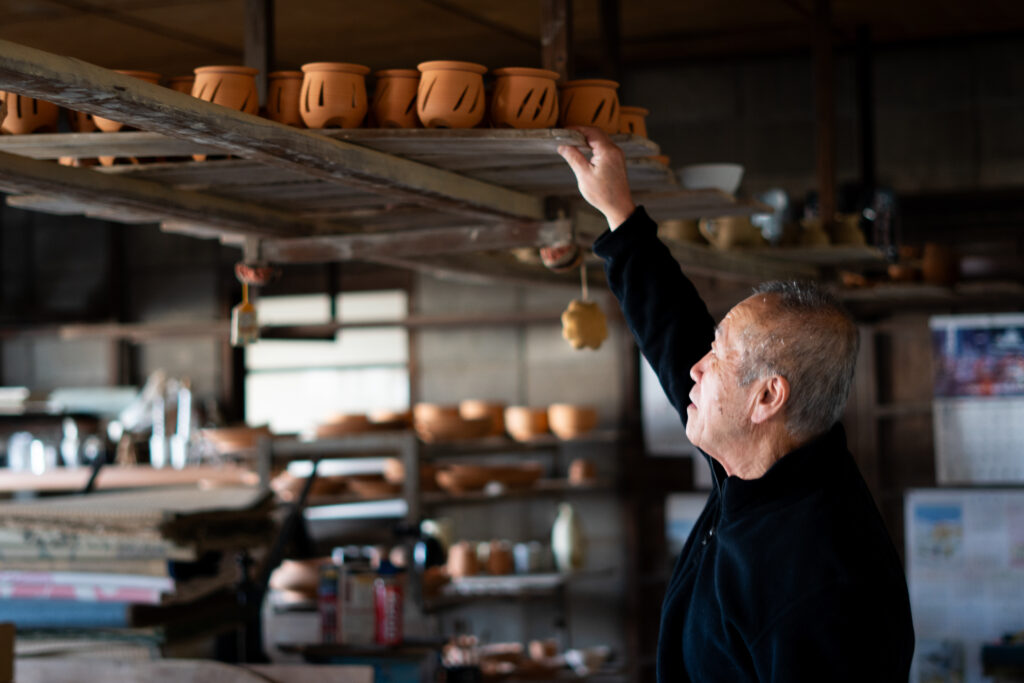
Finally, he offers a message to those visiting Tachikui.
“The festival is lively and fun, of course, but if you can, I recommend visiting during quieter times. Take a leisurely walk around the potters, enjoy the scenery, and find a piece that feels uniquely yours.”
The forms Takumi creates, shaped by his thoughts for the diverse lives of those who use them, will continue to carry the memory of Tamba’s clay and flame into the hands of people for years to come.
Interview, Text, and Photography:NOUCHI Nana
Overview
of
OKUMA-GAMA
Address
1 Onaka, Kamitachikui, Konda-cho, Tambasasayama, Hyogo, Japan
TEL
FAX
Website