
TOC
TANKYO-GAMA
profile
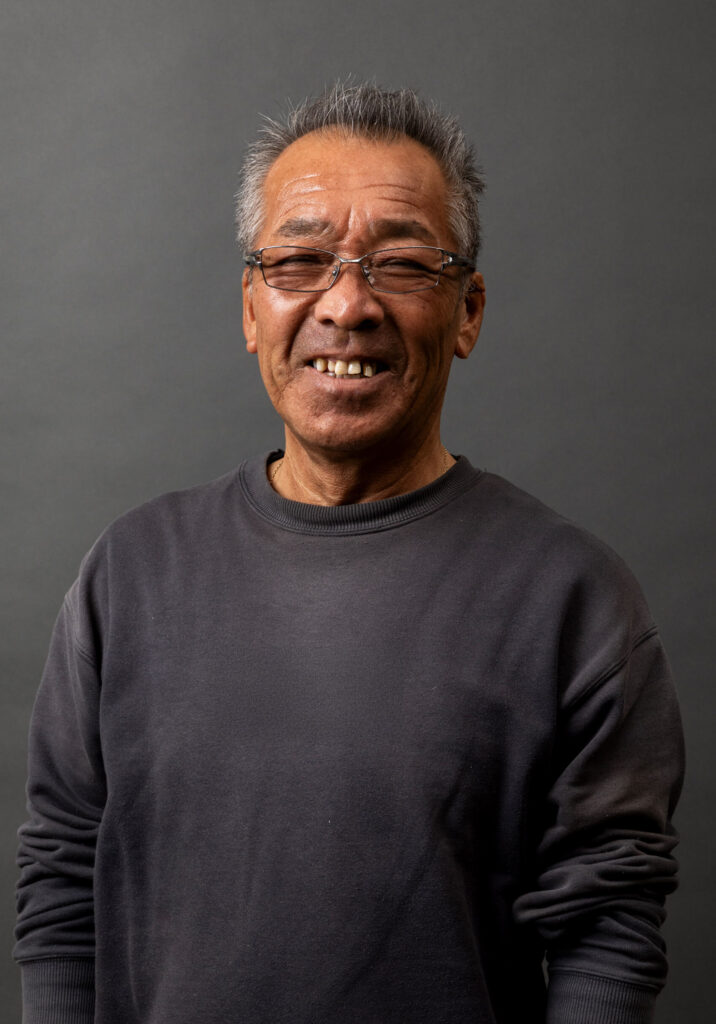
Akiyoshi Shimizu
profile
清水昌義(しみずあきよし)
Established over 60 years ago / 2nd generation
Year of Birth:1955
Year Began Pottery:1974
Education / Training Background
Graduated from Sanda Gakuen High School
Studied under Noboru Oue (1974–1976)
Major Awards
1977 – Selected and Awarded, Hyogo Prefectural Exhibition
1983 – Member, Hyogo Crafts Artists Association
2015 – Commendation from the Director-General of the Kinki Bureau of Economy, Trade and Industry
2018 – Certified Traditional Craftsman of Tamba Tachikui Ware
2019 – Hyogo Prefecture Distinguished Skills Award
2019 – Commendation from the Minister of Economy, Trade and Industry
2015 – Order of the Sacred Treasure, Silver Rays
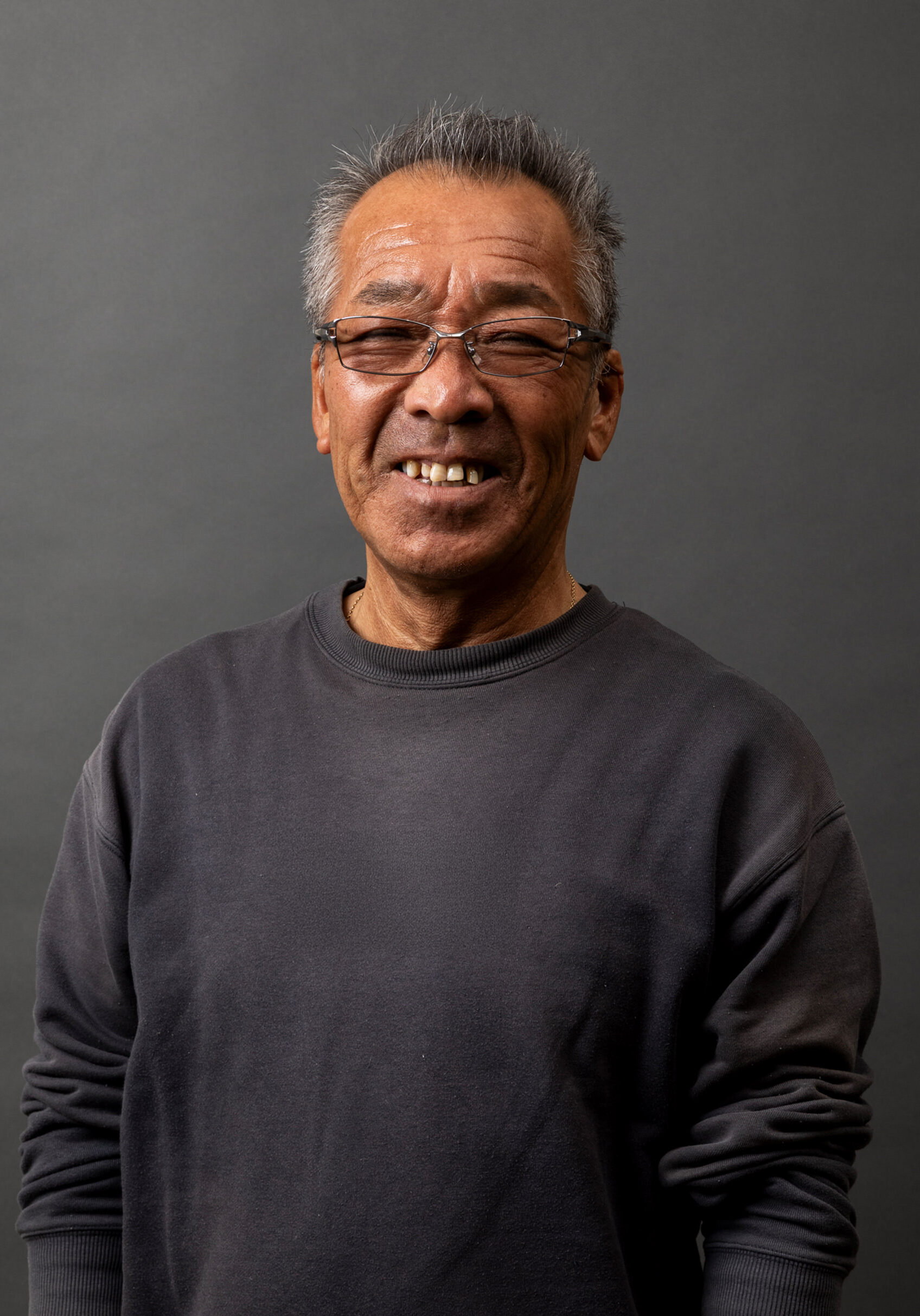
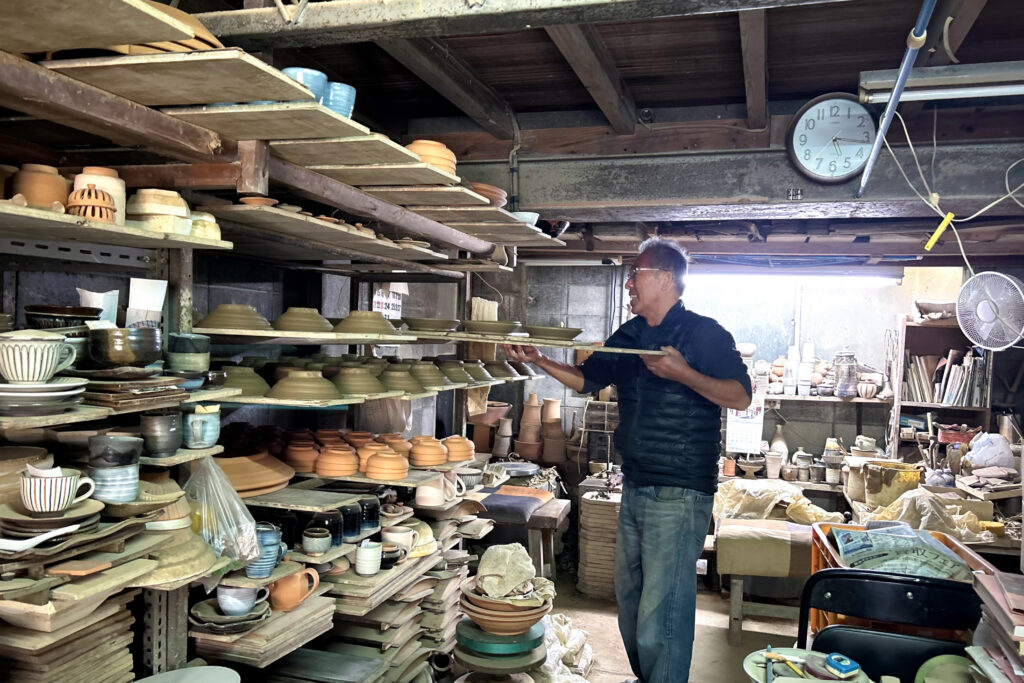
The state of the workshop
スクロールできます
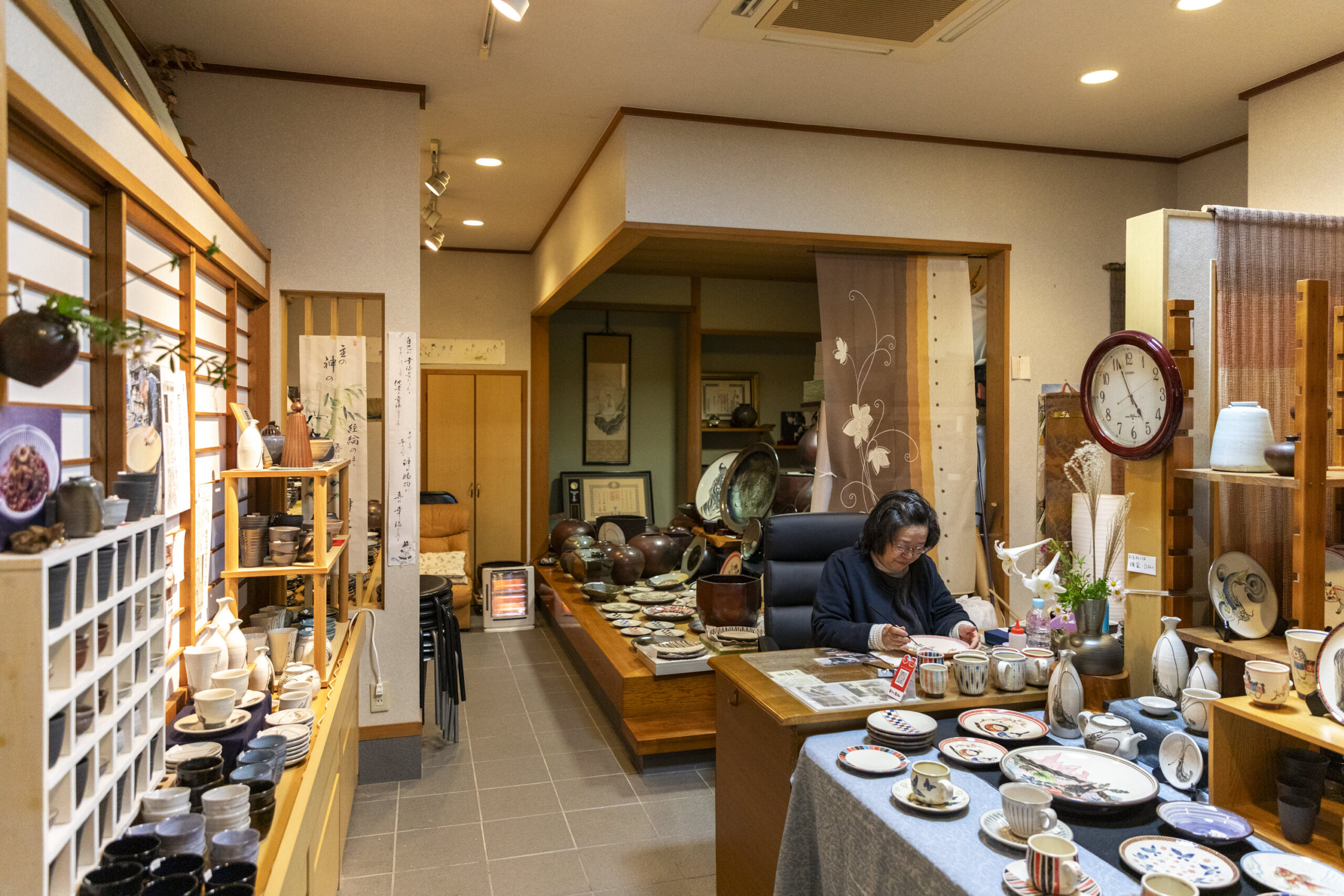
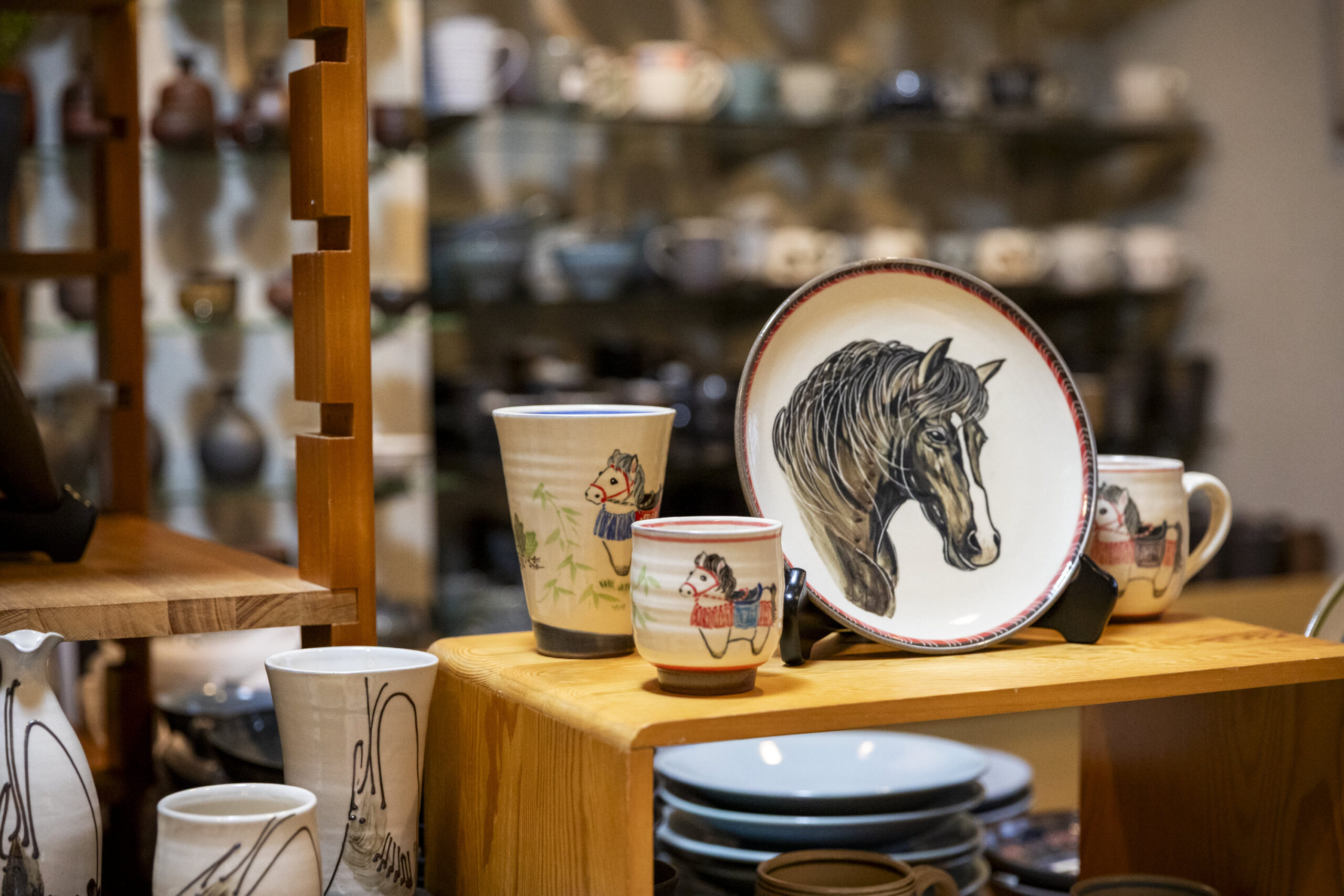
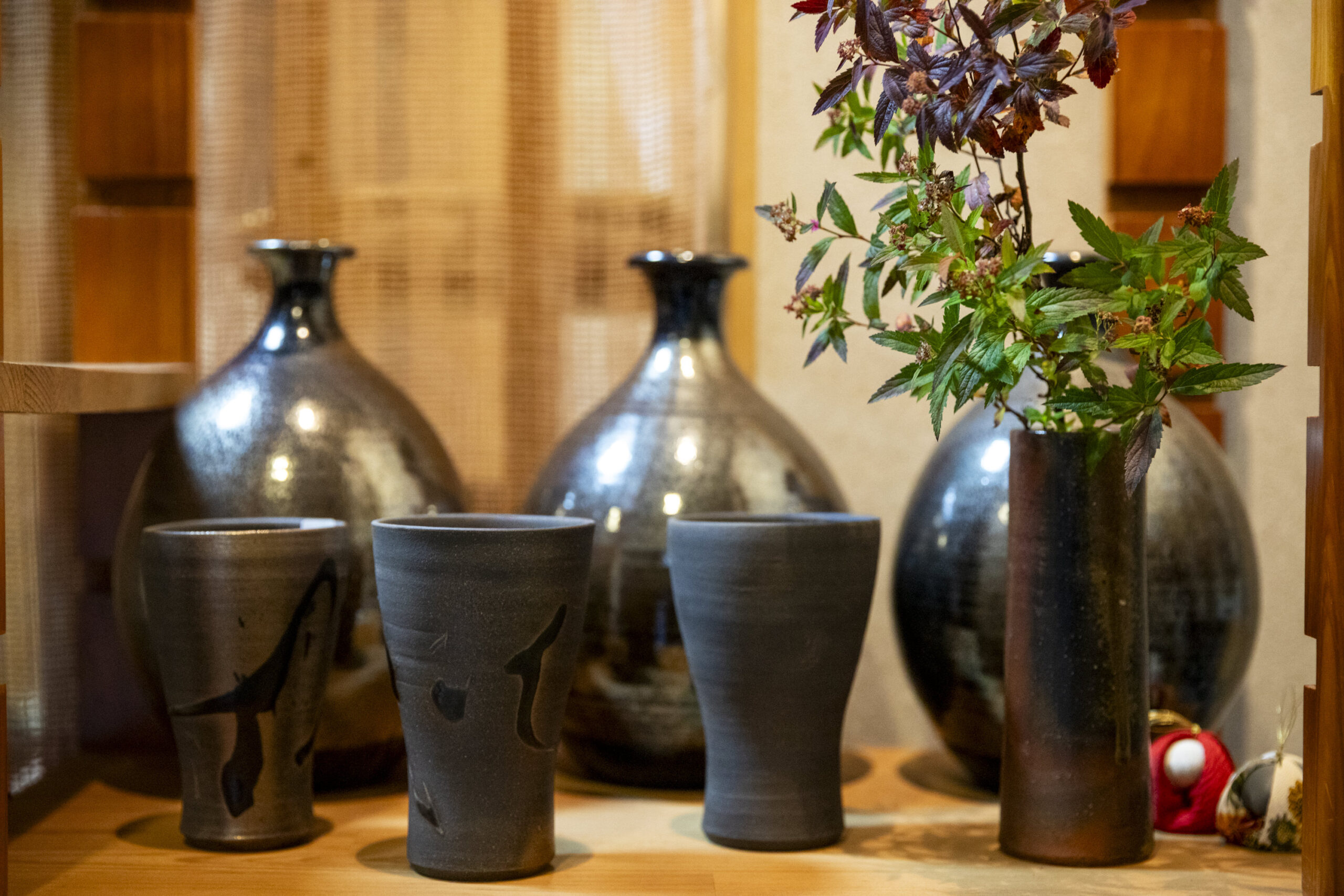
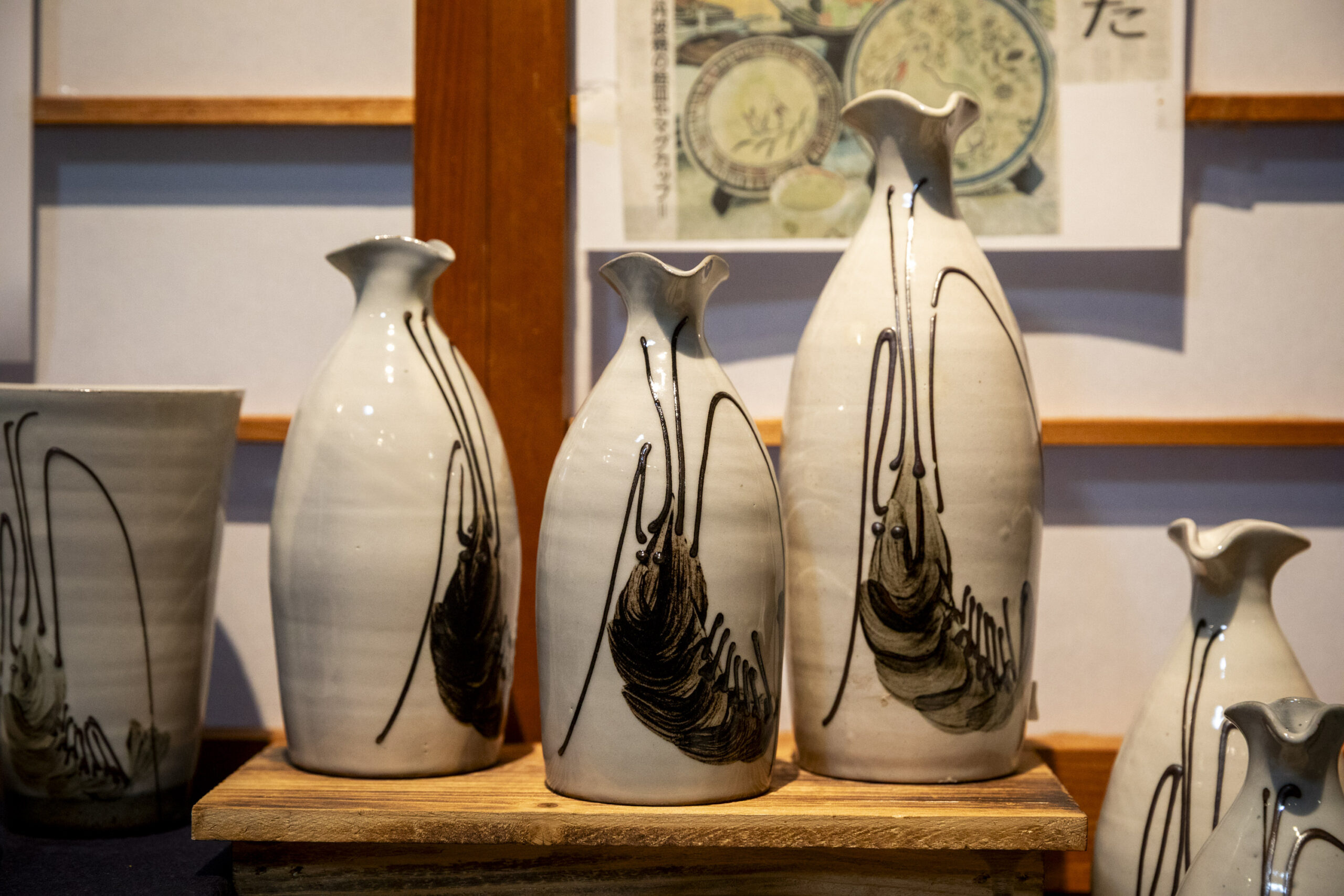


Works
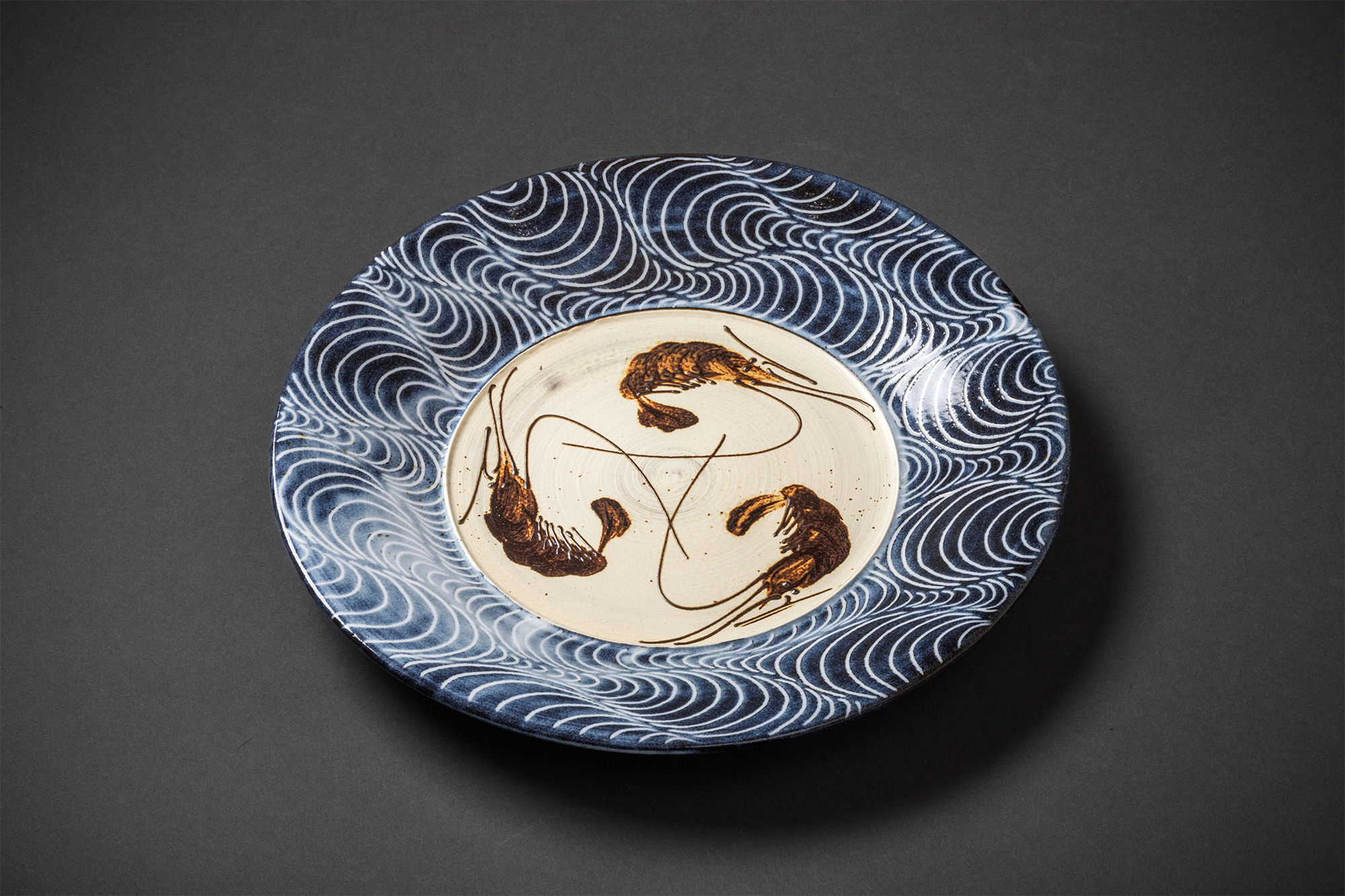
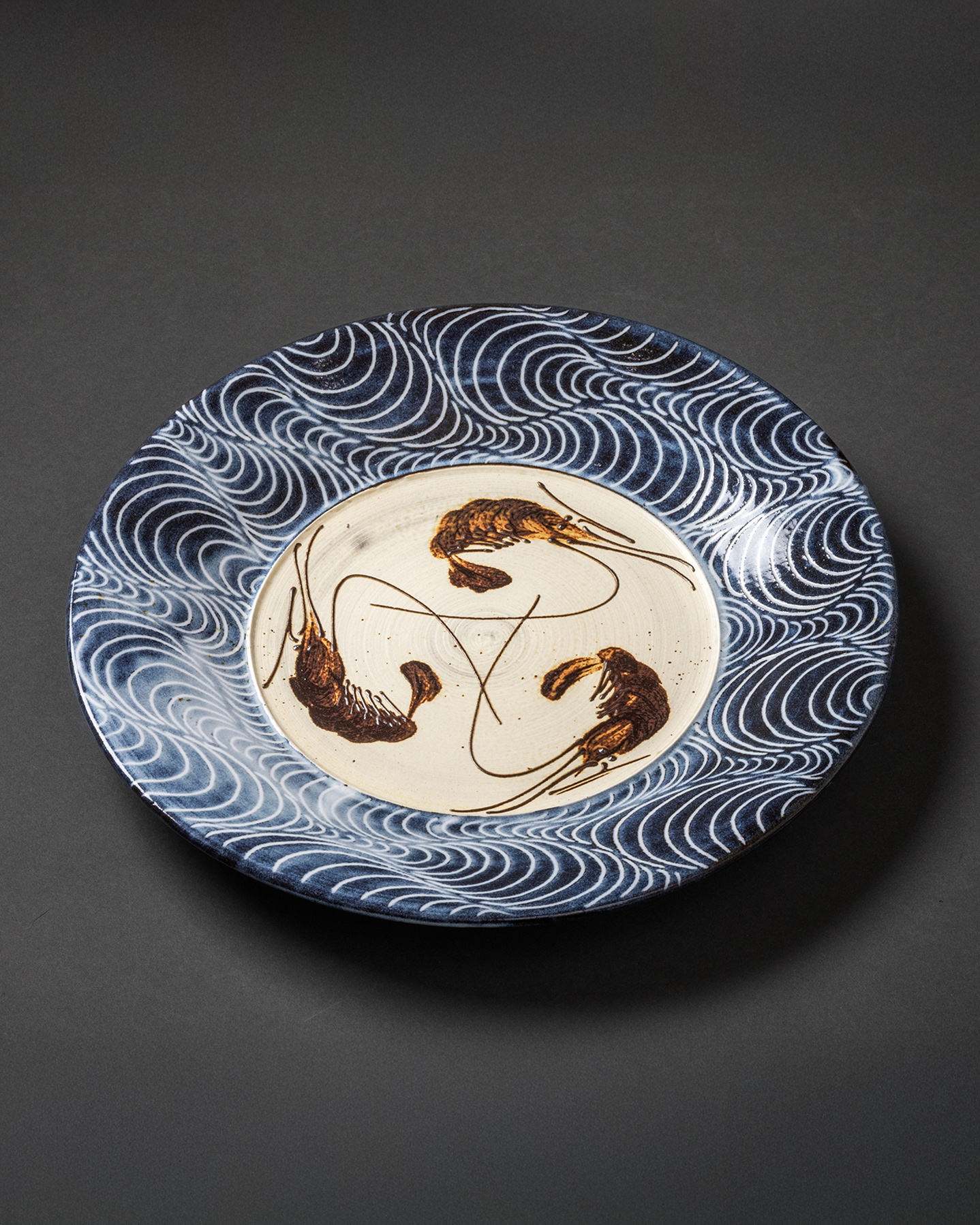
photo:AOTANI Takeru
Interview
Shrimp in the Traditional “Itchin” Technique and Soft Hand-Painted Designs — Akiyoshi Shimizu of TANKYO-GAMA Transforms His Romantic Vision of the Climbing Kiln into Everyday Tableware
The Beauty of Use Woven Through Traditional Itchin and Shinogi Techniques
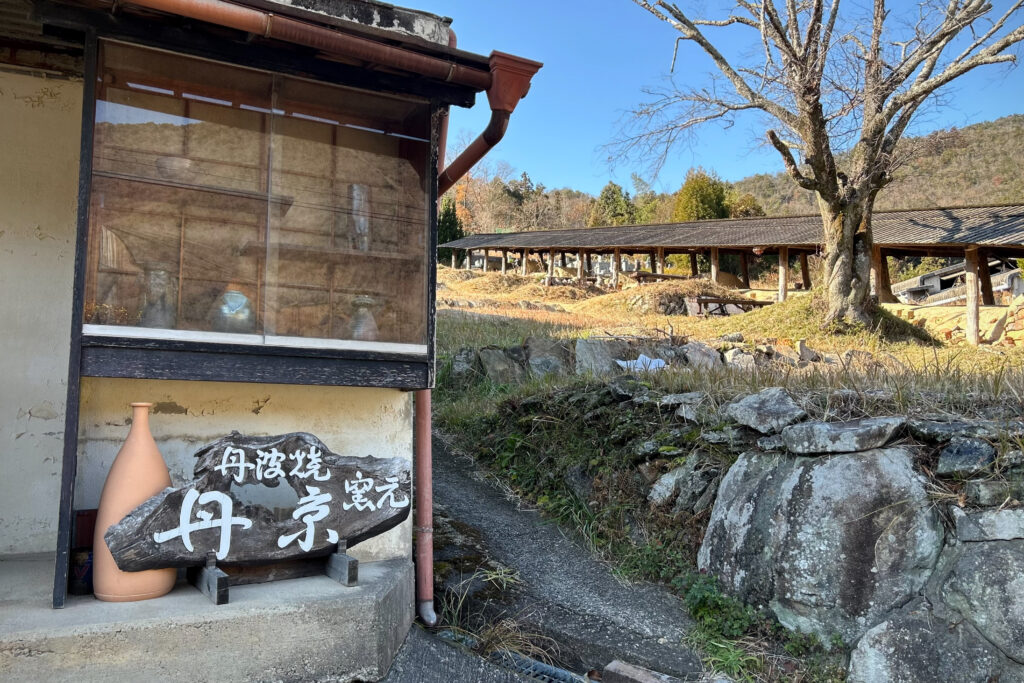
Beside the oldest existing potter built in 1895, the Tamba Ware Tachikui Noborigama, stands the small workshop of TANKYO-GAMA.
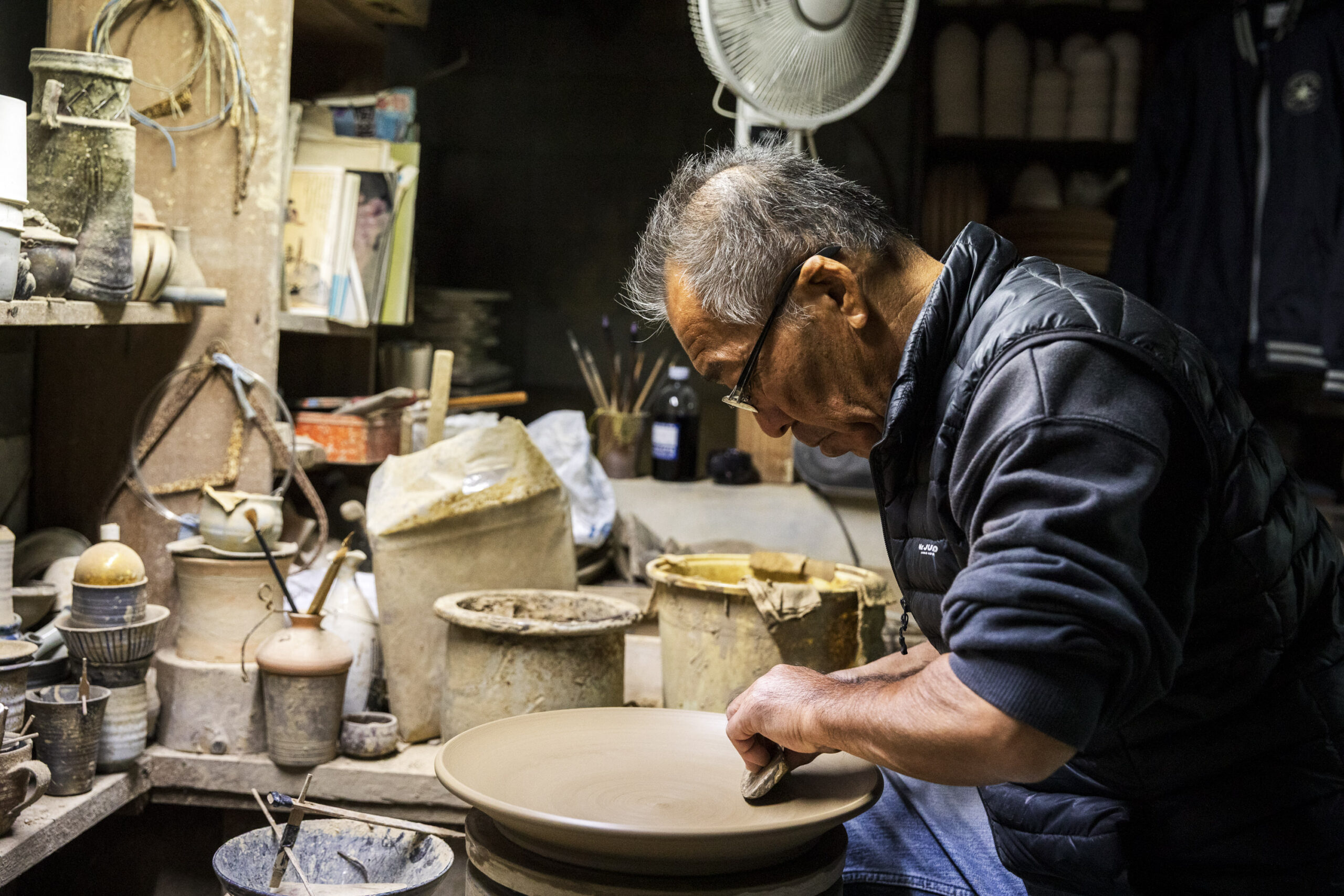
Stepping inside and opening the door, one first notices a rounded back bent intently over the wheel. It is Akiyoshi Shimizu, second generation head of TANKYO-GAMA. While incorporating traditional techniques of Tamba ware, he continues to create forms that feel light, approachable, and naturally at home on today’s dining tables.
Among his works, the shrimp motif drawn in the traditional itchin (slip-trailing) technique has become a signature of TANKYO-GAMA. Once commonly applied to large jars and sake flasks as an auspicious design, Shimizu has reimagined it for modern teacups and small plates. Extruded in fine lines of clay, the shrimp seem almost ready to leap from the surface of the form.
“My master often painted shrimp as well. Watching his back as he worked had a great influence on me.”
A motif cherished for generations continues to live on—never fading, but carried forward with refined elegance into the present day.
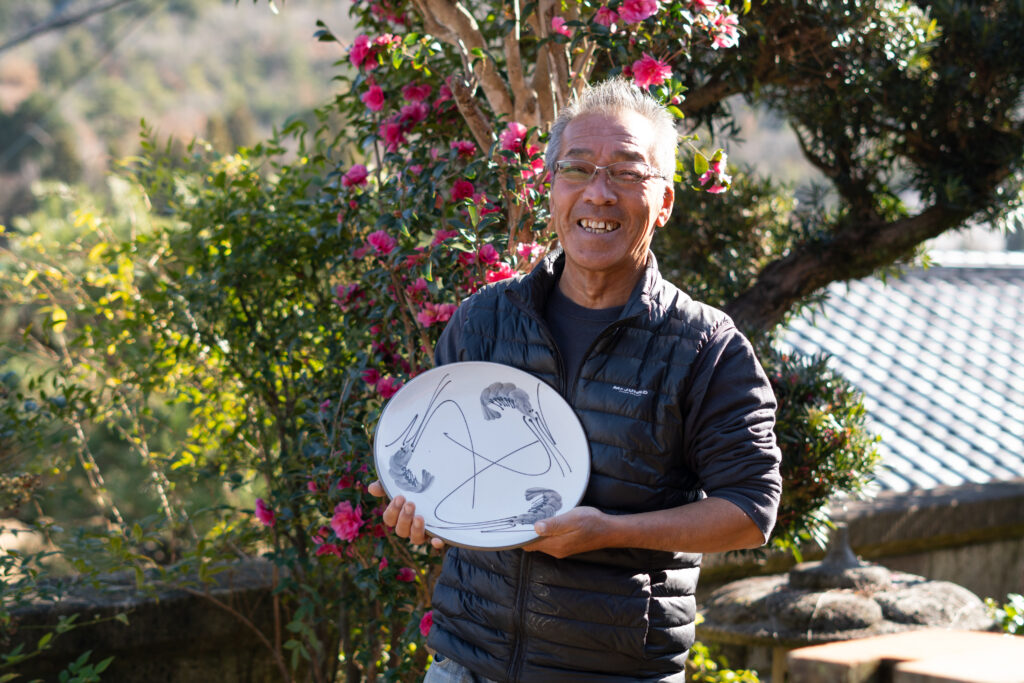
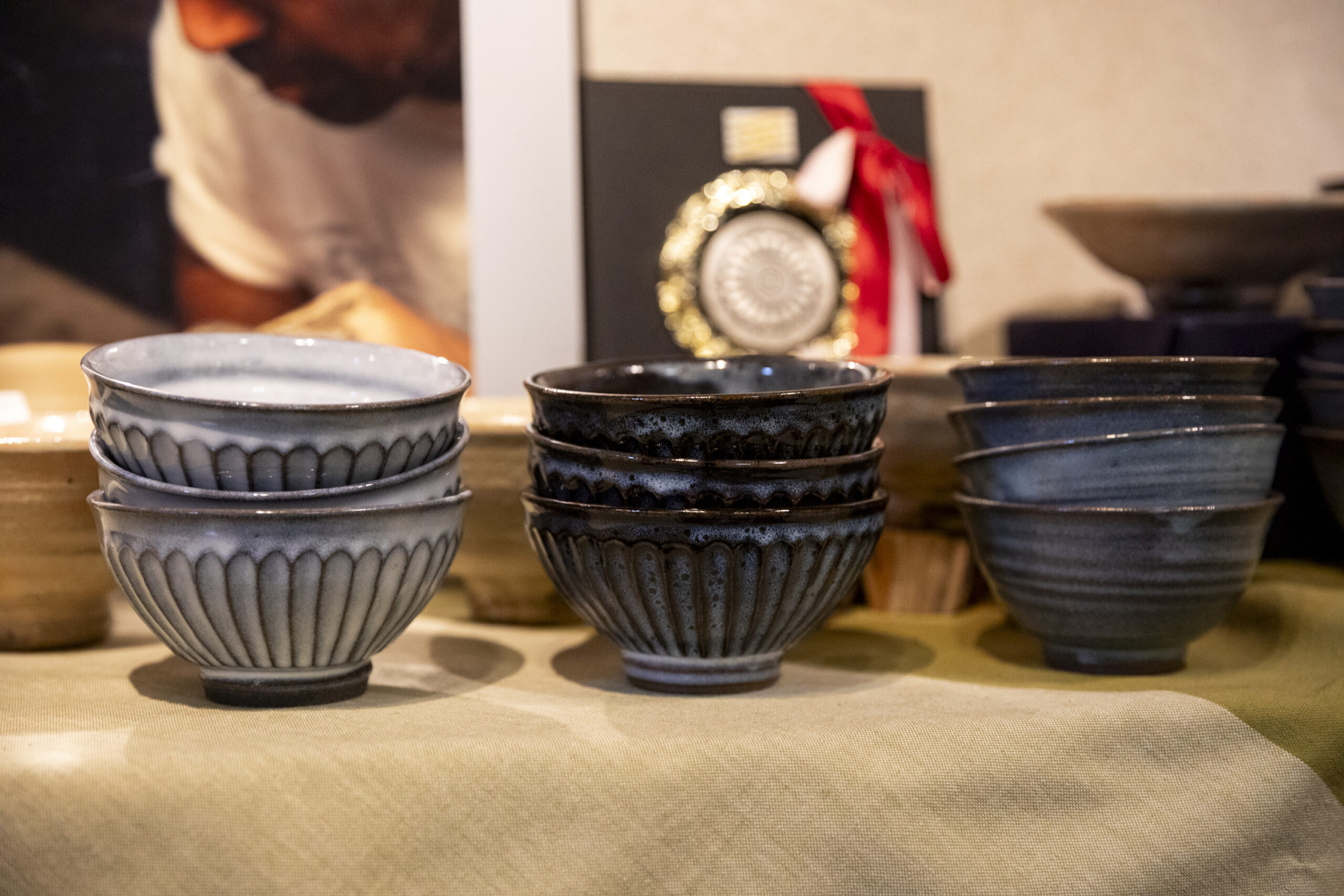
Another hallmark of TANKYO-GAMA is the shinogi technique, in which the surface of the foem is carved with a chisel. The evenly incised vertical grooves catch the light, casting soft shadows.
Yet aesthetic expression is never separated from usability.
“I’m not only a maker—I’m also a user. What matters most to me is how a piece feels in the hand. When you casually pick it up every day, it should feel natural. The fingers should rest comfortably against it. For me, that kind of quiet comfort is the true ‘beauty of use.’”
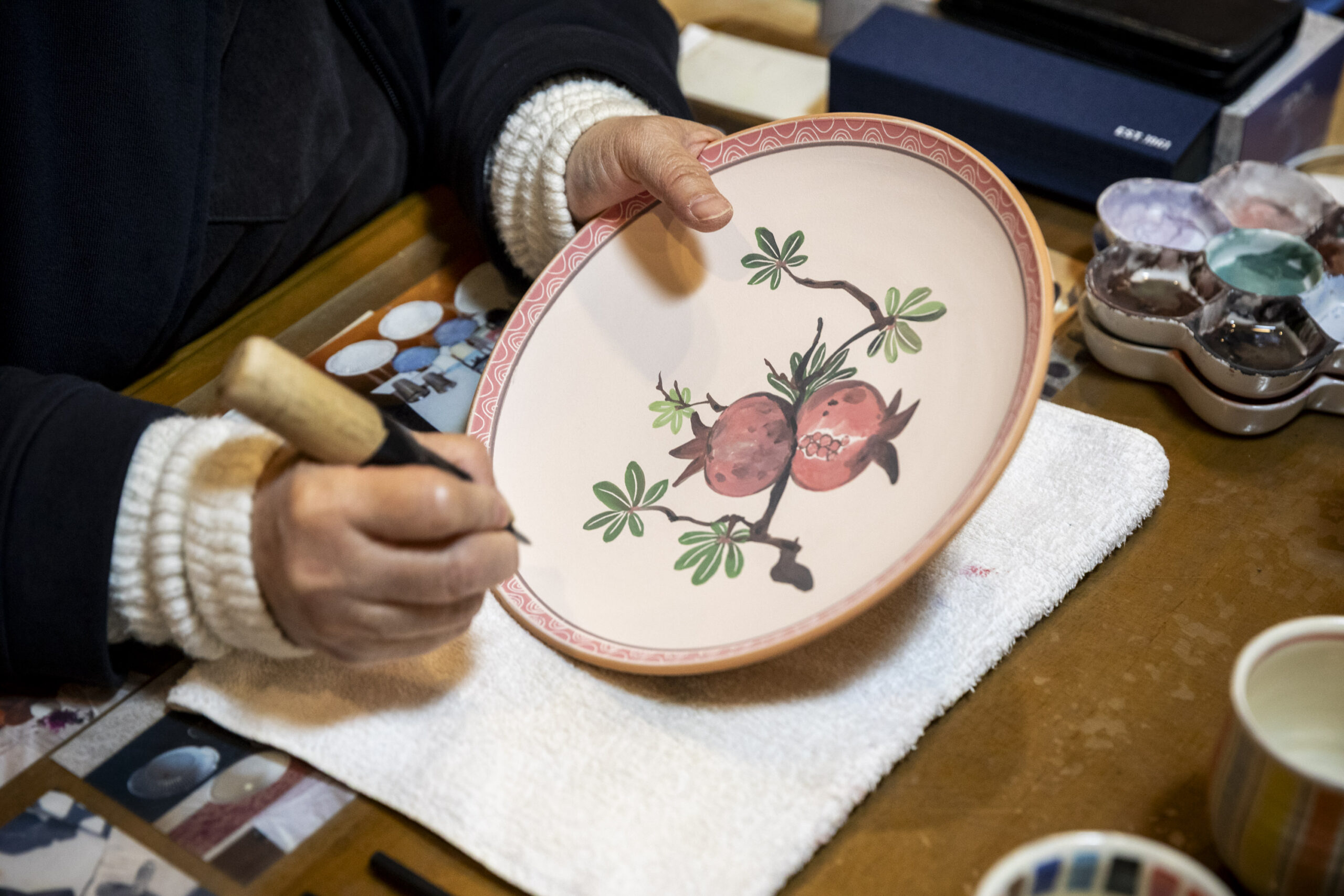
Adding gentle color to TANKYO-GAMA’s lineup are collaborative works created with his wife, Yuko. Shimizu shapes the forms, and Yuko delicately paints motifs of flowers and living creatures upon them. His strength and her softness, when these two qualities overlap, forms beloved across generations come to life.
Begun as a Subcontractor for Sake Barrels — Memories of a Mother Who Supported the Family Potter
Founded by his father, TANKYO-GAMA originally began as a subcontractor producing ceramic containers for soy sauce and sake, known as sake-daru.
A vivid memory remains etched in Shimizu’s mind: the image of his mother tirelessly supporting the family business.
“To dry the large, formed sake barrels, they were lined up on long wooden boards. My mother would hoist them onto her shoulder and carry them. I think it must have weighed over twenty kilograms in total. A woman carrying something that heavy… At the time it seemed ordinary, but now I realize how incredibly hard that work was. I feel nothing but gratitude.”
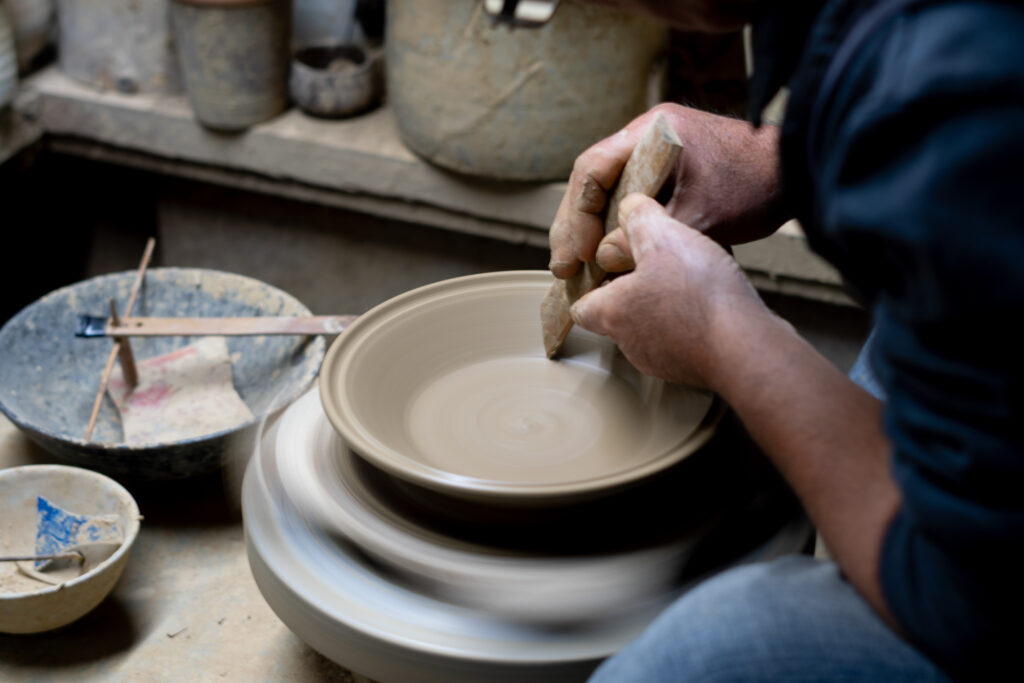
After graduating from high school, Shimizu trained for three years at a potter in Tachikui. There, he encountered not only the techniques of Tamba ware, but its deeper spirit.
“My master taught me not just technique, but what it means to fire pottery in this region. That I stand on the accumulated history of 850 years. The pride and responsibility that come with that. Through my training, I gradually came to understand how fortunate I was to be able to do this work.”
He completed his apprenticeship around the age of twenty one, during a time when the Mingei folk craft movement was strongly influencing Tachikui. While inheriting the jars and flower forms his father had long produced, Shimizu also began exploring everyday tableware guided by his own sensibility. Over time, he established a style uniquely his own.
A Landscape Once Filled with the Rising Smoke of Climbing Kilns
“Today, I mainly fire with a gas kiln. Because of physical demands, I’ve stepped away from the climbing kiln… But the romance inside it is irreplaceable.”
In a climbing kiln, wood is fed continuously, and the flames are tended day and night for three days. Clay and fire collide, and shizen-yu—natural ash glaze that can never be created by human hands alone—forms across the surface of the forms.
“After stopping the kiln, I’d be so curious about what happened inside,” he laughs. “I once tried to peek while it was still hot and was scolded—‘It’ll crack, absolutely don’t!’”
In the past, smoke from burning pine logs rose from kilns all across Tachikui, forming a landscape unique to this pottery village. Such scenes are now less common. Still, Shimizu treasures what he calls the very “atmosphere of the production area.”
“Tamba ware isn’t just the physical object of a form. It’s the sight of smoke drifting through the air, the sound of kneading clay, the voices of craftspeople talking. All of that represents this place. When you visit Tachikui, I hope you’ll truly feel that atmosphere.”
After experiencing illness, he decisively gave up both his beloved alcohol and cigarettes. He never misses his morning walks and now approaches the wheel while listening carefully to his own body.
“Good work is only possible when you’re healthy.”
With a gentle smile, Shimizu says this—and from his hands emerge forms that carry both a firm resolve to carry tradition forward and a tender regard for the daily lives of those who use them.
Overview
of
TANKYO-GAMA
Address
9 Kamitachikui, Konda-cho, Tamba-Sasayama, Hyogo, Japan
TEL
FAX
Website