
Kilns and Firing
Do not resist the will of nature.
Encounter beauty beyond calculation
Anagama Kilns and Climbing Kilns
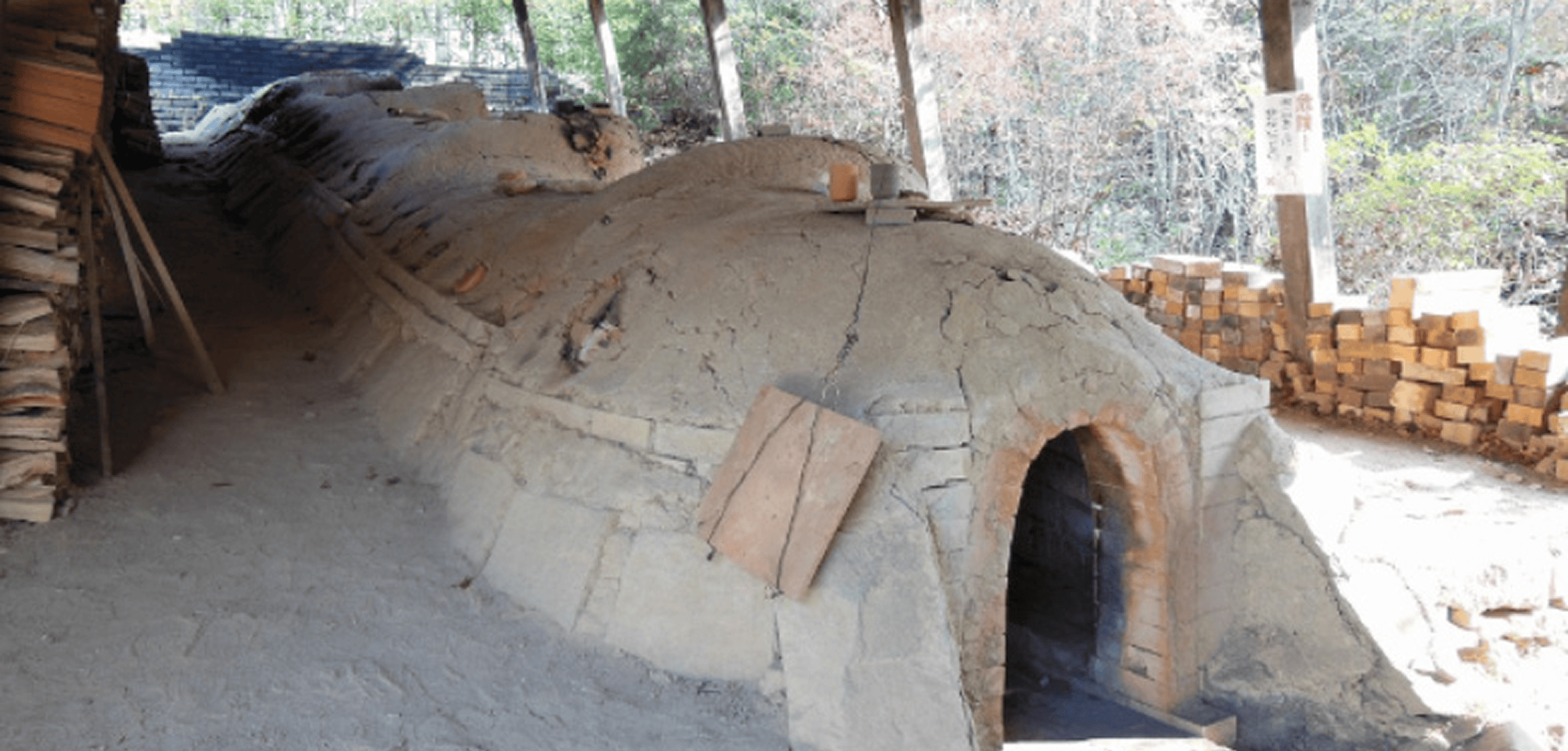
The climbing kiln that remains in Kamitachikui in the Tachikui area is known as the oldest existing kiln in Japan. Built in 1895, it measures 47 meters in length. It has been designated an Important Folk Cultural Property of Hyogo Prefecture and is a valuable cultural heritage that conveys the history and techniques of Tamba Ware to the present day. Even now, its majestic presence continues to captivate visitors to the Tachikui area, the home of Tamba Ware.
The Anagama Period (mid 12th century–16th century)
Until climbing kilns began to be built at the foot of the mountains, Tamba Ware in the medieval period continued for approximately 400 years in the era of using “anagama” kilns—kilns created by digging trenches into mountainsides and adding a roof.
At that time, this area (now the Kondacho district of Tambasasayama City) was a manor of Sumiyoshi Shrine in Settsu Province called Onohara-shō. From this, the pottery produced here came to be known as Onohara-yaki, and anagama kilns were built on the mountain slopes around Sanbon-toge for firing.
To date, five ancient kiln sites have been discovered: Sanbon-toge, Tokorari, Genbeiyama, Tasoura, and Inariyama.
Structure and Firing of Anagama Kilns
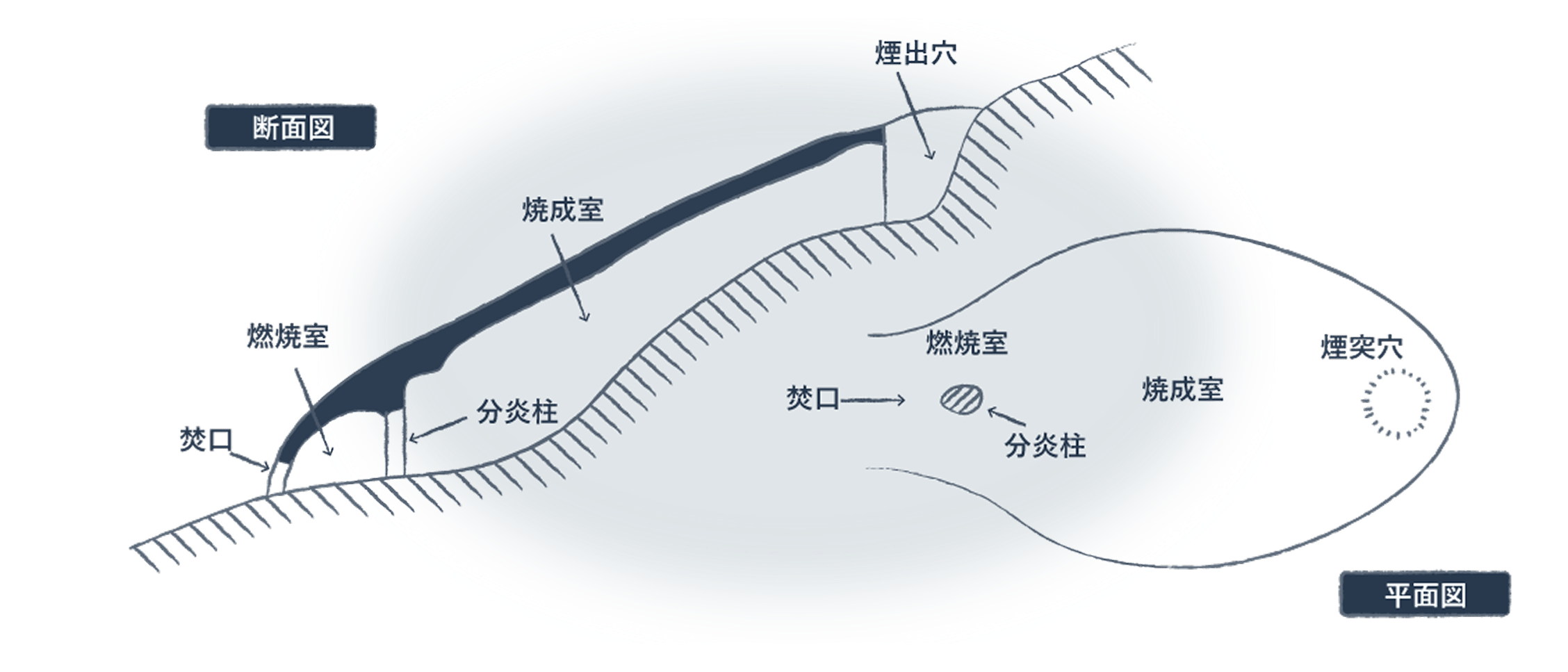
An anagama kiln has an extremely simple structure: a trench is dug into a sloping mountainside, reinforced with stone and clay, covered with a roof, and then sealed with earth. Firing in an anagama kiln required a considerable number of days (around two weeks), and because it had only a single firing chamber, the amount that could be fired at one time was limited.
The Anagama Period (mid 12th century–16th century)
Until climbing kilns began to be built at the foot of the mountains, Tamba Ware in the medieval period continued for approximately 400 years in the era of using “anagama” kilns—kilns created by digging trenches into mountainsides and adding a roof.
At that time, this area (now the Kondacho district of Tambasasayama City) was a manor of Sumiyoshi Shrine in Settsu Province called Onohara-shō. From this, the pottery produced here came to be known as Onohara-yaki, and anagama kilns were built on the mountain slopes around Sanbon-toge for firing.
To date, five ancient kiln sites have been discovered: Sanbon-toge, Tokorari, Genbeiyama, Tasoura, and Inariyama.
Structure and Firing of Anagama Kilns
An anagama kiln has an extremely simple structure: a trench is dug into a sloping mountainside, reinforced with stone and clay, covered with a roof, and then sealed with earth. Firing in an anagama kiln required a considerable number of days (around two weeks), and because it had only a single firing chamber, the amount that could be fired at one time was limited.
Introduction of Climbing Kilns
In the early modern period, around 1611, the introduction of a Korean-style semi-underground climbing kiln marked the end of the approximately 400-year anagama period and opened a new era of climbing kilns.
This era began with climbing kilns built at the foot of the mountain near kiln workshops and was therefore also known as the “Kamaya period” or “Mountain-foot period.” Later, in 1752, climbing kilns were constructed in Shimo-Tachikui and then in Kami-Tachikui, leading into what became known as the “Village kiln period.”
At first, climbing kilns were built at the foot of the mountains near kiln workshops. This period is known as the “Kamaya period” or “Mountain-foot period.” Later, in 1752, climbing kilns were also built in Shimo-Tachikui and then in Kami-Tachikui, ushering in the “Village kiln period.”
Structure of Climbing Kilns
The construction of a climbing kiln begins with laying stones called “sodate-ishi” on a sloped mountainside as a foundation. Split bamboo woven together with rope is used as support, and semicircular blocks called “makura” are stacked from both sides. These makura are sun-dried bricks made by placing mountain clay into molds and forming cubes. Today, they are often stacked using iron plates as supports. Openings for entry and for adding fuel are also created at this stage, and finally the interior floor of the kiln, called the “gojin,” is thickly coated and compacted to complete the kiln.
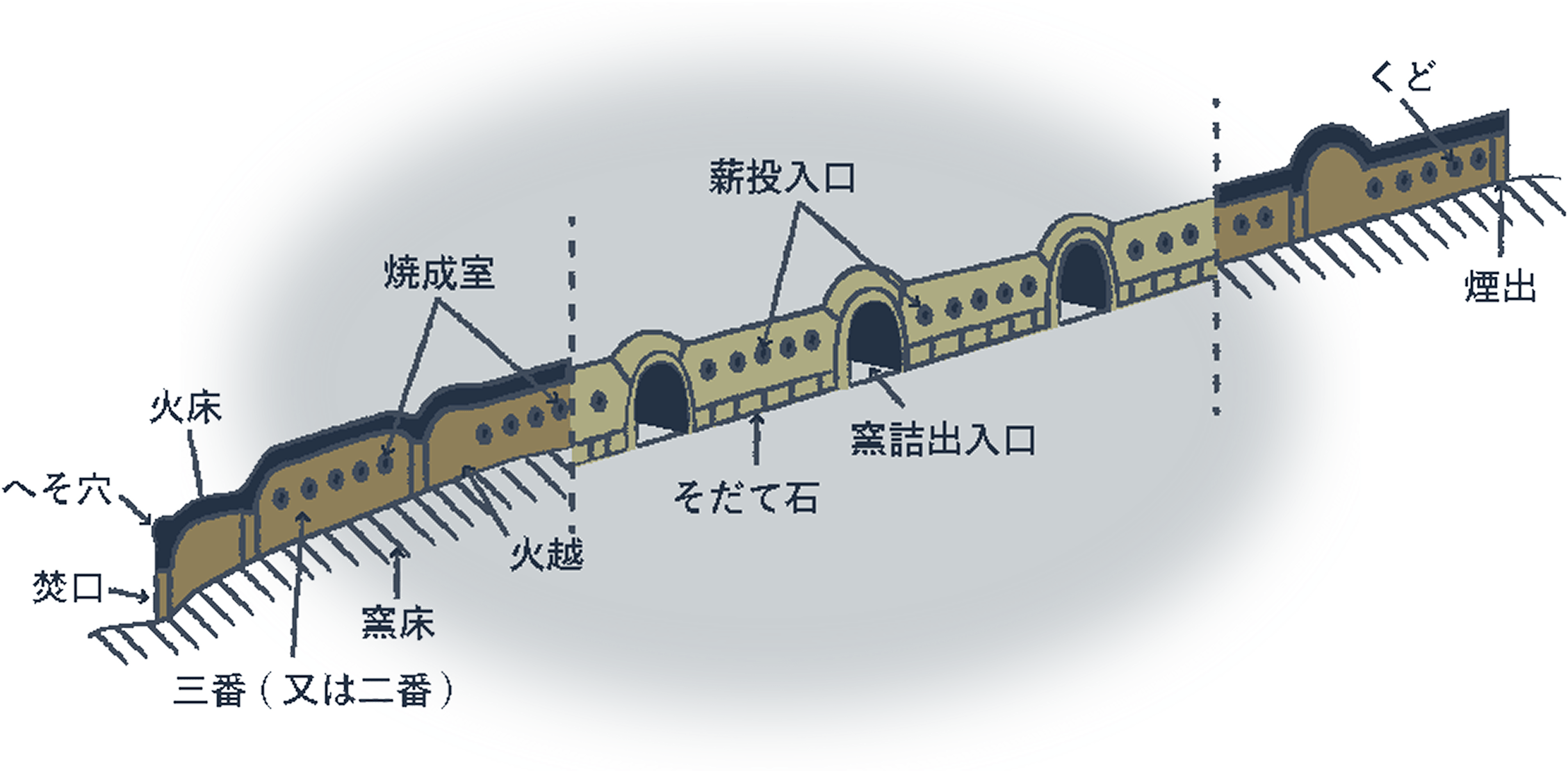
The kiln consists of a firebox followed by a series of firing chambers. Except for the first chamber connected to the firebox and the frontmost chamber called the “kudo,” the intermediate chambers are almost equal in length.
These firing chambers are called “fukuro,” each with an opening at the lower end. Between each chamber, two to four pillars are placed to support the ceiling. These are called “higaki,” “higoshi,” or “sama.”
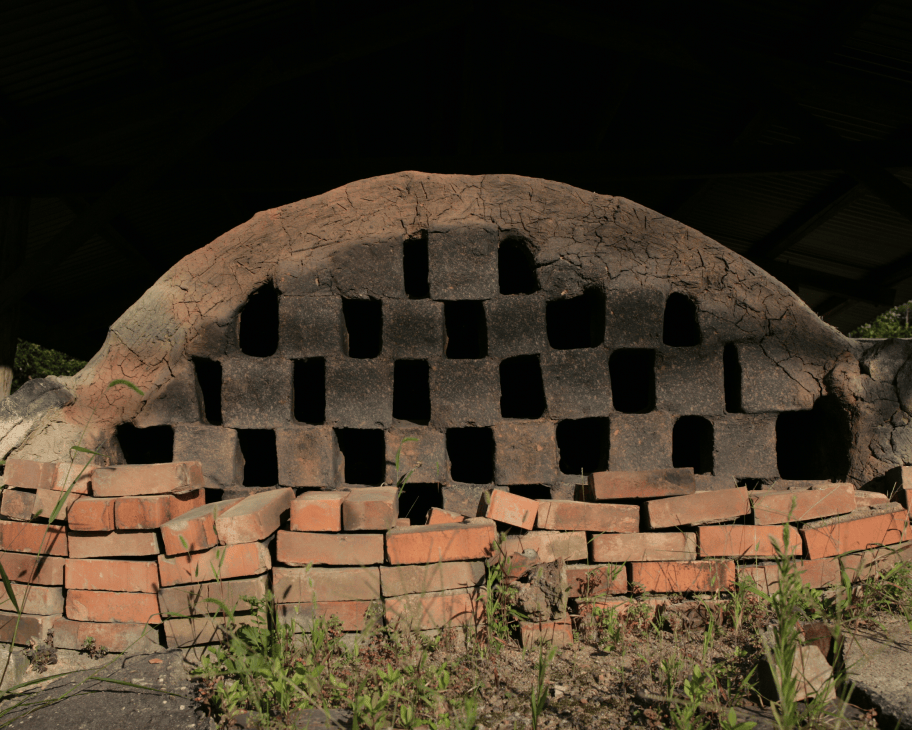
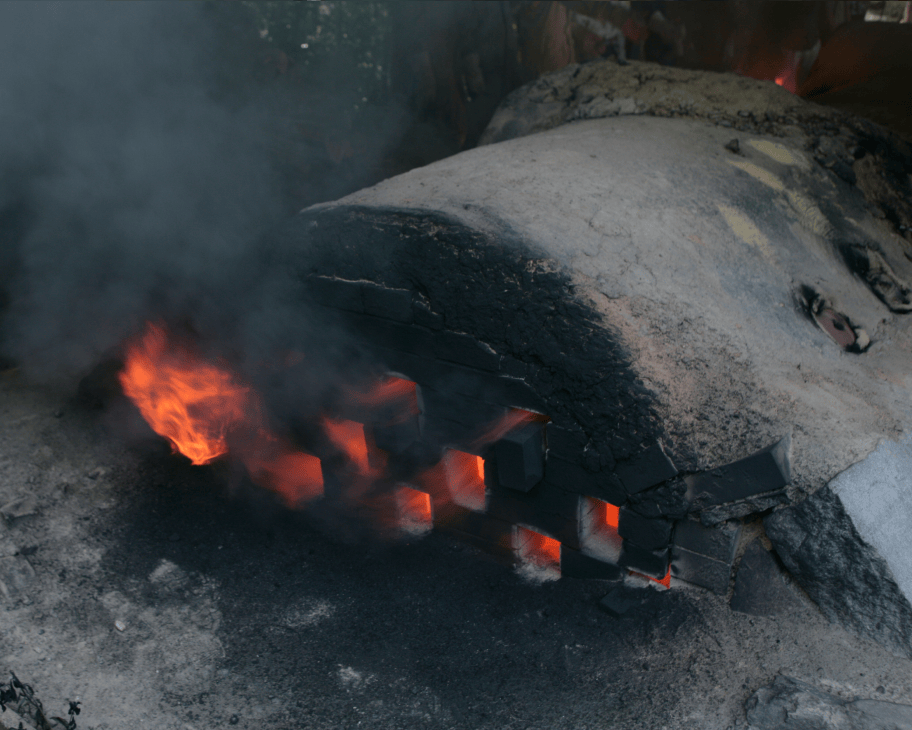
At the front end of the kiln, the kudo has a smoke vent known as the “kudosaki,” “hisaki,” or, because of its shape, the “beehive.” In recent years, however, most of these openings have had chimneys attached, and the beautiful sight of bright red flames bursting from the beehive is rarely seen.
The length of a kiln varies depending on the number of firing chambers (fukuro). The climbing kiln in Kamitachikui, designated an Important Tangible Folk Cultural Property of Hyogo Prefecture and known as the oldest existing kiln, was built in 1895. Measuring 47 meters in length and consisting of nine chambers, it is a representative climbing kiln that has retained its traditional form and continues to be used.
In the past, climbing kilns with many chambers were used as shared kilns. However, from around the 1960s, individual kilns began to spread. As pottery items became smaller, kiln sizes also became more compact, typically with two to four chambers.
Firing with Climbing Kilns
Loading the Kiln
This is the process of placing finished works into the kiln for firing. After shaping, glazing, and drying are completed, the works are transported to the kiln site and placed into the firing chambers.
In the past, when multiple kilns were used jointly, works were carried in bamboo baskets called “kamaya-kago.” When placing works into the firing chamber, they are set on a wheel stand and arranged on the kiln floor (gojin). Smaller pieces may be placed inside larger ones or inside protective containers called “saya.”
When stacking works, rice-husk ash is applied to contact points, or small clay balls coated with ash called “hama” are inserted between them. Once all works are loaded, the entrance is sealed with makura and clay.
Firing the Kiln
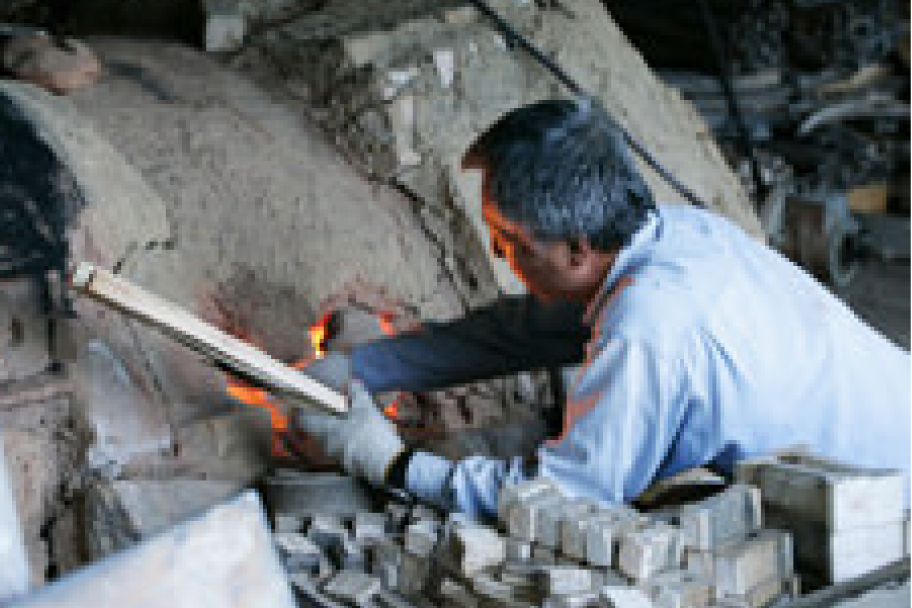
Firing begins with “nukume” (preheating), the initial stage in which the temperature is gradually raised. From around 1955, heavy oil began to be commonly used as fuel during this stage.
Although it varies depending on kiln size, after 30–40 hours of preheating, flames rise upward and the main firing begins. Split pine wood is continuously fed through openings on both sides of each chamber. The temperature inside the kiln reaches approximately 1,300°C.
This firing process takes about 60 hours and is carried out day and night. The long firing time required for anagama kilns—several times longer than that of climbing kilns—produced the beauty of natural ash glaze in green or brown tones. In contrast, firing in climbing kilns creates vivid kiln transformation effects through the fusion of pine ash and applied glaze.
Unloading the Kiln
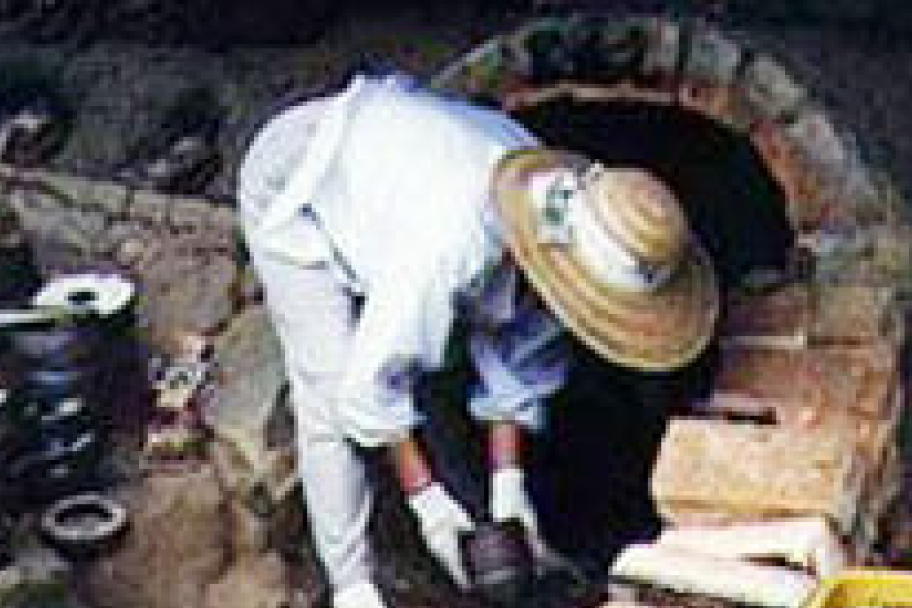
After firing is completed, the firebox and fuel openings are sealed with clay, and the kiln is left to cool for about a full day before unloading the fired works. From loading to unloading, the process takes roughly one week. In modern individual kilns, however, the time required is somewhat shorter.
Firing with Gas, Electric, and Oil Kilns
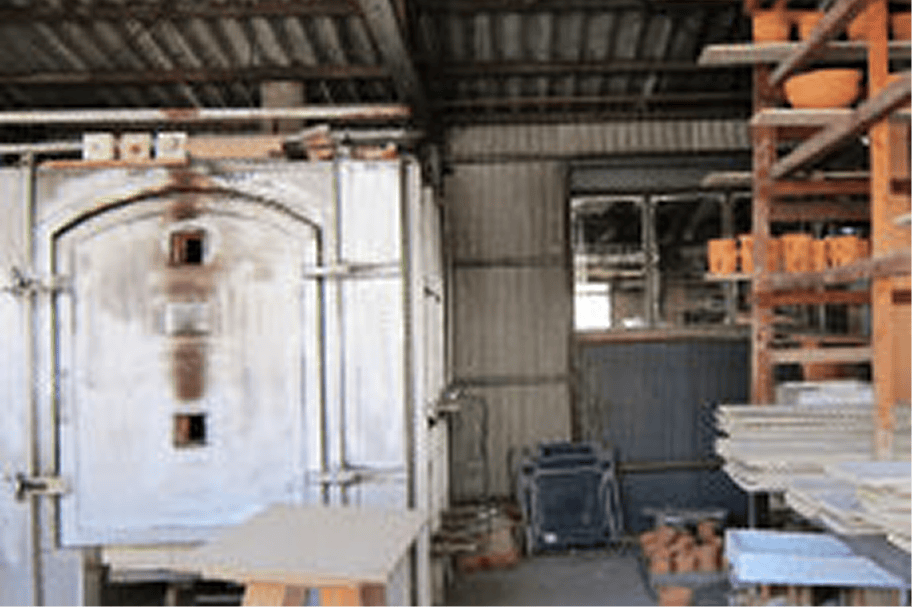
Today, the most widely used method is firing with electric kilns. From the Showa to the Heisei period, large gas kilns capable of short firing times and mass production of large items such as flower vases spread rapidly. In recent years, however, as production has shifted toward everyday tableware, more kilns have introduced compact electric kilns with electronically controlled temperature management to accommodate small-lot, short-delivery production.