
TOC
GOUJIN-GAMA
profile
Goujin Nomura

profile
Goujin Nomura
Established 2002 / 1st generation
Year of Birth:1972
Education / Training Background
Studied under Tetsuo Ogawa at Kitayama gama
Graduated from Arita College of Ceramics, Saga Prefecture
Studied under Tadashi Nishibata at Sueharu gama

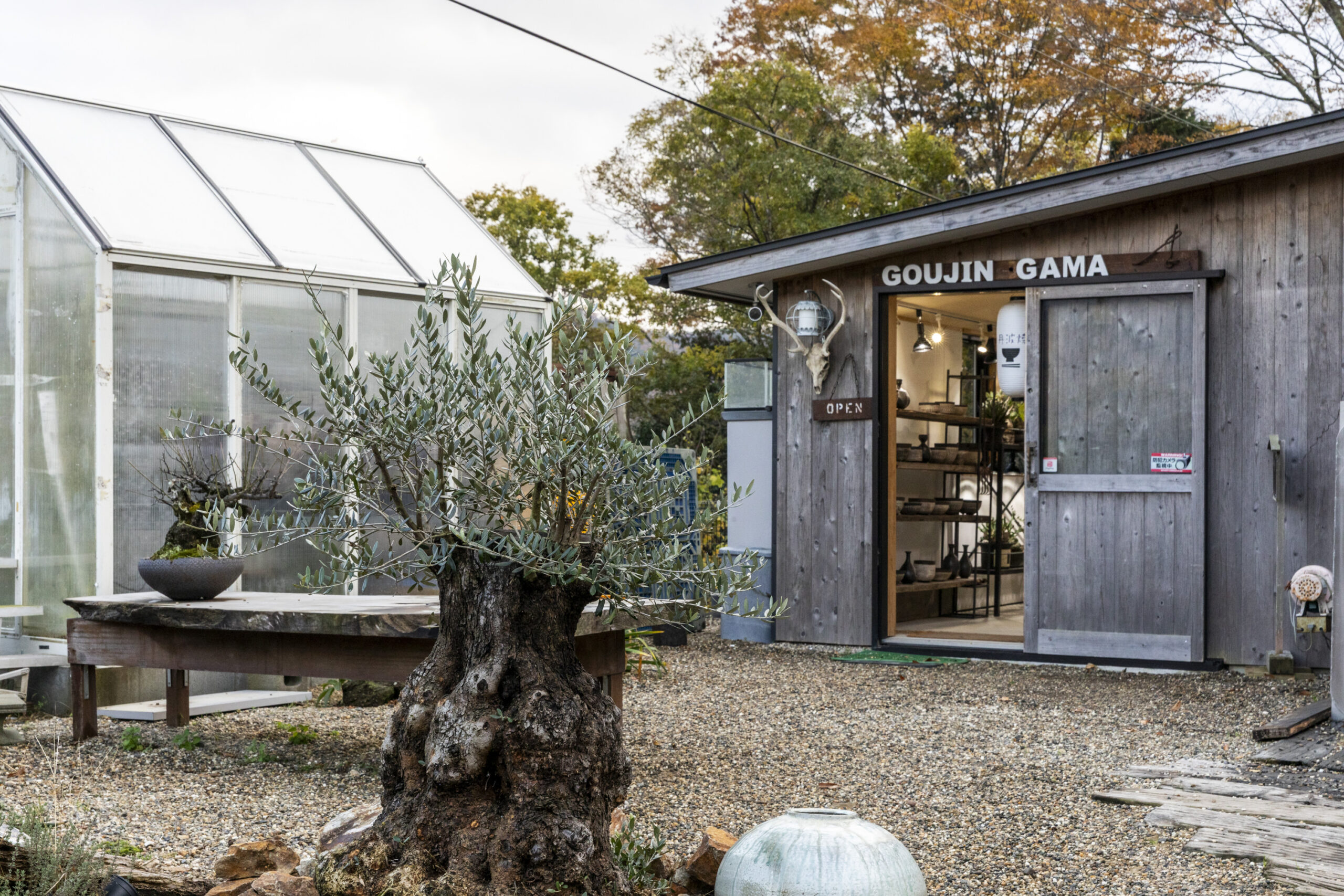
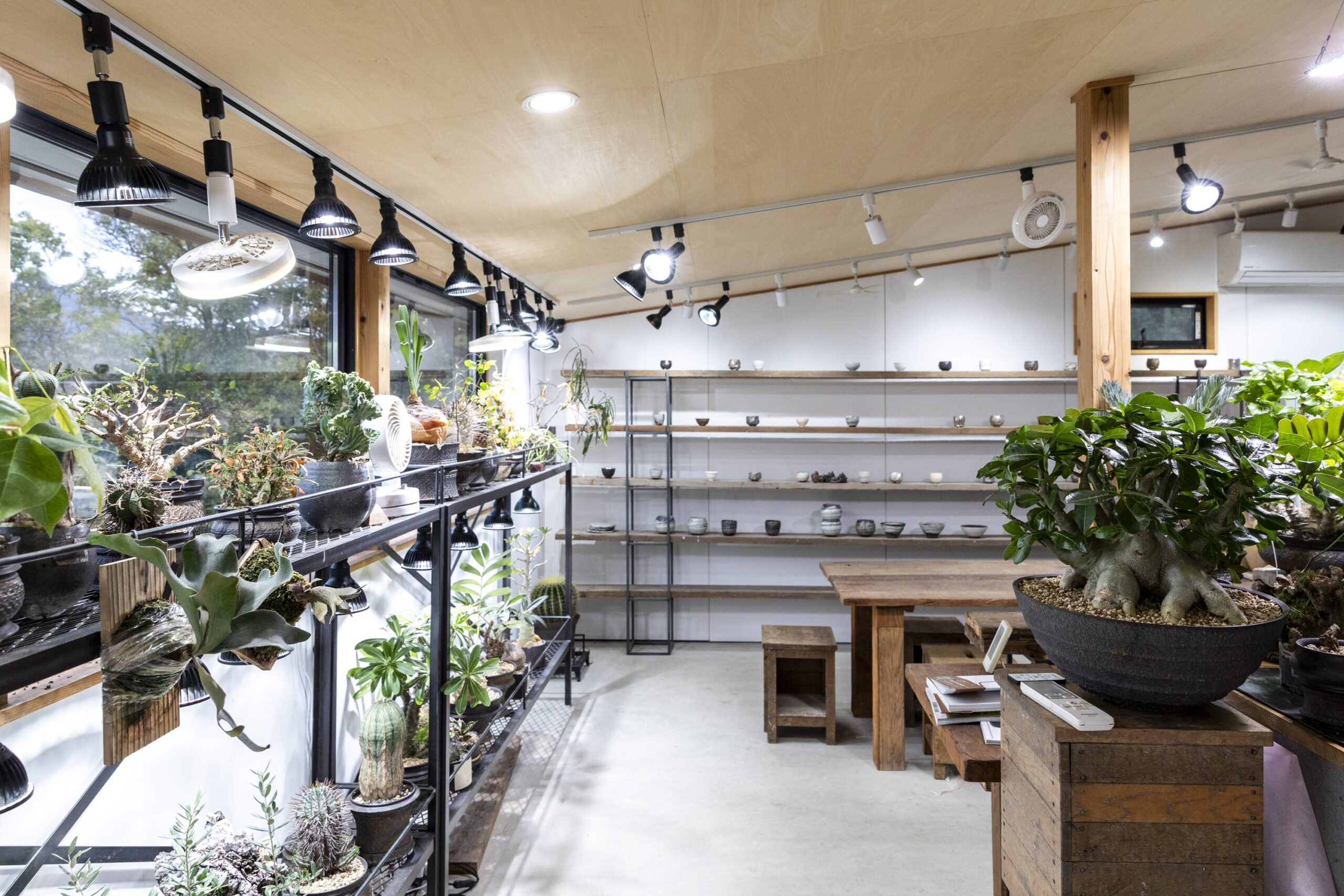
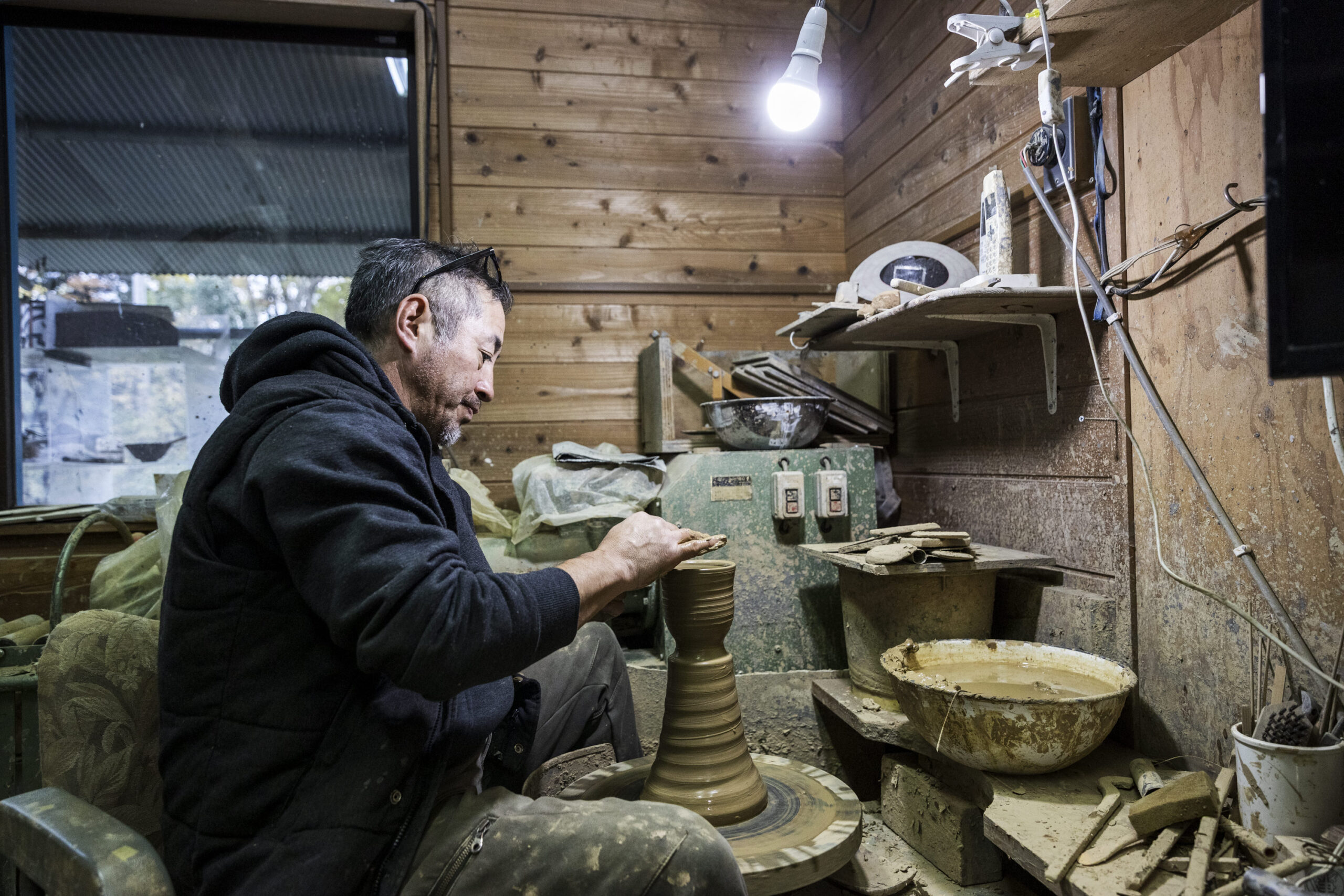
The state of the workshop
スクロールできます
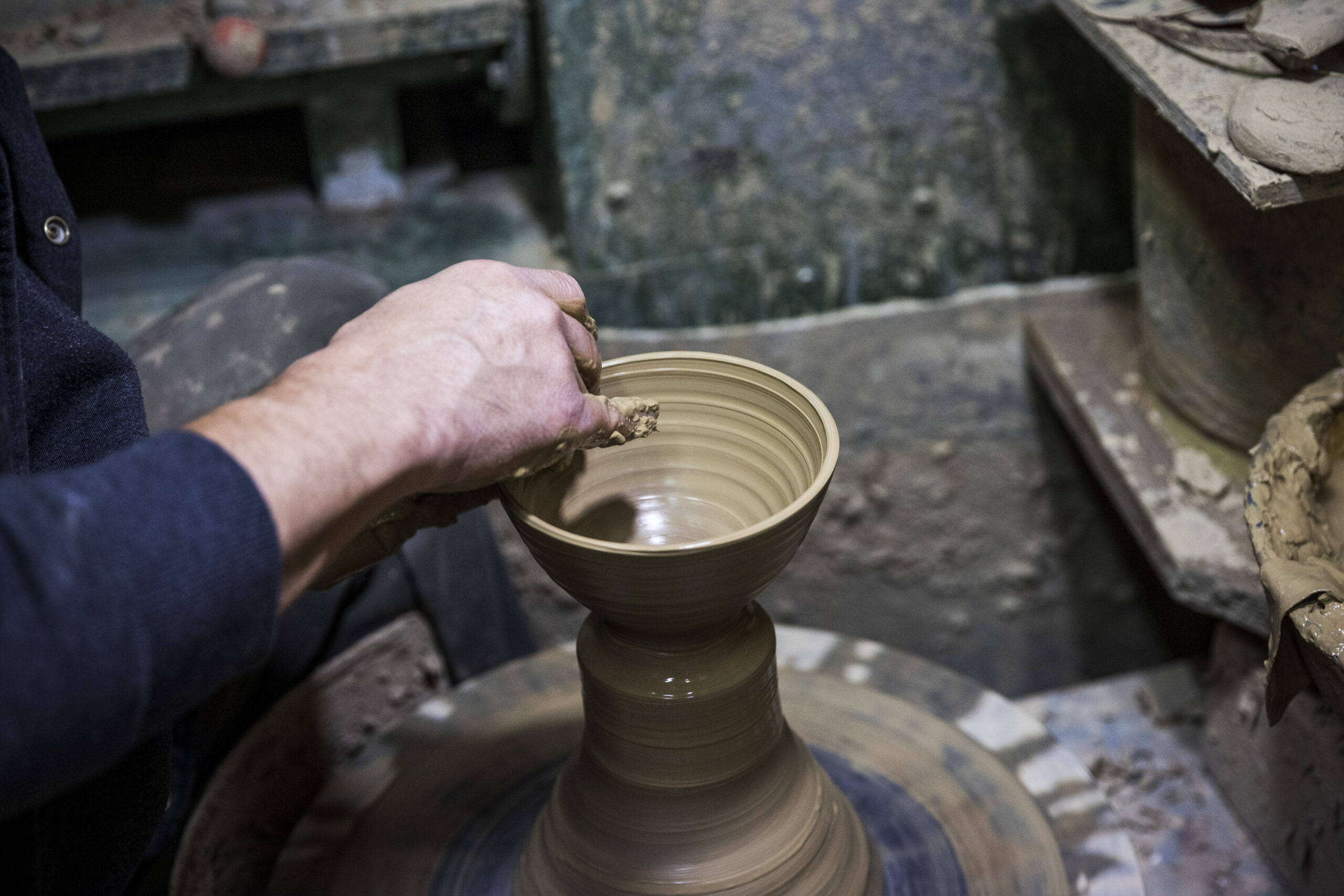


Works
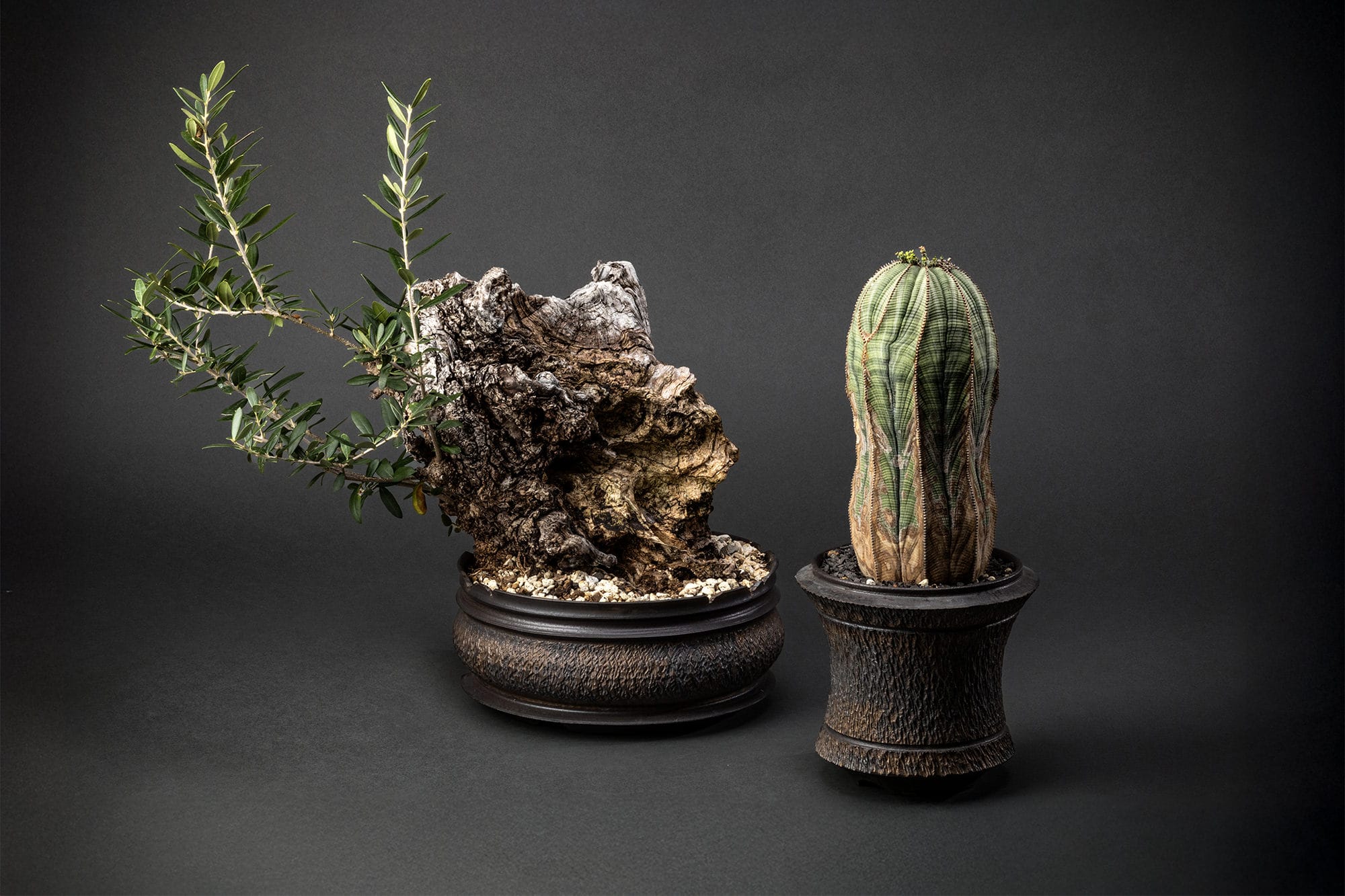
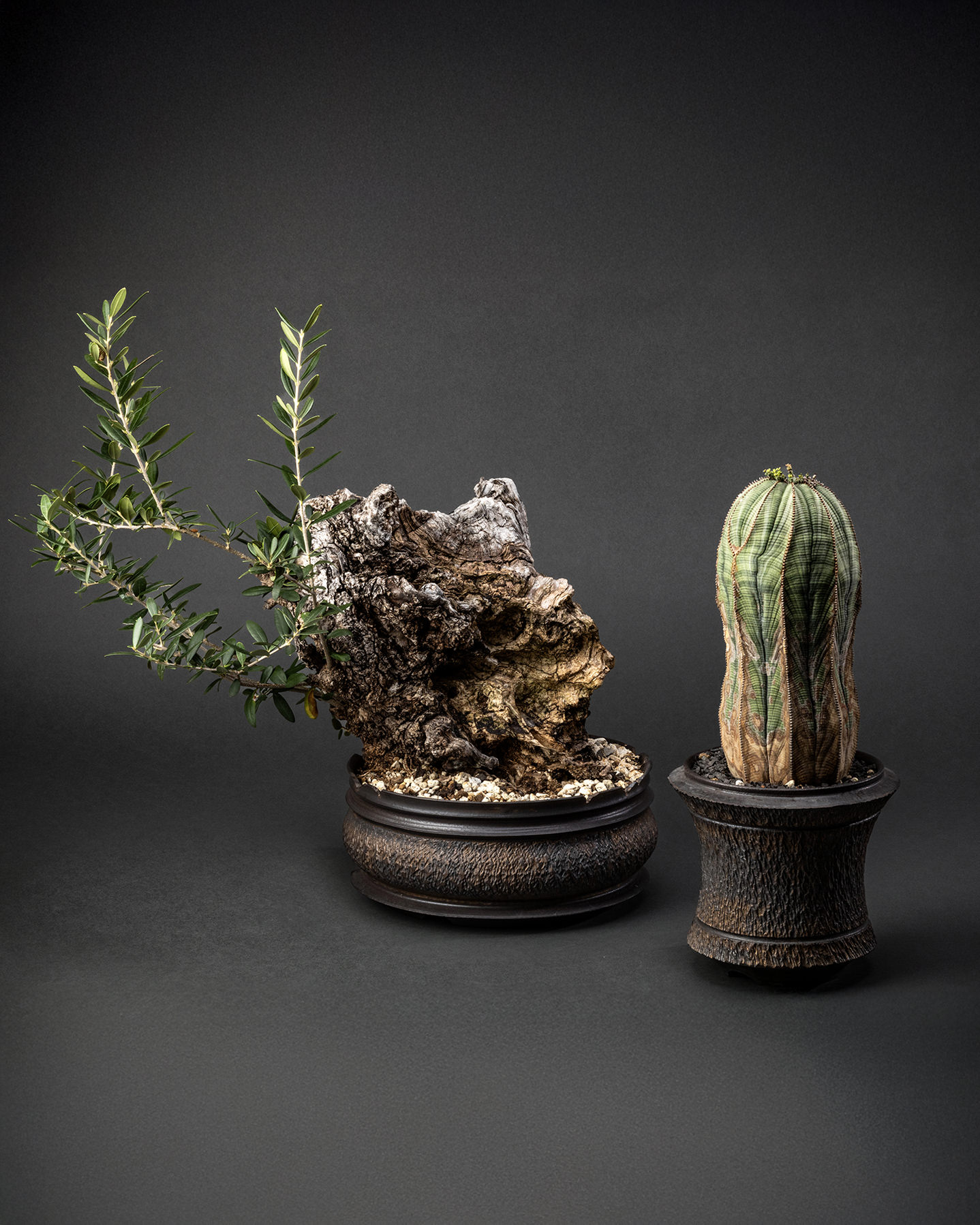
photo:AOTANI Takeru
Interview
Balancing cool design with healthy plant growth. At GOUJIN-GAMA, Goujin Nomura pursues plant pots made from Tamba clay
Creating a “place to belong” for plants with Tamba clay
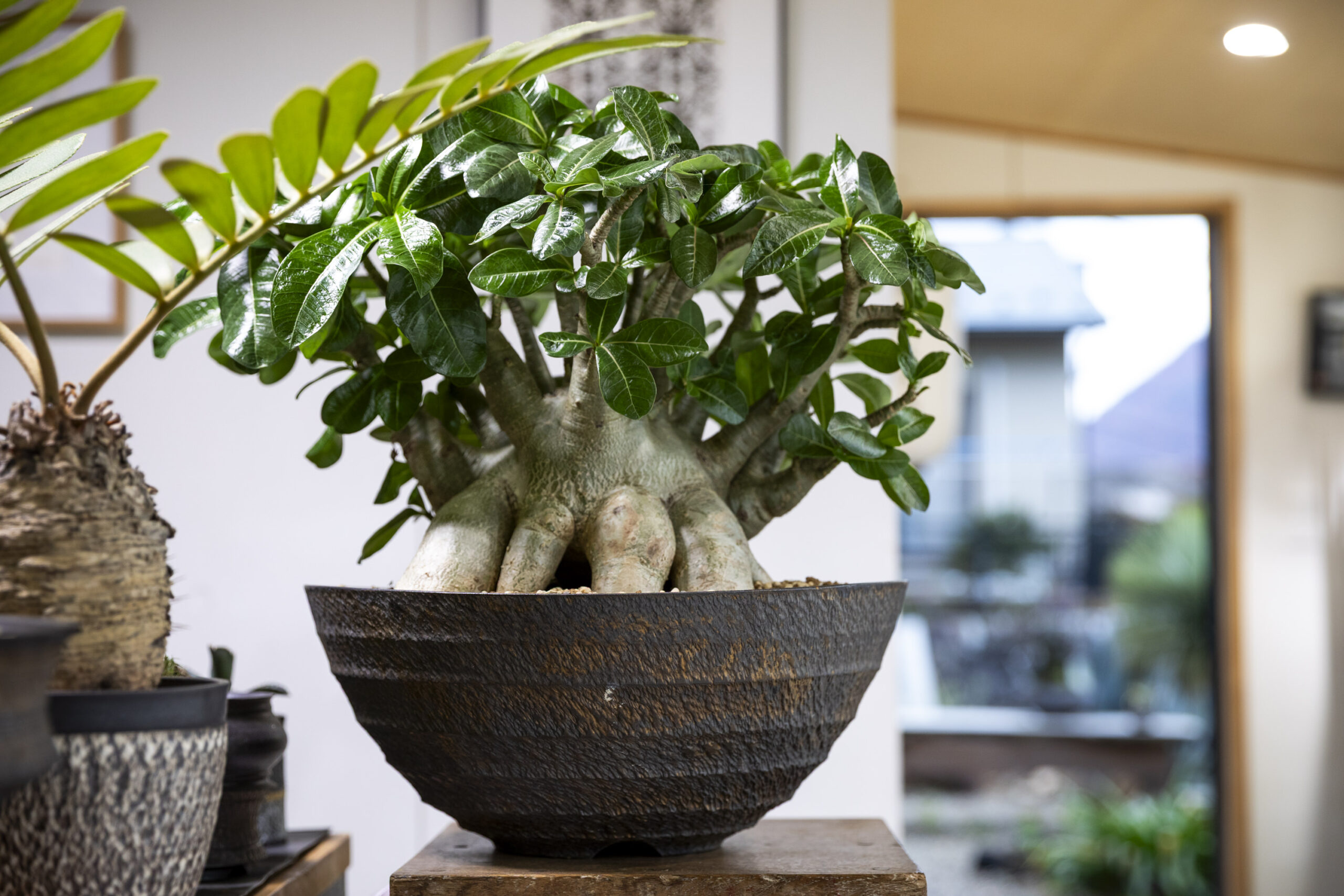
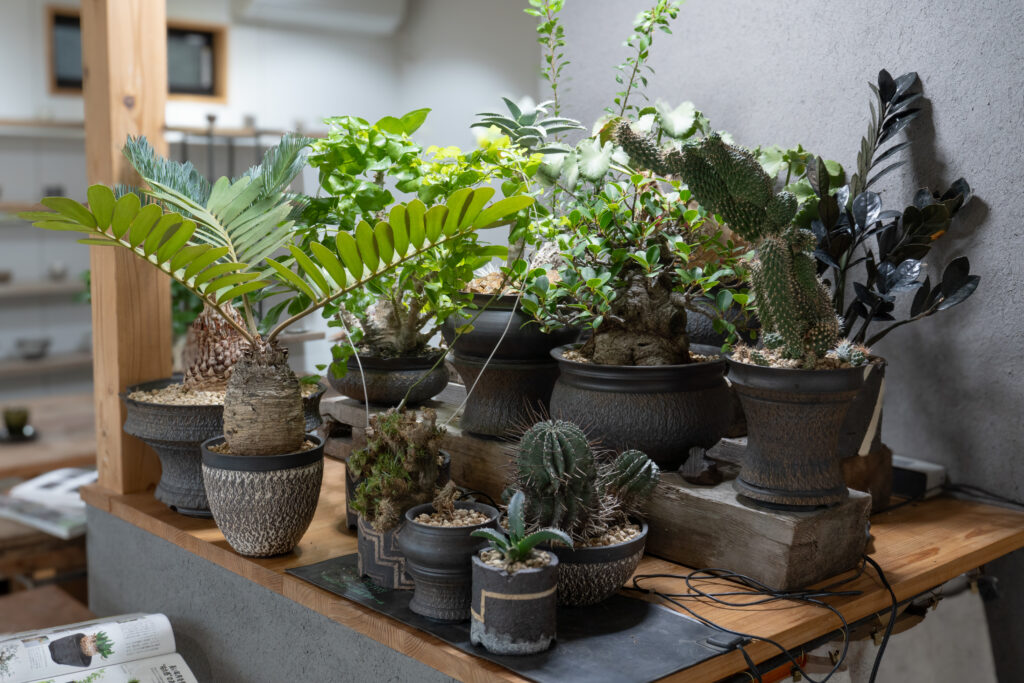
Stepping into the gallery of GOUJIN-GAMA, the first thing that catches the eye is a row of whimsical caudex plants lined up by the window. Though located deep in the mountains of Tamba, the space feels almost like a green shop tucked into a corner of a bustling city.
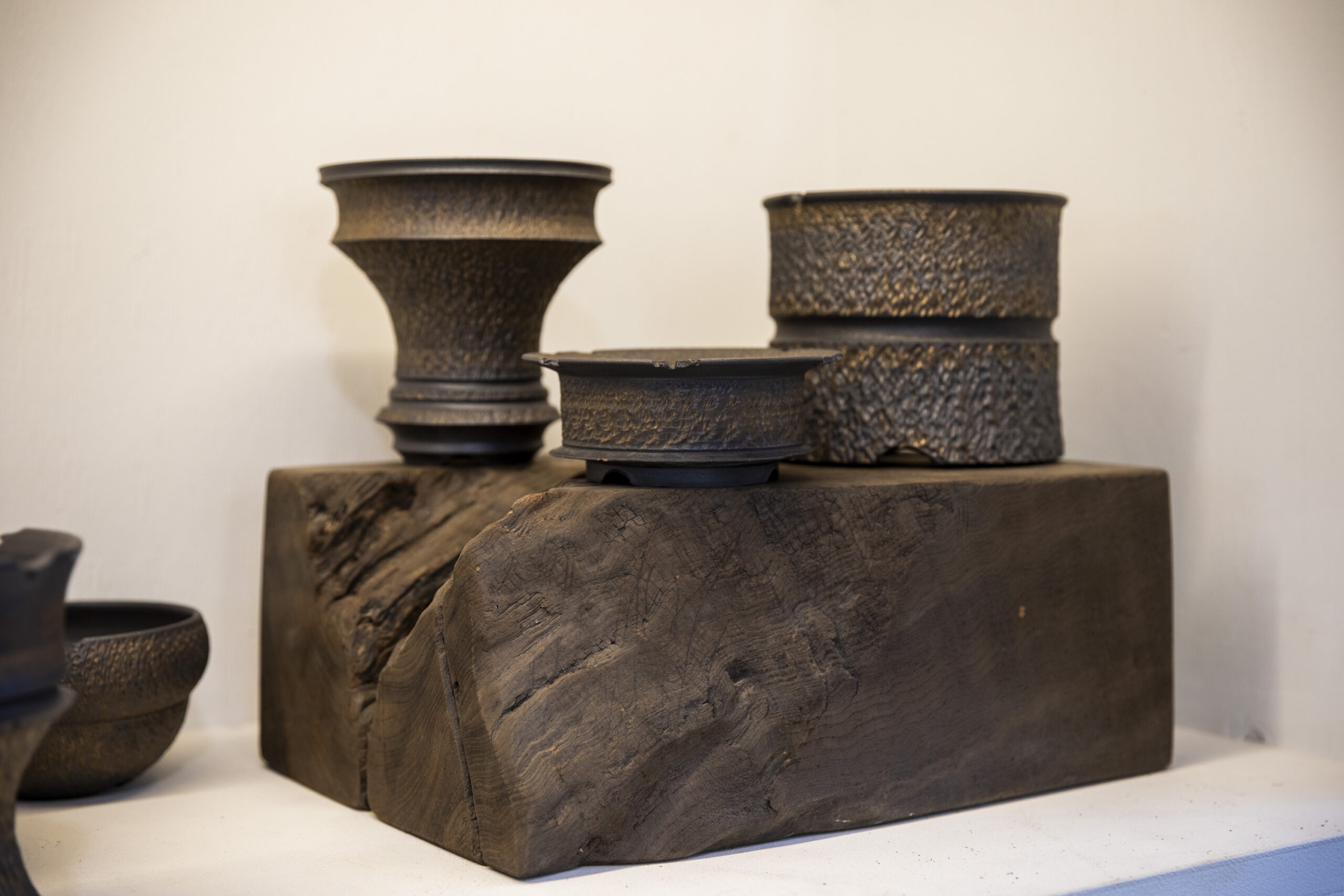
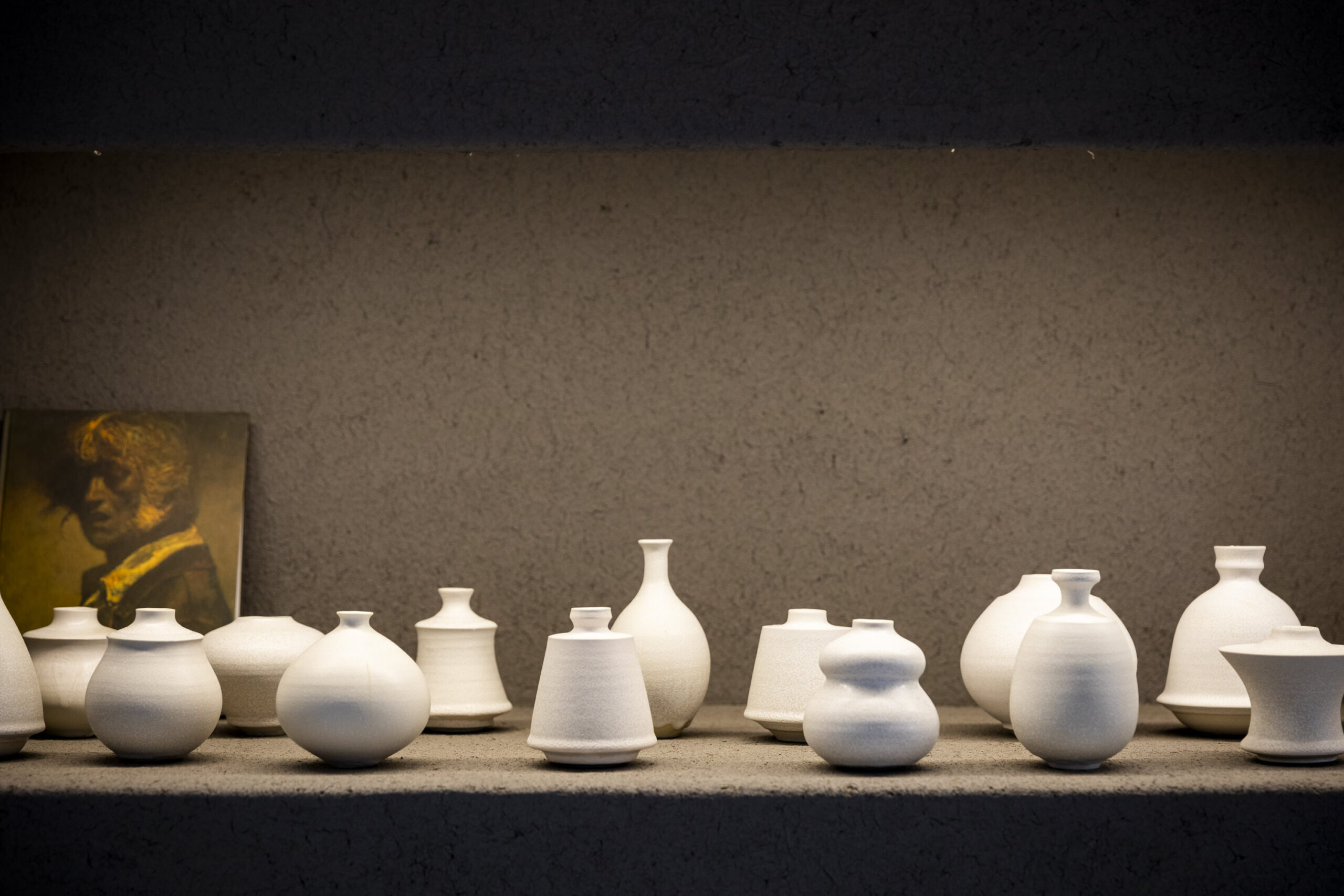
Turning to the pots themselves, gentle curves coexist with sharp forms, their surfaces bearing a subdued, metallic-like texture. Never overpowering yet perfectly complementing the strength of the plants, these pots are named “goujin pot.” While retaining the earthy character of Tamba ware, they carry a distinctly contemporary outline.
The creator of these pots is Goujin Nomura of GOUJIN-GAMA (hereafter, Goujin). It is the work into which he currently pours most of his passion.
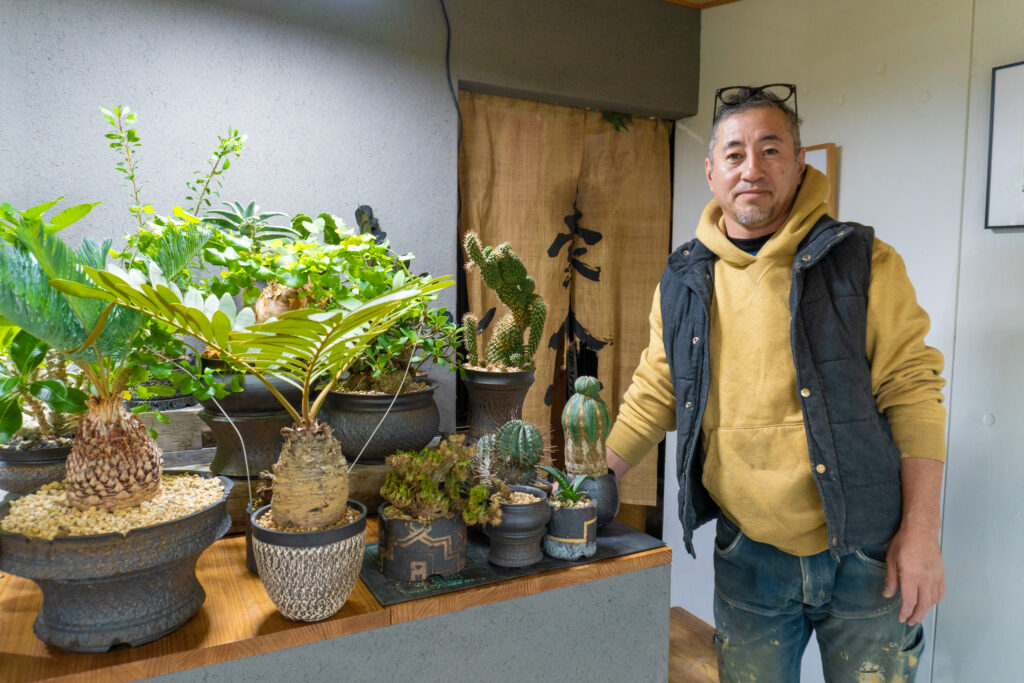
“I want to create a comfortable ‘home’ for plants. It makes me happy when customers tell me their plants grow well in my pots.”
Many caudex plants originate from arid regions such as Africa and Central and South America. Because they are living in environments different from their natural habitats, Goujin wants the pots that support them to be as comfortable as possible. His careful consideration can be seen throughout his work.
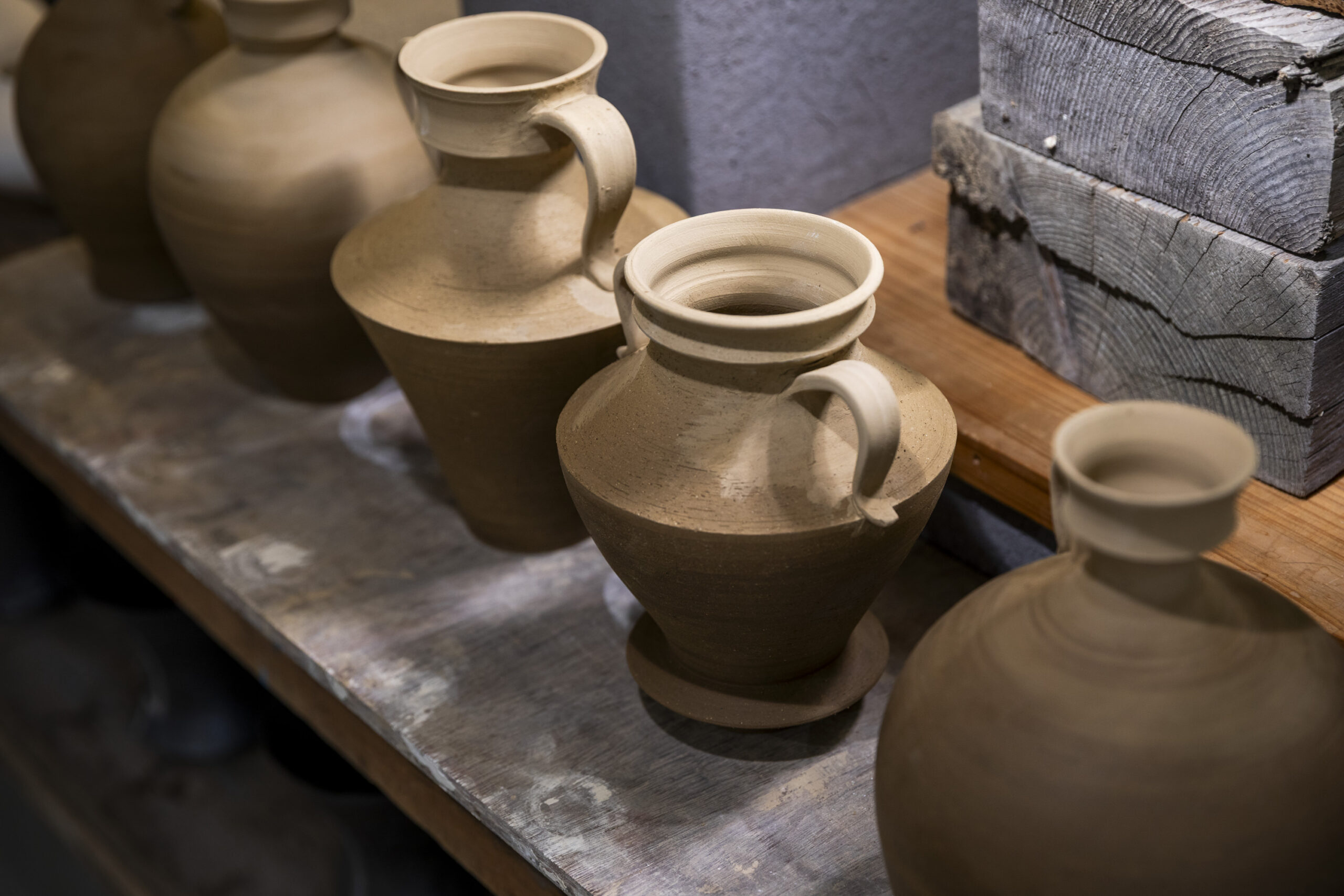
Some plants send roots straight down, others spread sideways. Some require more water, while others prefer dryness. According to each plant’s nature, he carefully adjusts the clay composition and firing methods. Mixing in rice husks to create air pockets after firing—improving ventilation—is another result of his ongoing experimentation.
However, he did not begin by making plant pots. Previously, he focused mainly on tableware. The turning point came during the COVID-19 pandemic.
A young plant enthusiast, drawn to Goujin’s “black forms,” asked him to create plant pots. When he tried making them and posted the results on social media, the response exceeded all expectations.
Today, he holds an exclusive contract with BOTANIZE, a specialty caudex plant shop in Yoyogi, Tokyo, and has collaborated with fashion brands.
“Plant lovers don’t just enjoy growing plants—they also enjoy photographing them paired with their favorite pots. That’s why I pay meticulous attention to the beauty of the form.”
To create truly satisfying pots, Goujin began growing plants himself. Now his studio is filled with greenery, and he too has become captivated by their presence.
Choosing a path without detours on the day of his coming-of-age ceremony
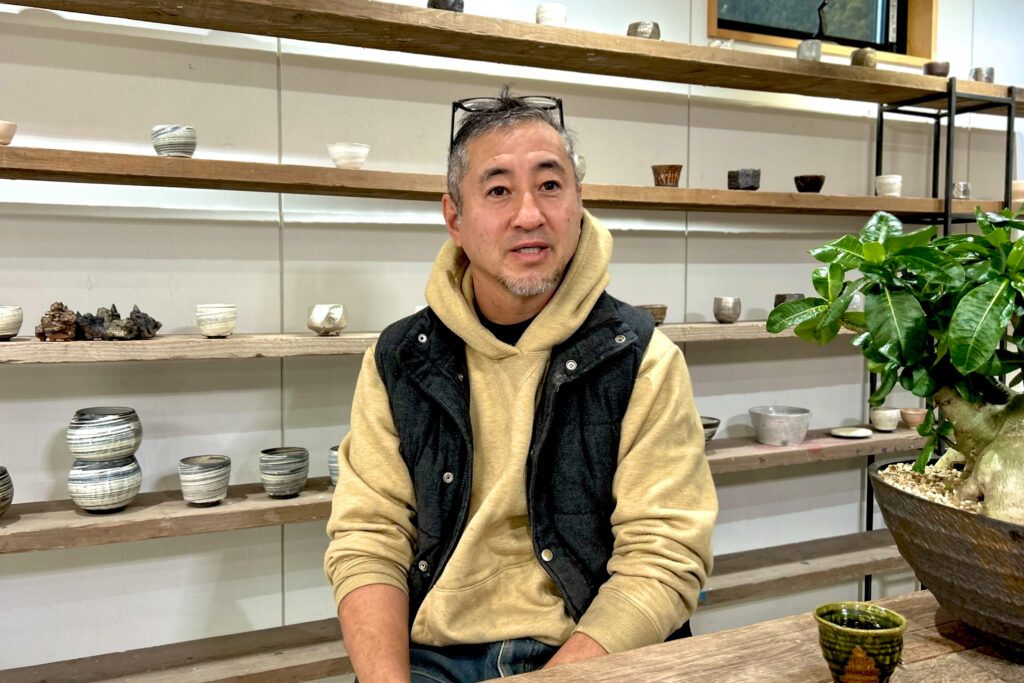
Goujin was born in Ashiya, Hyogo Prefecture. After a youth devoted to soccer, he entered a university faculty of education through a sports recommendation. Yet he found it impossible to picture himself working as a teacher.
“I’m stubborn by nature and not suited for desk work. On the day of my coming-of-age ceremony, I decided to learn a hands-on trade.”
Once he decided, he acted quickly. He soon left university and even declared to his teammates that he would become a ceramic artist, pushing himself forward with no turning back.
It was his mother who suggested ceramics. “She said, ‘Your fingers are thick—you’d be suited to working with soil, maybe farming or pottery.’ My mother loved ceramics, and I grew up surrounded by her collection of forms, so entering this world felt natural.”
He first apprenticed at Hokuzan Potter in Saga Prefecture. For two years he spent his days kneading clay, chopping wood, and cleaning. Of the hundreds of pieces he made, most were ordered to be destroyed—he broke them one after another.
“My master would break anything he wasn’t satisfied with, even slightly. He left nothing behind. Now I understand that strictness.”
Goujin has inherited that spirit. If a piece does not match his vision, he does not hesitate to return it to clay.
After completing his apprenticeship, he enrolled in the Arita College of Ceramics to relearn the fundamentals. He later trained for five years under renowned Tamba ceramic artist Tadashi Nishibata. Through selling directly at pottery markets, he experienced firsthand how his work entered people’s daily lives.
In 2002, at age 30, he became independent. Seeking a place close to the city yet rich in nature with a flowing stream, he spent a year searching before building his “own castle” in its current location.
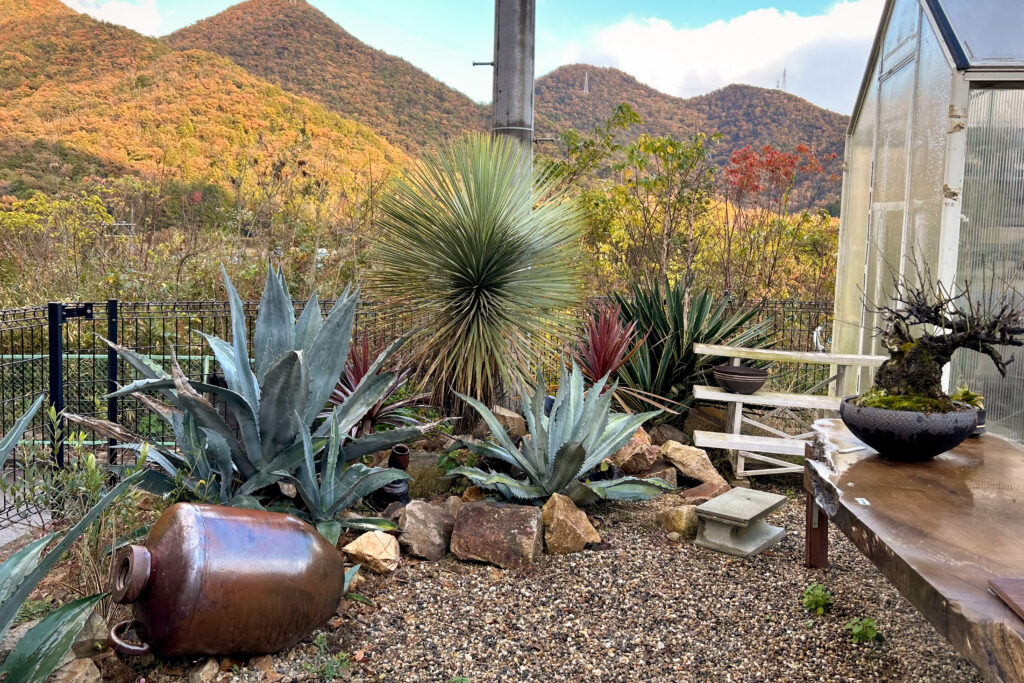
Creating with a comfortable sense of distance in a mountain studio
“For me, using Tamba clay and firing in Tamba—that’s what makes it Tamba ware.” Drawing on techniques learned in Saga, Arita, and Tamba, he fuses them with inspiration from natural forms and architectural structures to shape his forms and pots.
In one corner of the studio, numerous plants quietly breathe. Because caudex plants are sensitive to cold, he runs fans in summer and warms them with electric heaters in winter.
“They’re a lot of work—almost like people,” he says with a smile, his expression softening from that of a craftsman to a devoted enthusiast.
His daily pleasure is walking his dog. Outside the studio windows stretches a satoyama landscape of mixed woodland. In autumn, the mountains turn red and gold, and soft light filters through the trees—a sight that brings him peace.
Today, as always, Goujin quietly shapes welcoming “places to belong” for plants, working with the clay of Tamba.
Interview, Text, and Photography:NOUCHI Nana
Overview
of
GOUJIN-GAMA
Address
3-15 Shimotachikui, Konda-cho, Tambasasayama, Hyogo, Japan
TEL
FAX