
TOC
TANSAI
profile
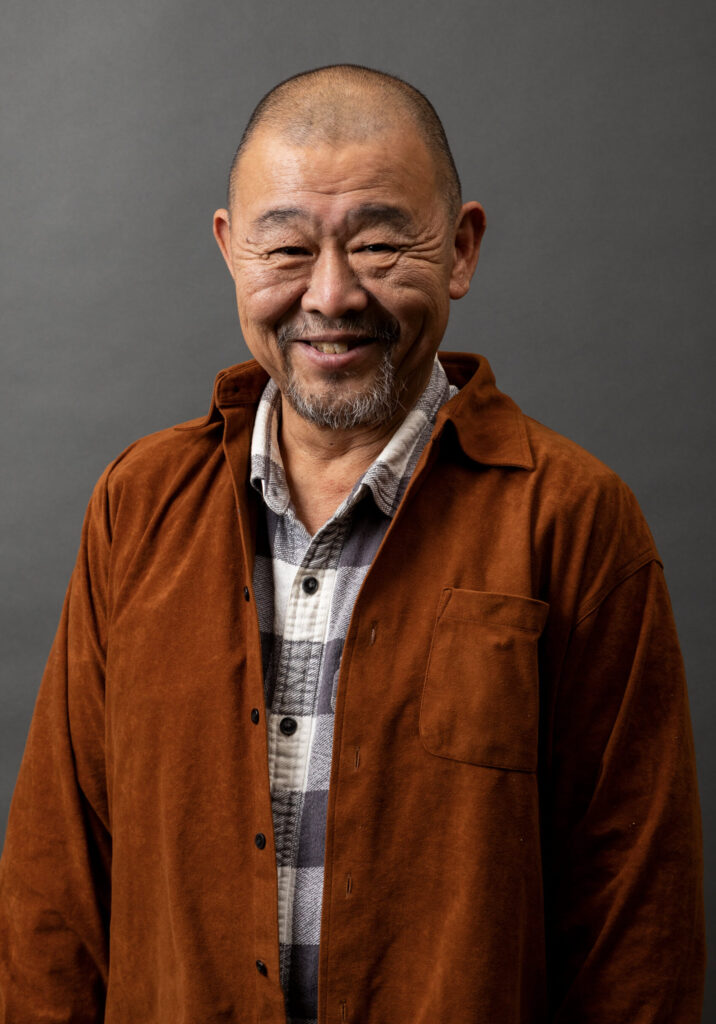
Toru Imanishi
profile
Toru Imanishi
3rd generation
Year of Birth:1963
Year Began Pottery:1992
Education / Training Background
Graduated from Osaka School of Fine Arts
Tachikichi Co., Ltd
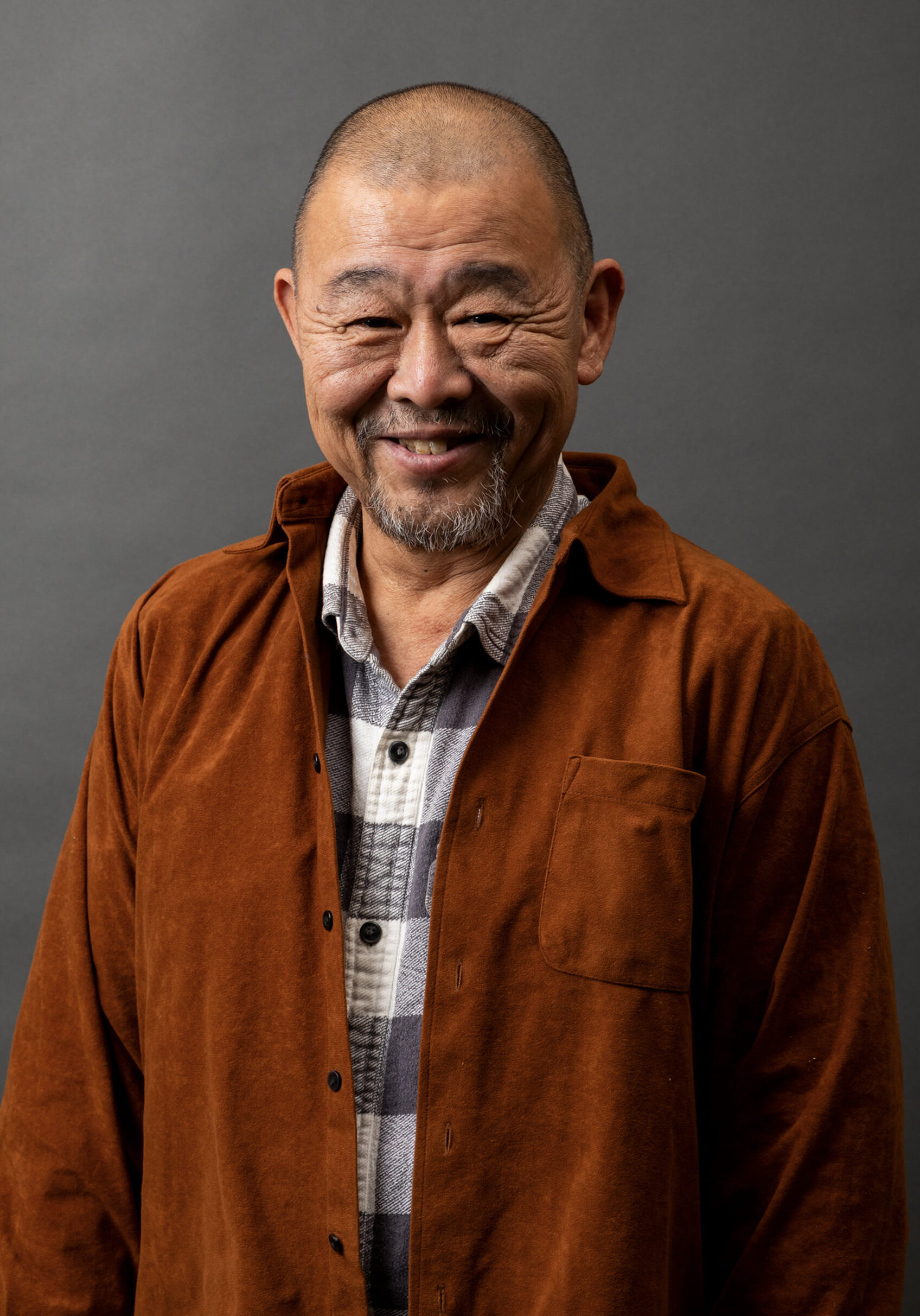
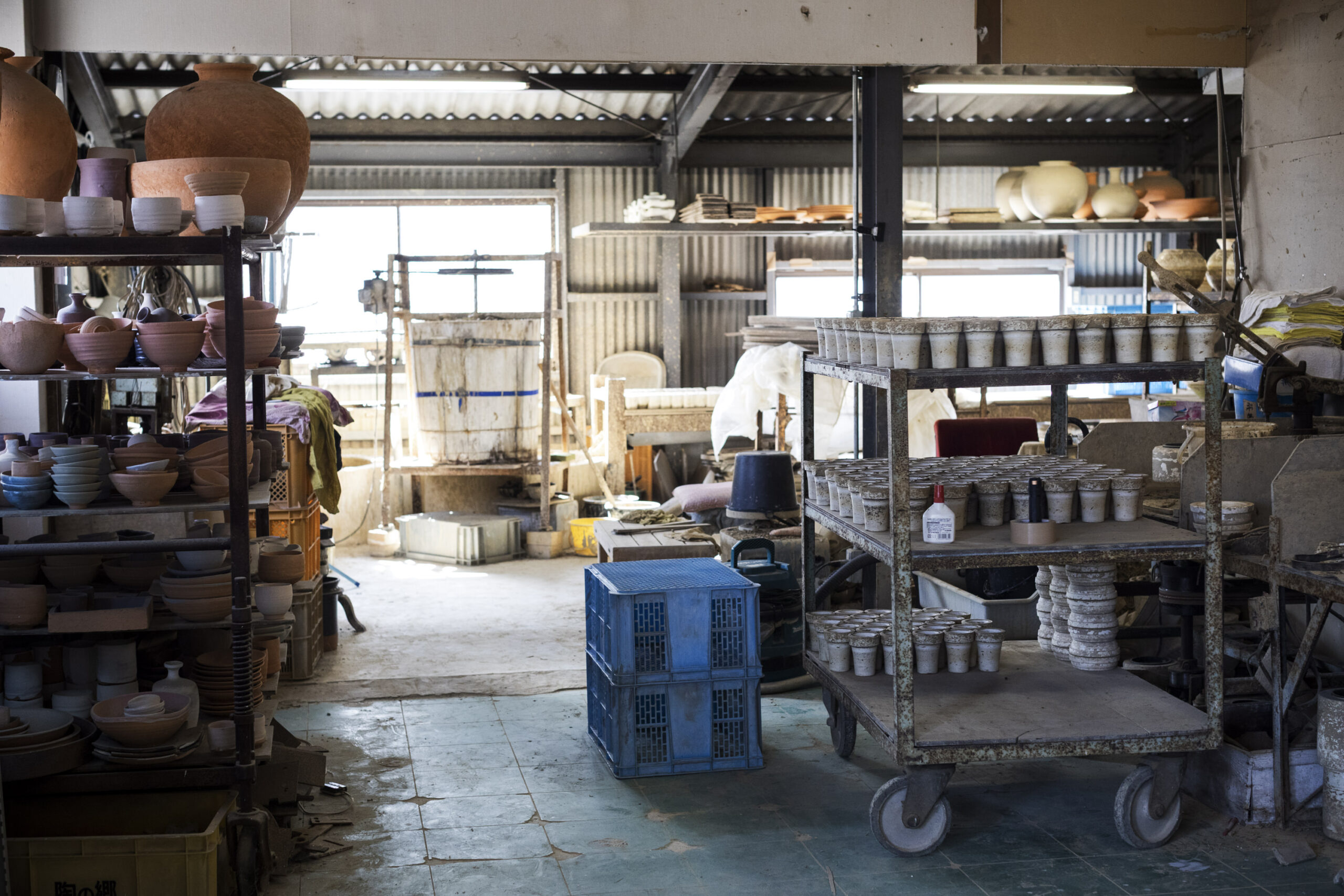
The state of the workshop
スクロールできます
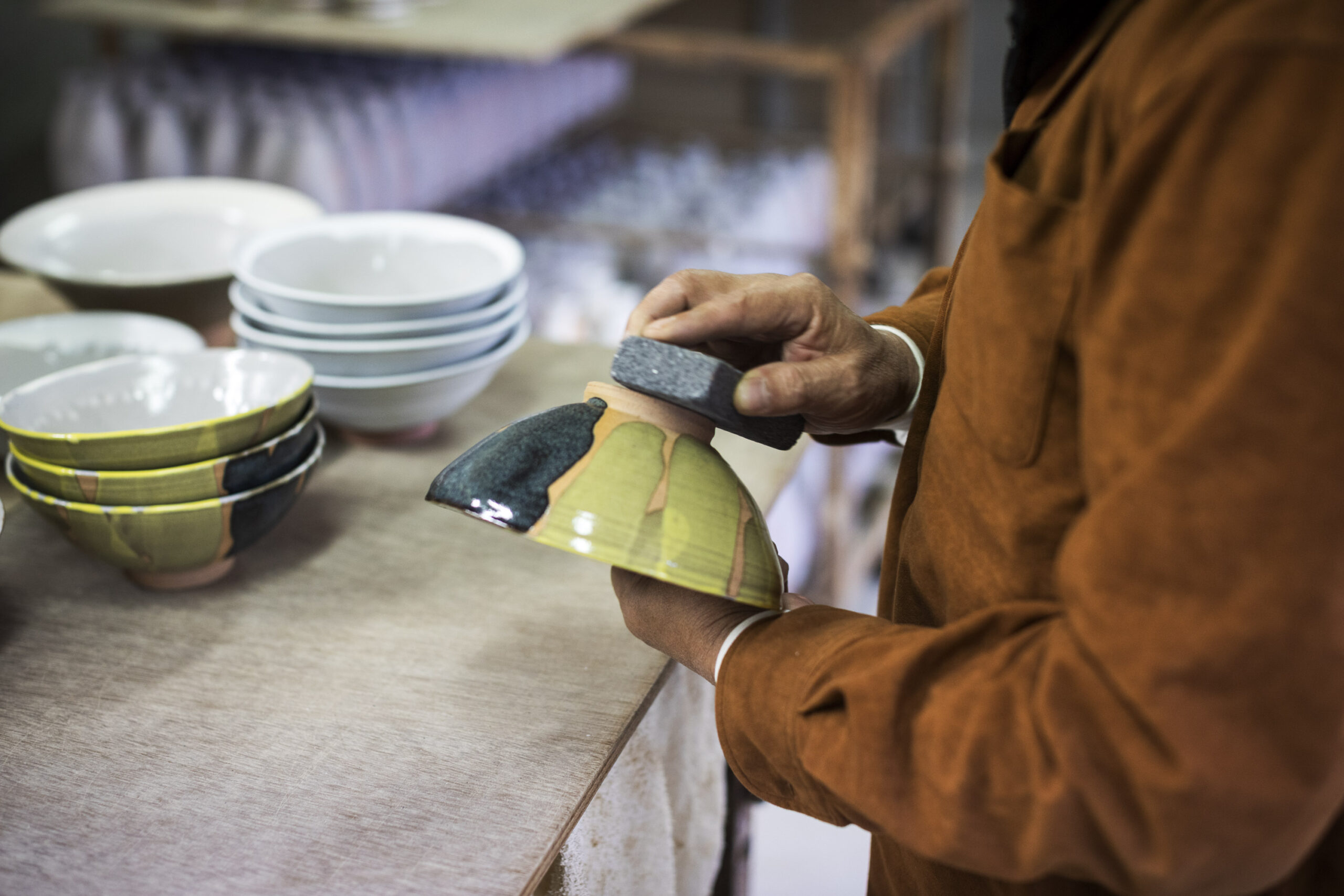
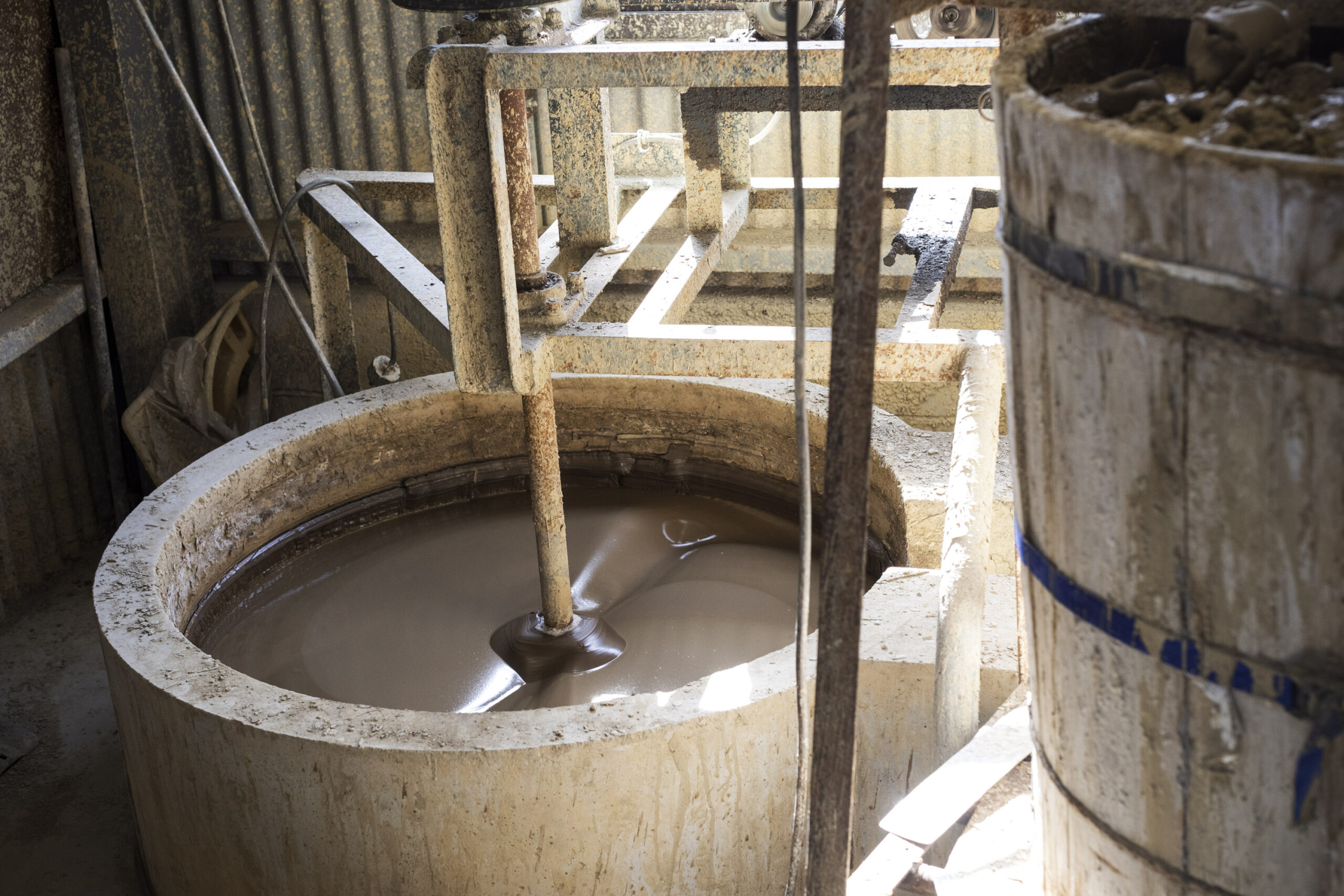


Works
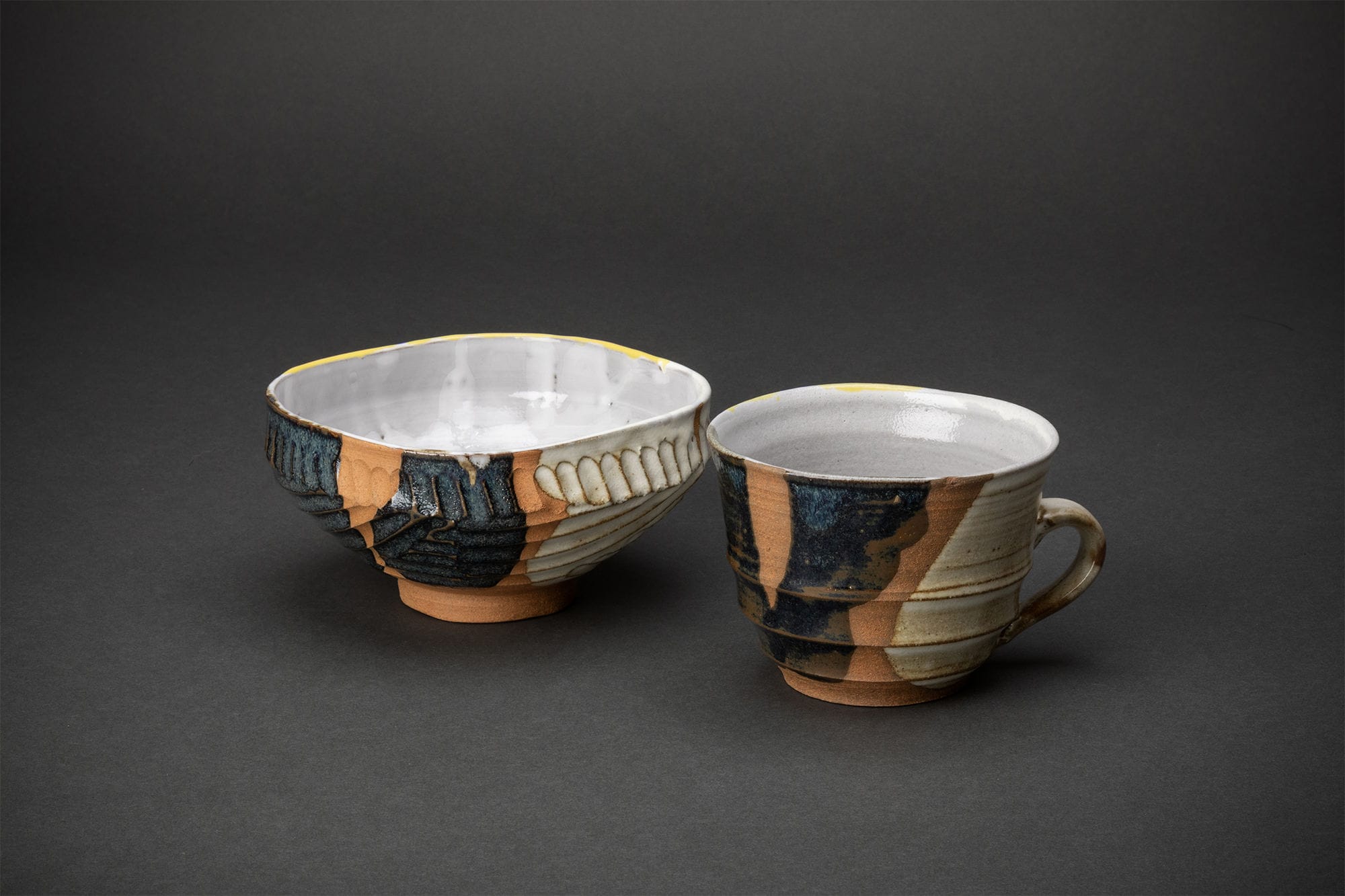
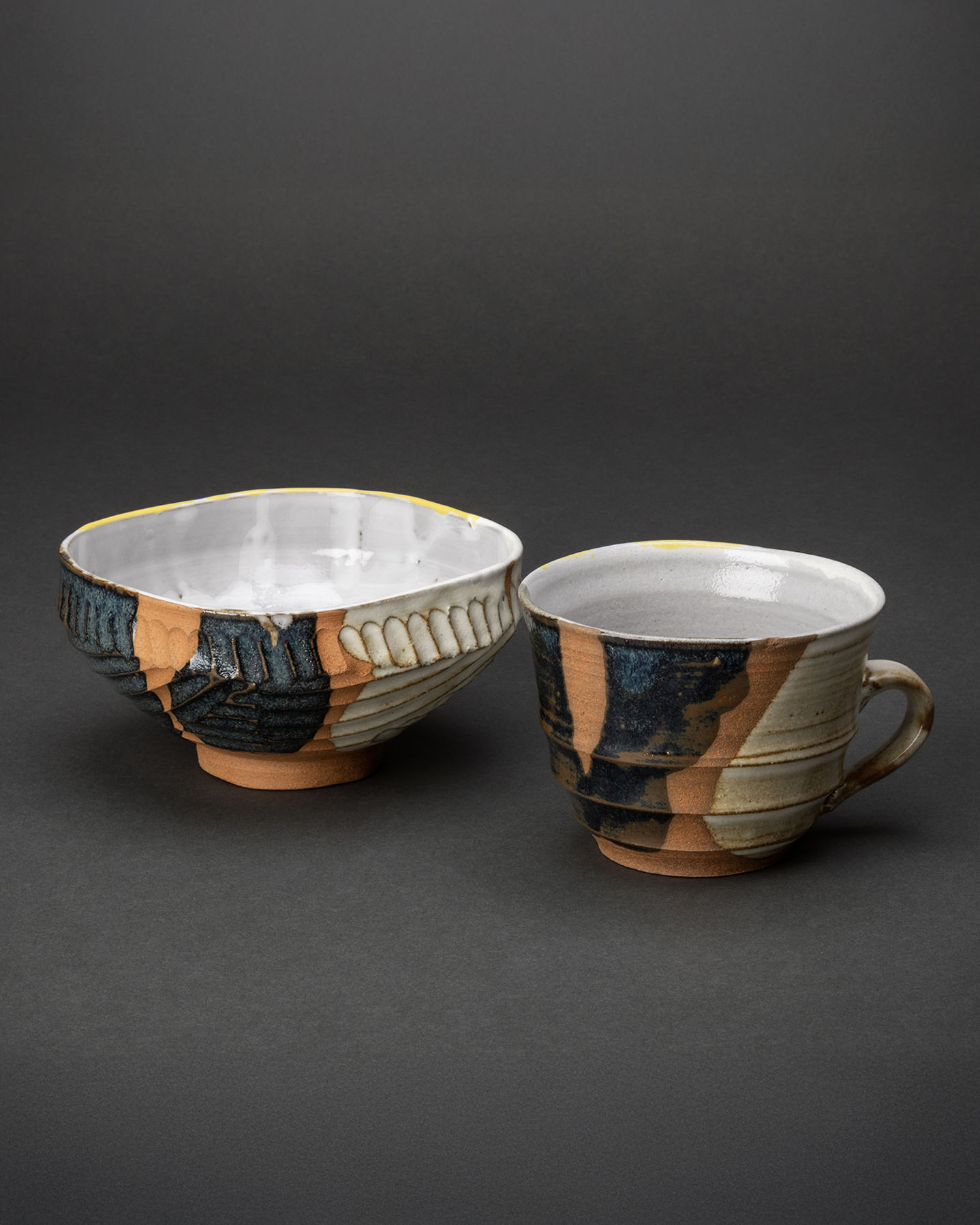
photo:AOTANI Takeru


Interview
Speed and Efficiency as Strengths — Toru Imanishi of TANSAI, Who Supported the Peak of Mass Production, and His Flexible Gaze Toward the Changing Times
Fast, Precise, and Beautiful — A Rational Spirit That Supported Mass Production and Gave Rise to a Department-Store-Like Variety
Among the potters of Tamba Tachikui ware, TANSAI has long stood out for its ability to meet the demands of large-scale production.
There was a time when the kiln fulfilled major orders from nationwide mail-order companies, running a tunnel kiln continuously for 42 hours, managing preheating, firing, and cooling in one streamlined process.
In its two story workshop, the first floor was dedicated to forming, the second to drying. By the next morning, products would be finished. TANSAI built a production system that perfected both speed and efficiency, supported by considerable technical expertise.
From the long history that has flowed through TANSAI comes an enduring craftsman’s pride: to produce the same pottery in large quantities, quickly and without waste. Even now, after significantly scaling down operations, that spirit remains.
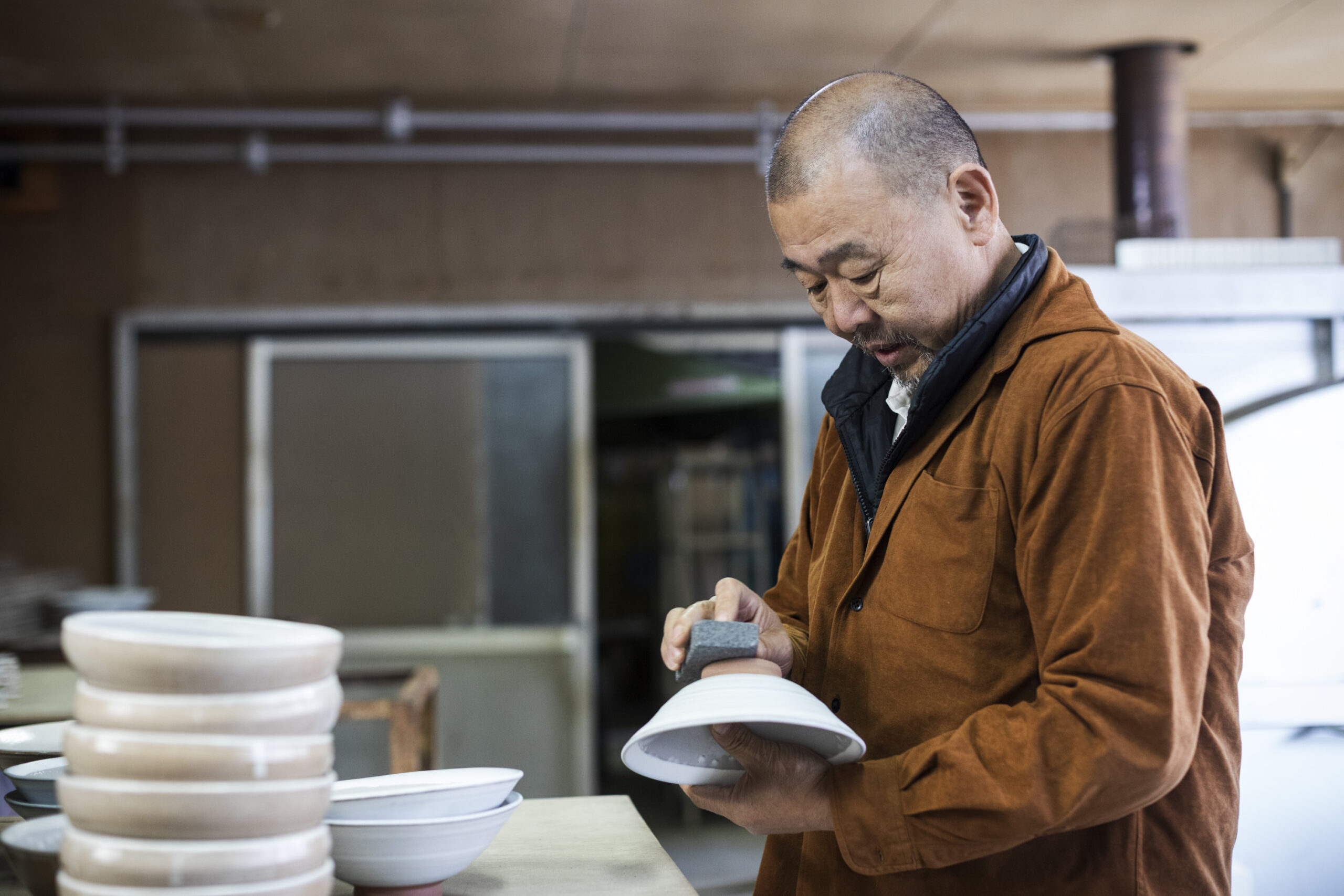
Today, the potter is led by Toru Imanishi, who runs TANSAI together with his son.
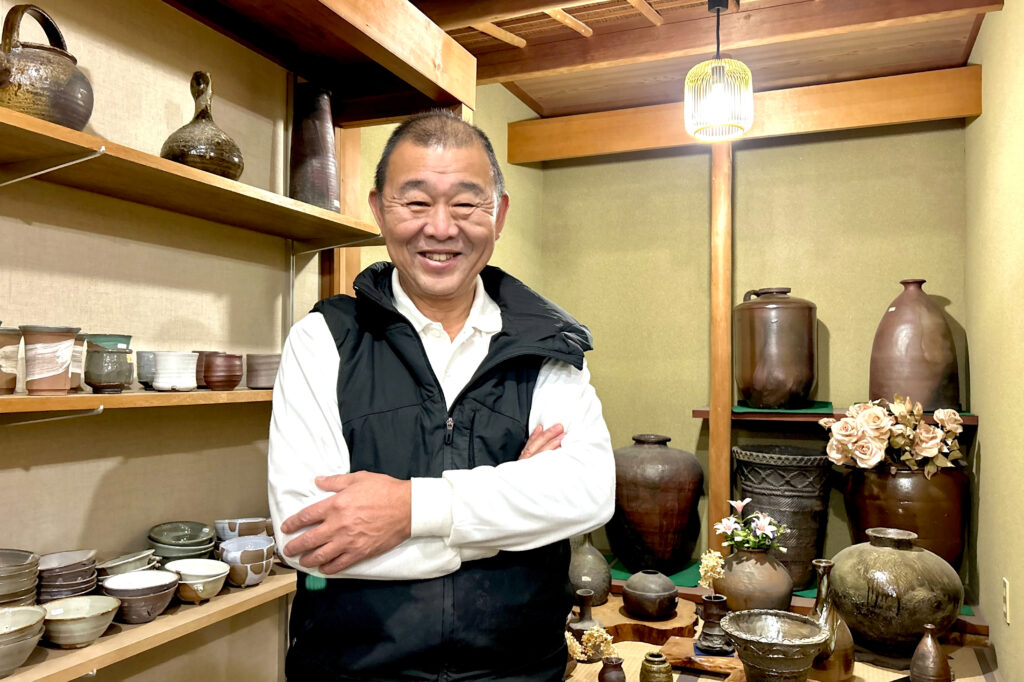
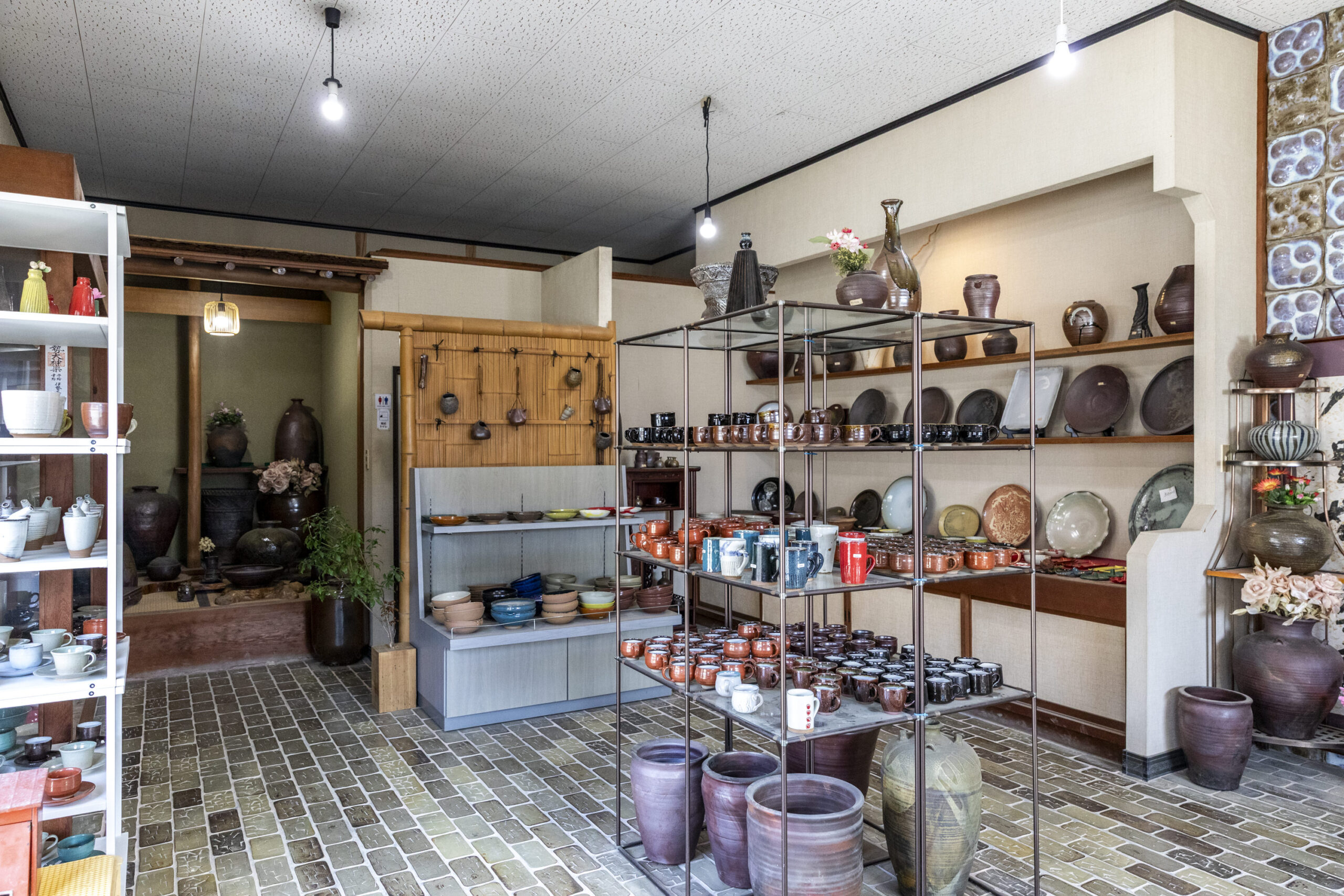
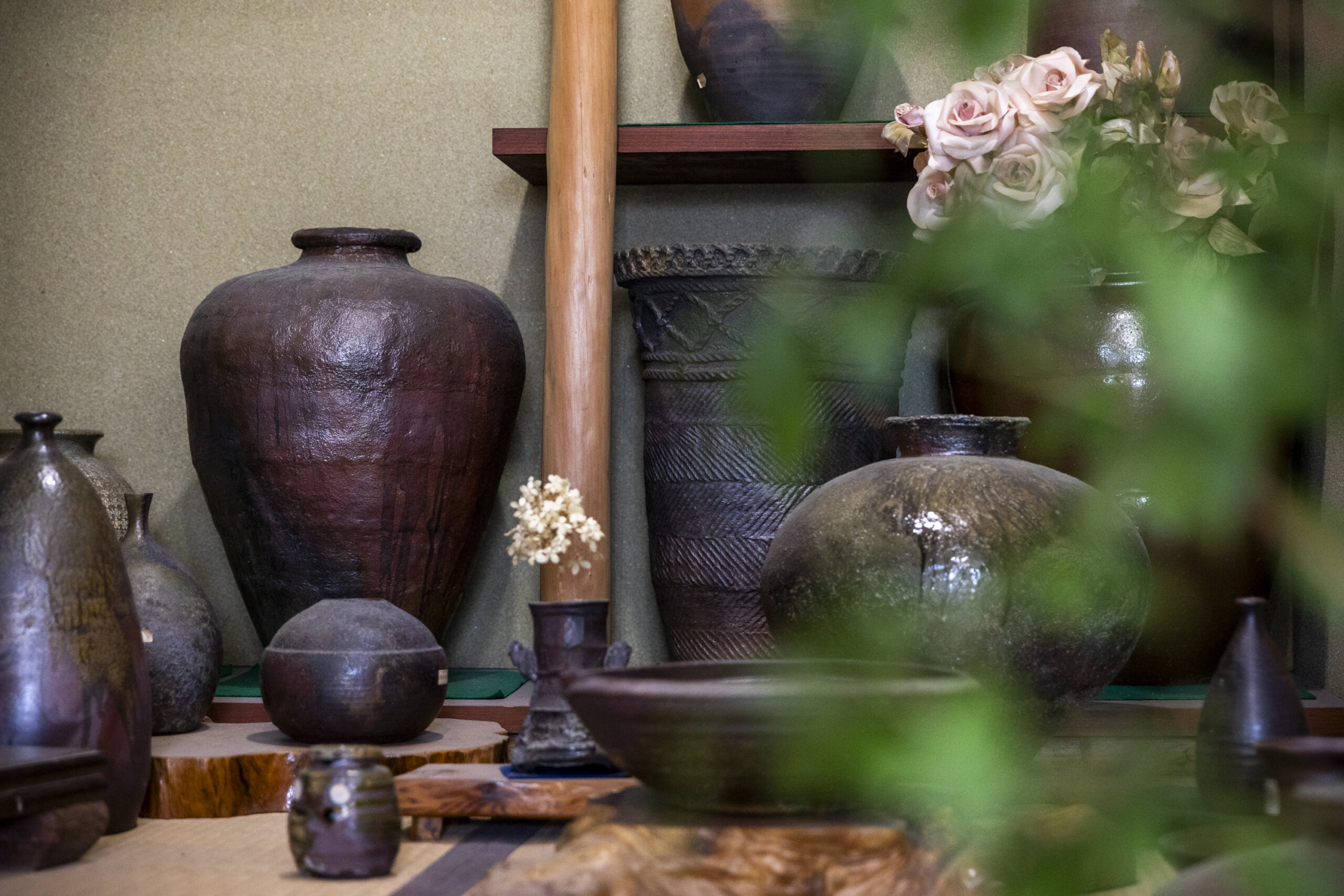
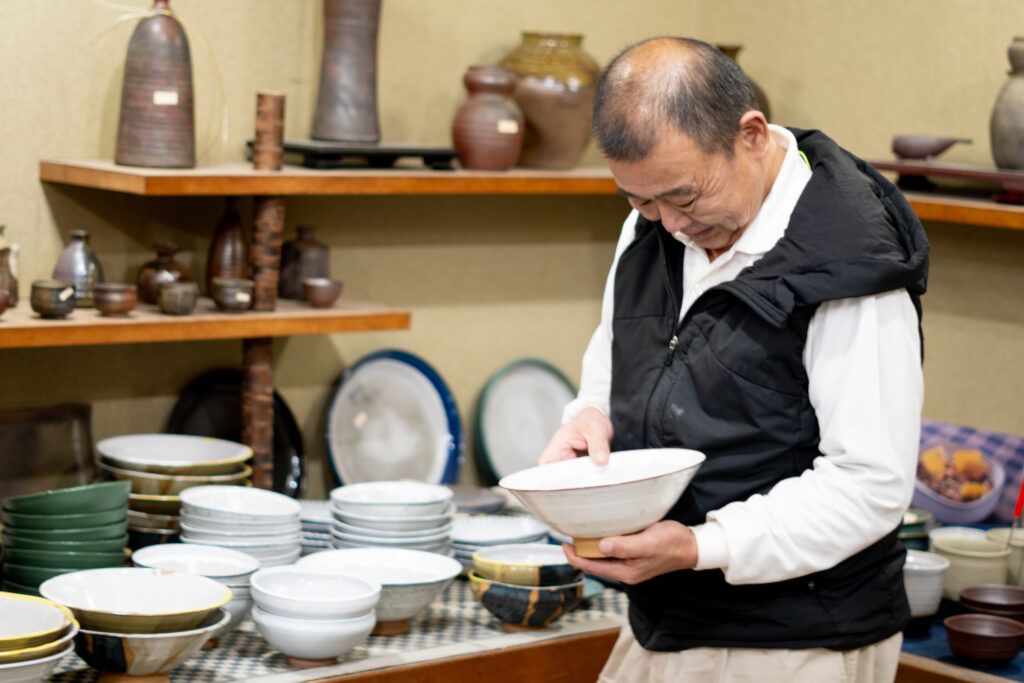
Stepping into the TANSAI gallery feels like entering a carefully curated tableware boutique. From traditional yakishime pieces to vividly colored forms suited to modern dining tables, the variety is so wide it is hard to believe it all comes from a single potter.
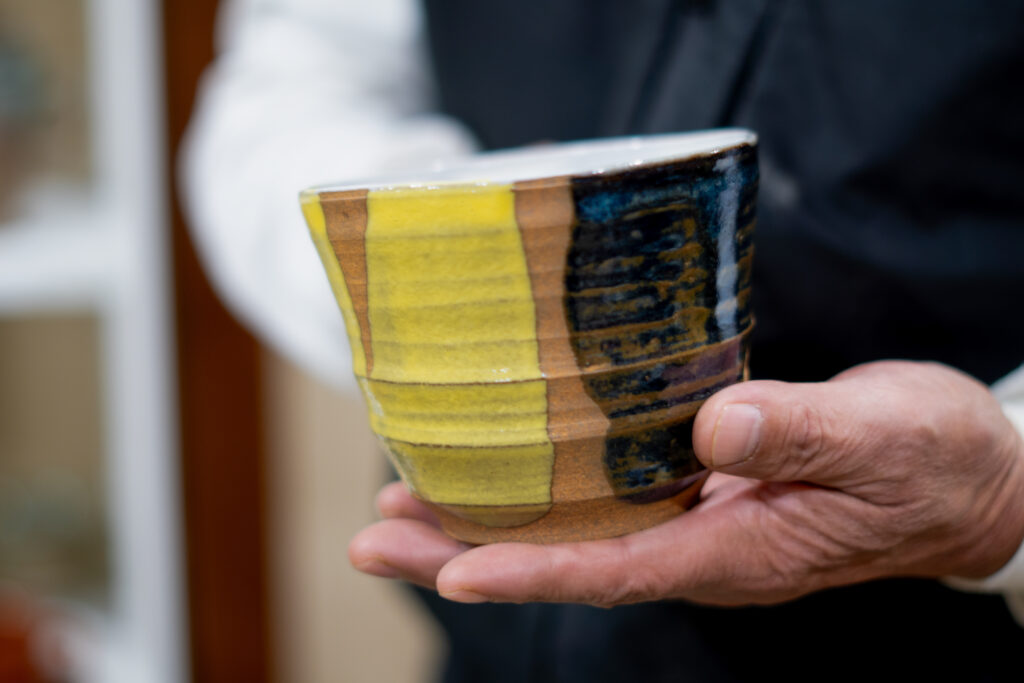
Over the years, Toru has responded to every kind of large-scale request. When customers ask for something new, he first tries making it. Recently, responding to visiting international customers in Tachikui, he created oversized mugs—so large that even he laughs, saying, “They’re huge, aren’t they?” These have quietly become popular.
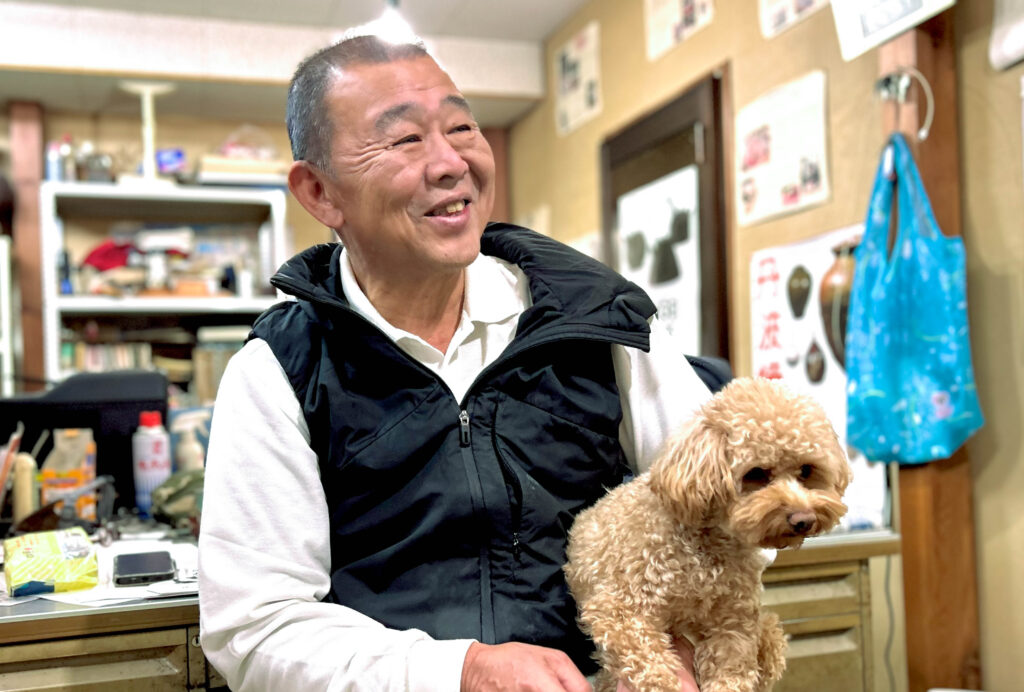
He never neglects honing his technical skills, yet he also values playfulness. Small daily joys, like the adorable paw prints and wagging tail of Kinako, the toy poodle welcomed into the family, sometimes find their way into the decorative motifs of his forms.
When handling mass production, he works with speed and precision. When creating freely, he allows room for imagination. The ability to move fluidly between these two modes is TANSAI’s true strength.
Rapid Response and Efficiency — Lessons Learned During the Era of High Economic Growth
When Toru was in junior high school, TANSAI operated Tachikui’s most prominent tunnel kiln, enabling large-scale production. The spacious workshop bustled with around twenty craftspeople, running from morning until night. He recalls often being called upon to help carry heavy pottery as part of the workforce.
After graduating from high school, Toru studied at an art school for two years. At his father’s urging, he then joined the major Japanese tableware mail-order company Tachikichi, where he learned the distribution side of Japanese ceramics. For eight years, he traveled to department stores across the country four to eight times a month, sharing product information and arranging displays as part of his sales role.
“What sells in Kyoto is completely different from what sells in Tamba. Talking with manufacturers from Seto and other production regions was incredibly stimulating.”
When he returned to the family potter, he struggled with the differences in work. In sales, one sheet of paperwork could complete a transaction. At the potter, receiving an order meant making each piece by hand. With a climbing kiln, color results vary every time. For orders with fixed deadlines, such as wedding tableware, inventory control and maintaining consistent quality required constant vigilance.
“Back then, if you missed a deadline, you were out. It felt like walking a tightrope every day.”
As times changed, so did the demand for tableware and business partners. The operation was eventually scaled down significantly.
In 2023, his beloved wife, who had long walked beside him and supported TANSAI, passed away. Amid deep grief, his son returned home, as if following in his grandfather’s footsteps. The workshop that once operated with twenty craftspeople now moves forward with a new rhythm shared by father and son.
“I’m grateful,” Toru says quietly, stroking Kinako. “I have to keep working hard so my son will feel glad he chose pottery.”
Embracing Change and Seeking New Paths
Since the World Expo, more international visitors have come to Tachikui. Noticing that many drink twice as much tea as Japanese customers, Toru began creating larger-capacity teaware. His flexibility in responding to needs draws upon the instincts cultivated during the era of mass production.
“If we keep doing only what we’ve always done, we won’t survive. I want to try different glazes and search for new materials. We have to keep our eyes on the changing environment.”
Having experienced the height of mass production, Toru does not fear change. Efficiency that wastes not even a shaving of clay. Reliability in meeting orders. And now, adaptability for a new era. With an eye that looks forward to the next move, he is quietly and steadily shaping the next chapter in TANSAI’s history.
Interview, Text, and Photography:NOUCHI Nana
Overview
of
TANSAI
Address
5-1 Onaka, Kamitachikui, Konda-cho, Tambasasayama, Hyogo, Japan
TEL
FAX
Website