

TOC
GAHO-GAMA
profile
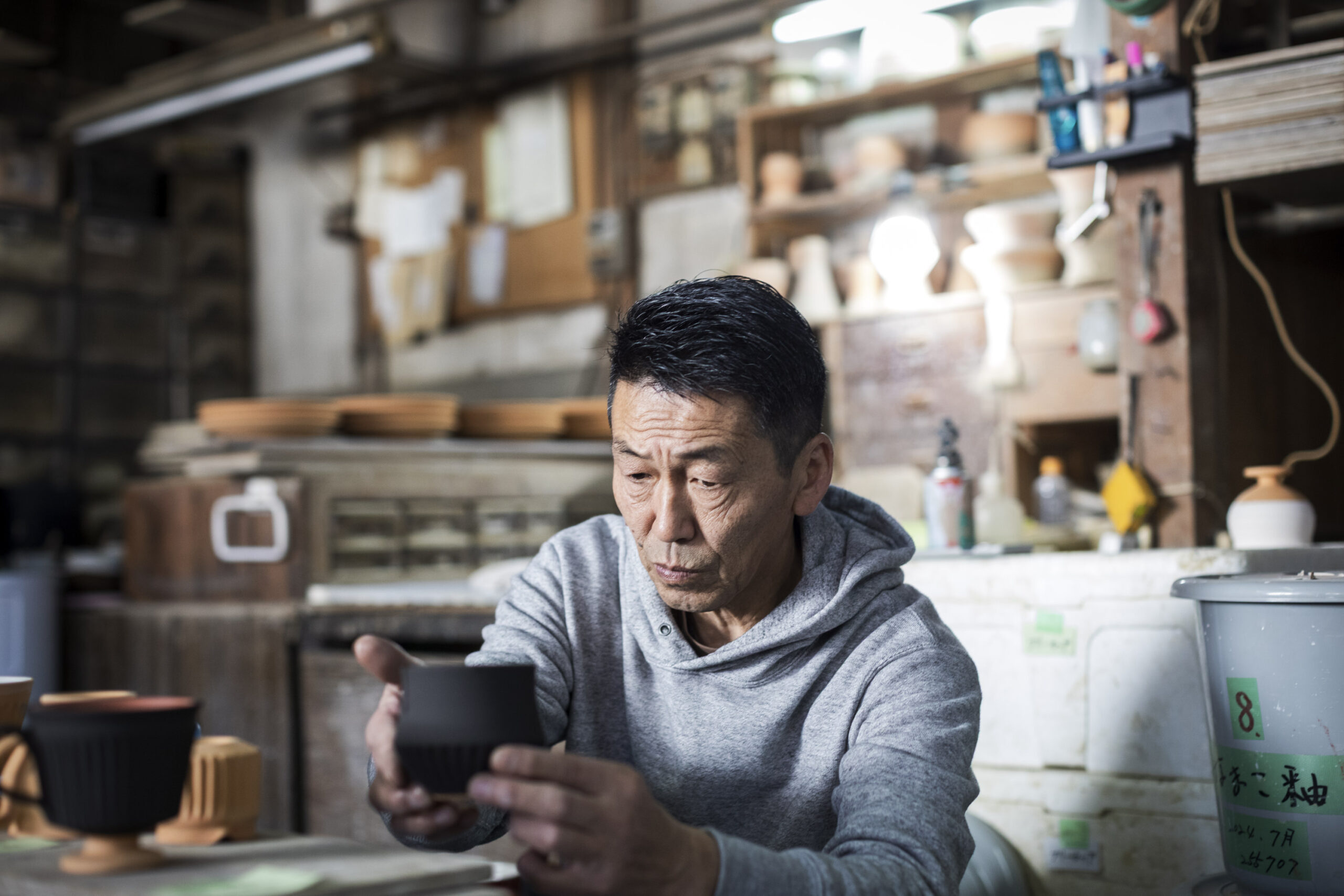
Hideyuki Ichino
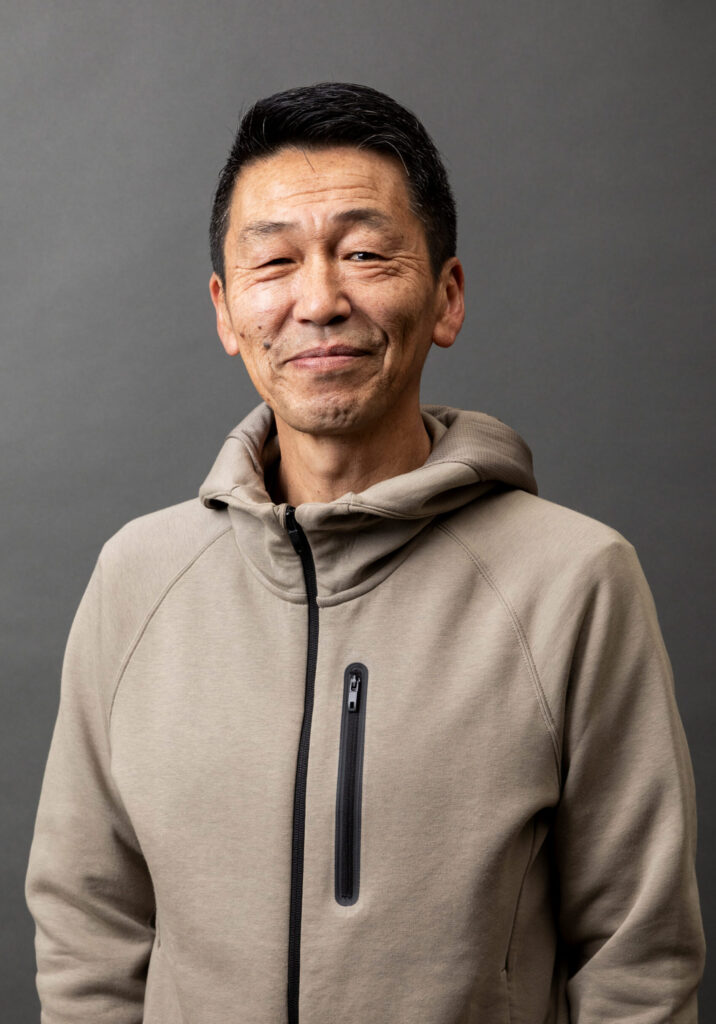
profile
Hideyuki Ichino
4th generation
Year of Birth:1963
Year Began Pottery:1985
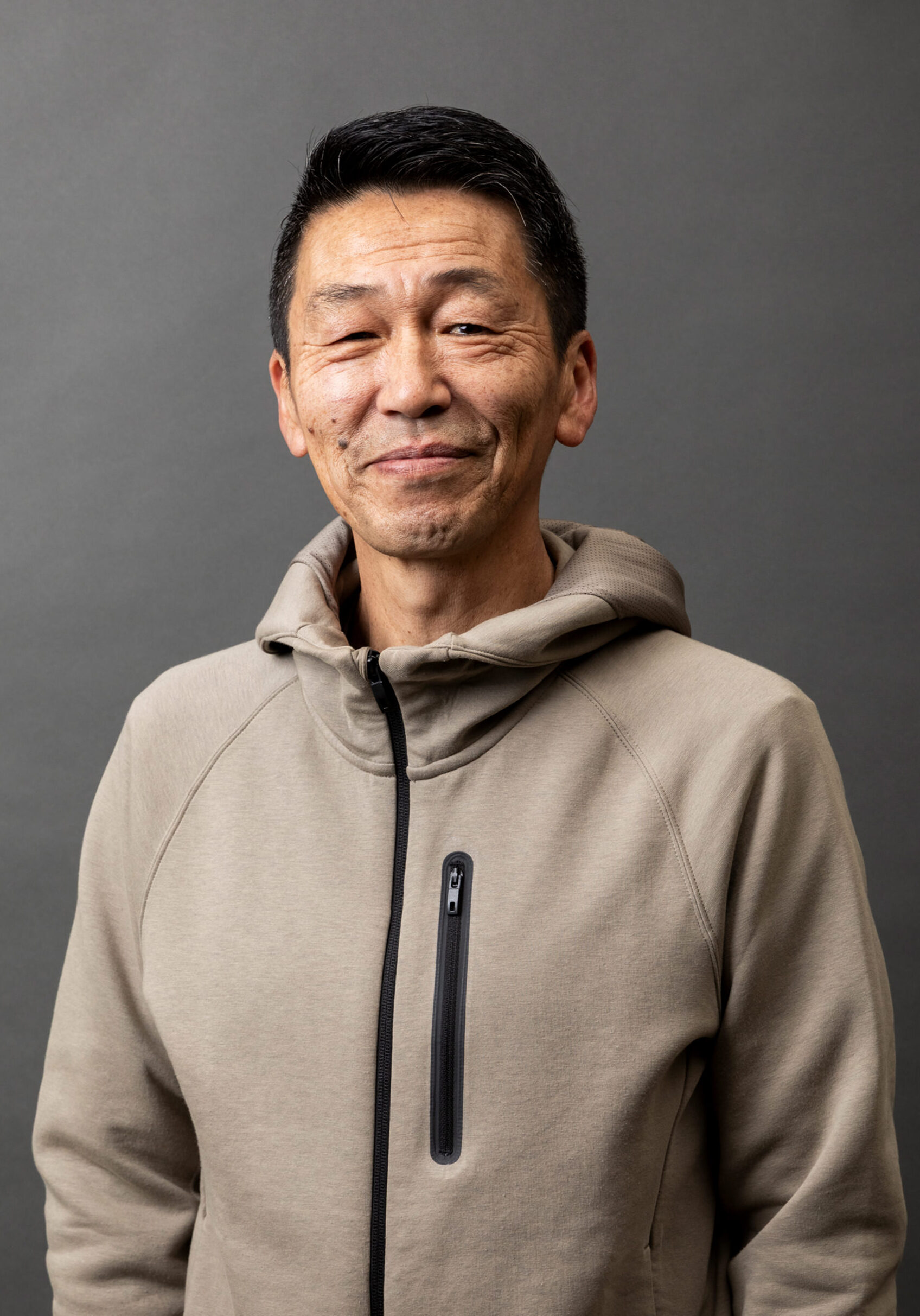
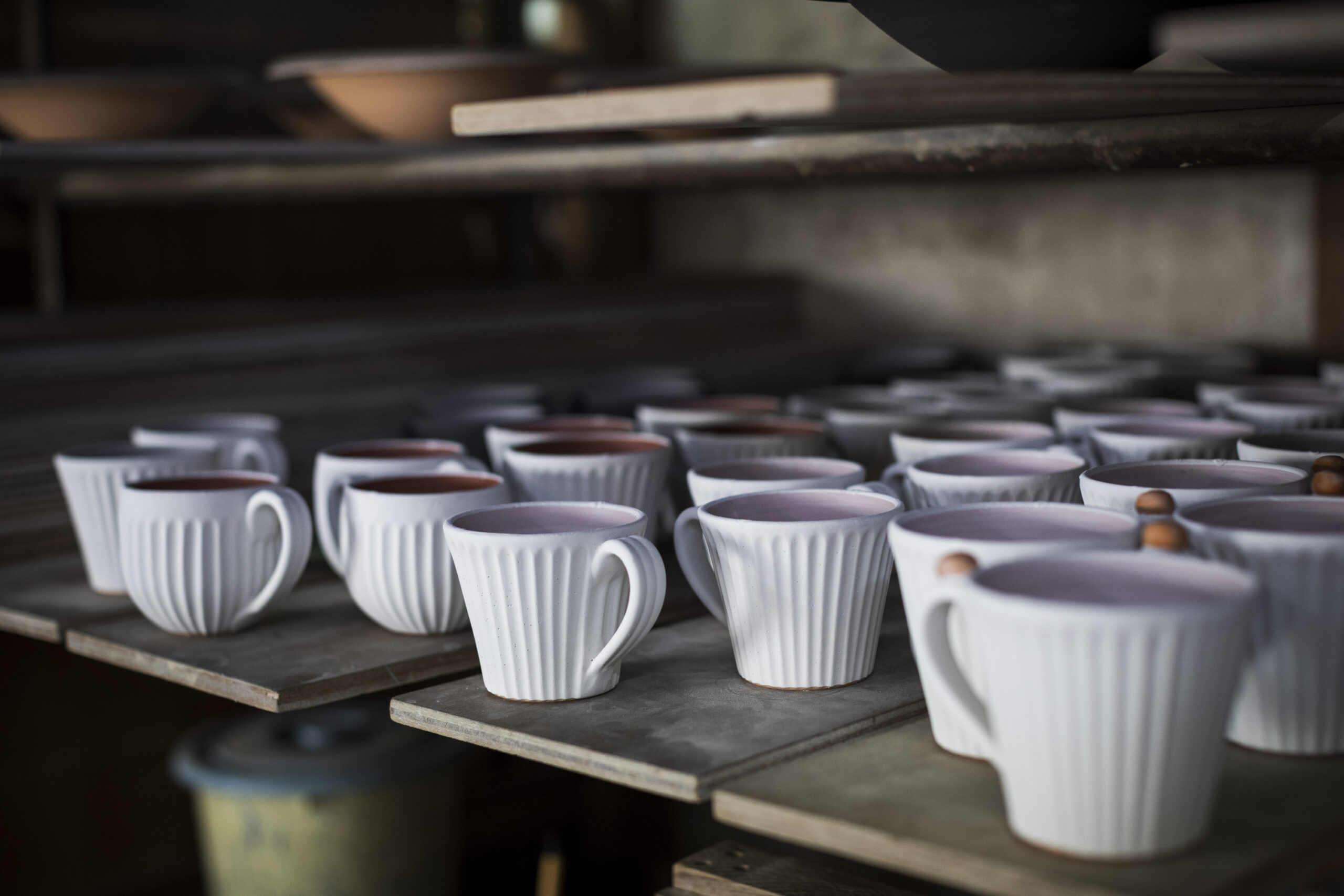
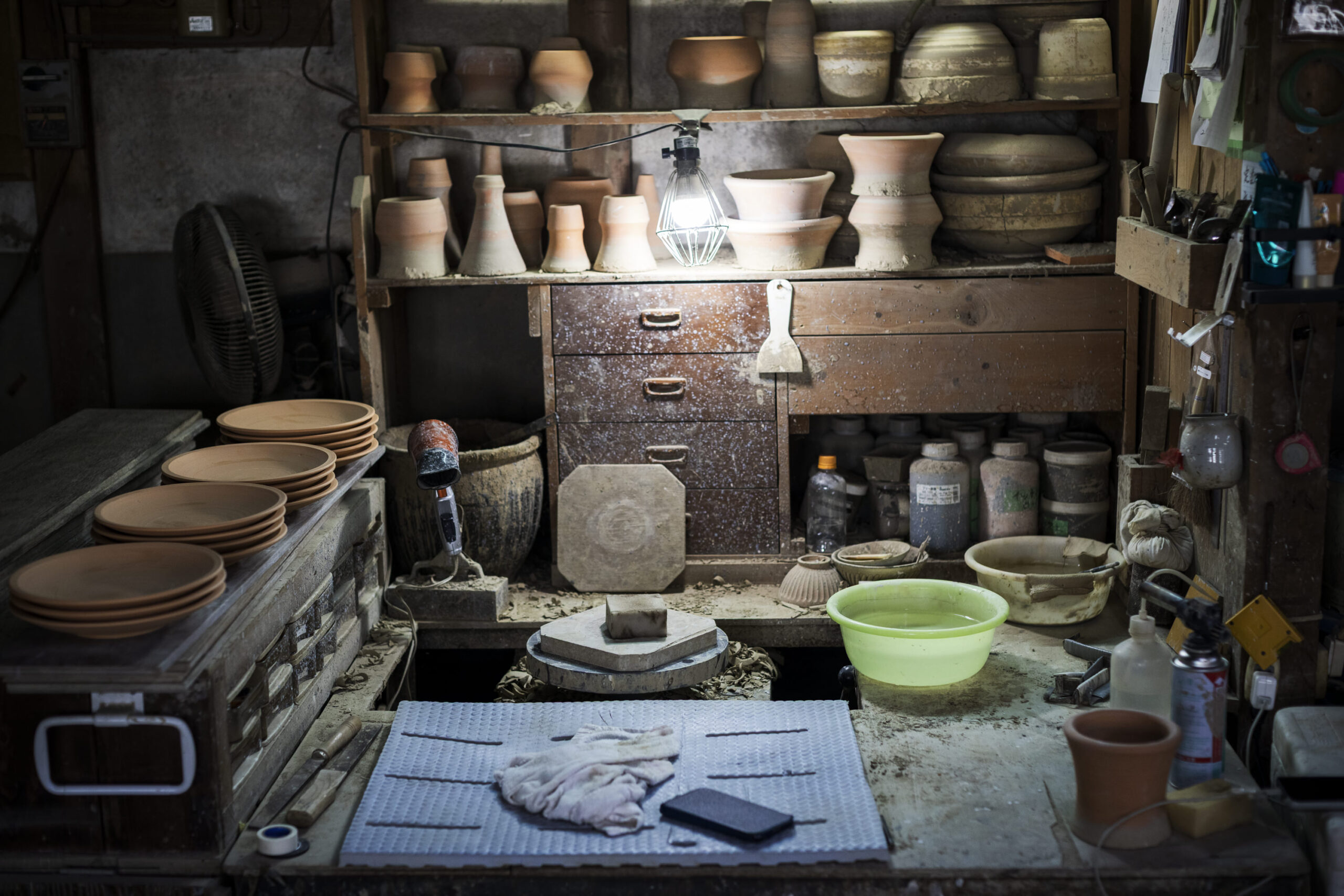
The state of the workshop
スクロールできます
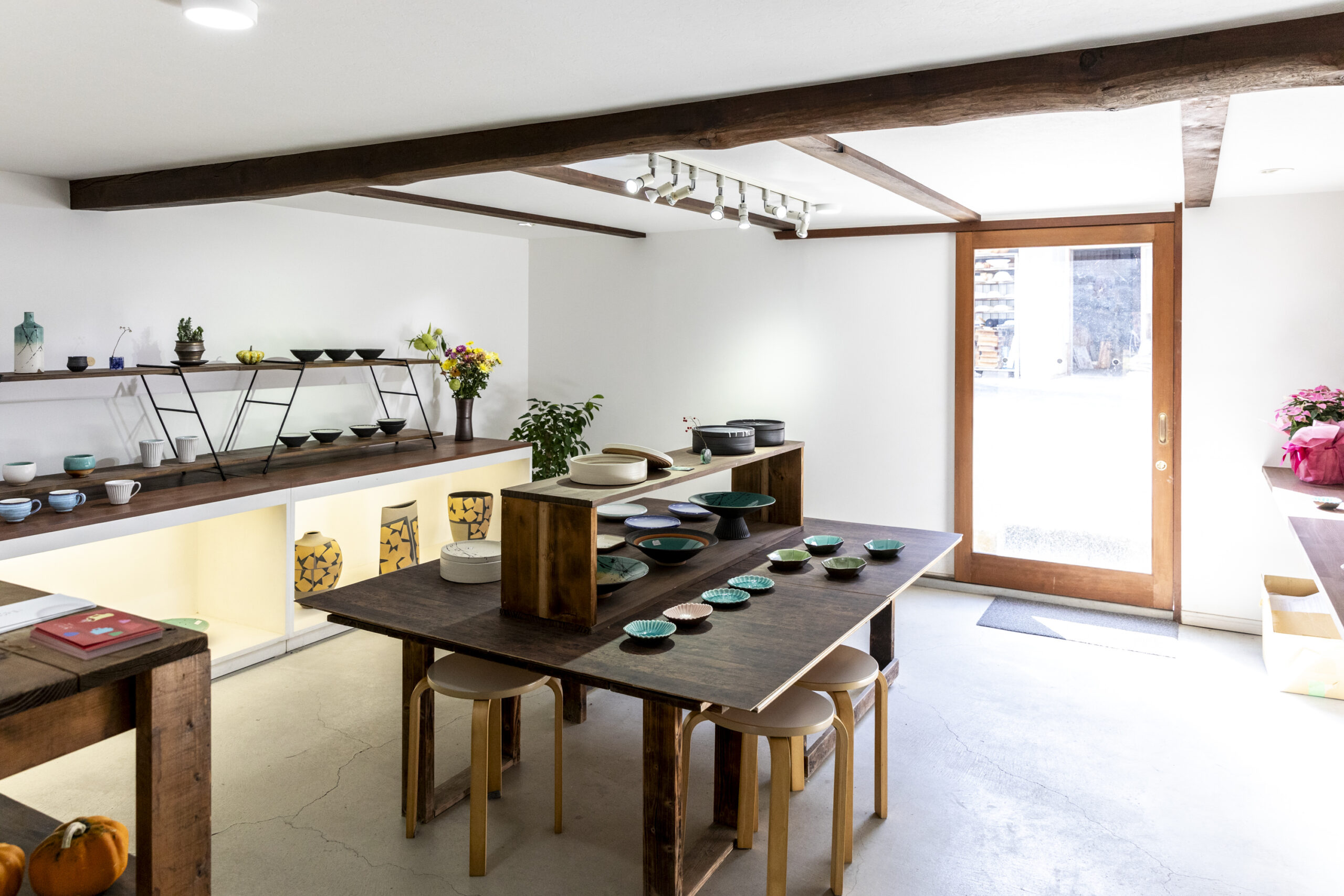


Works
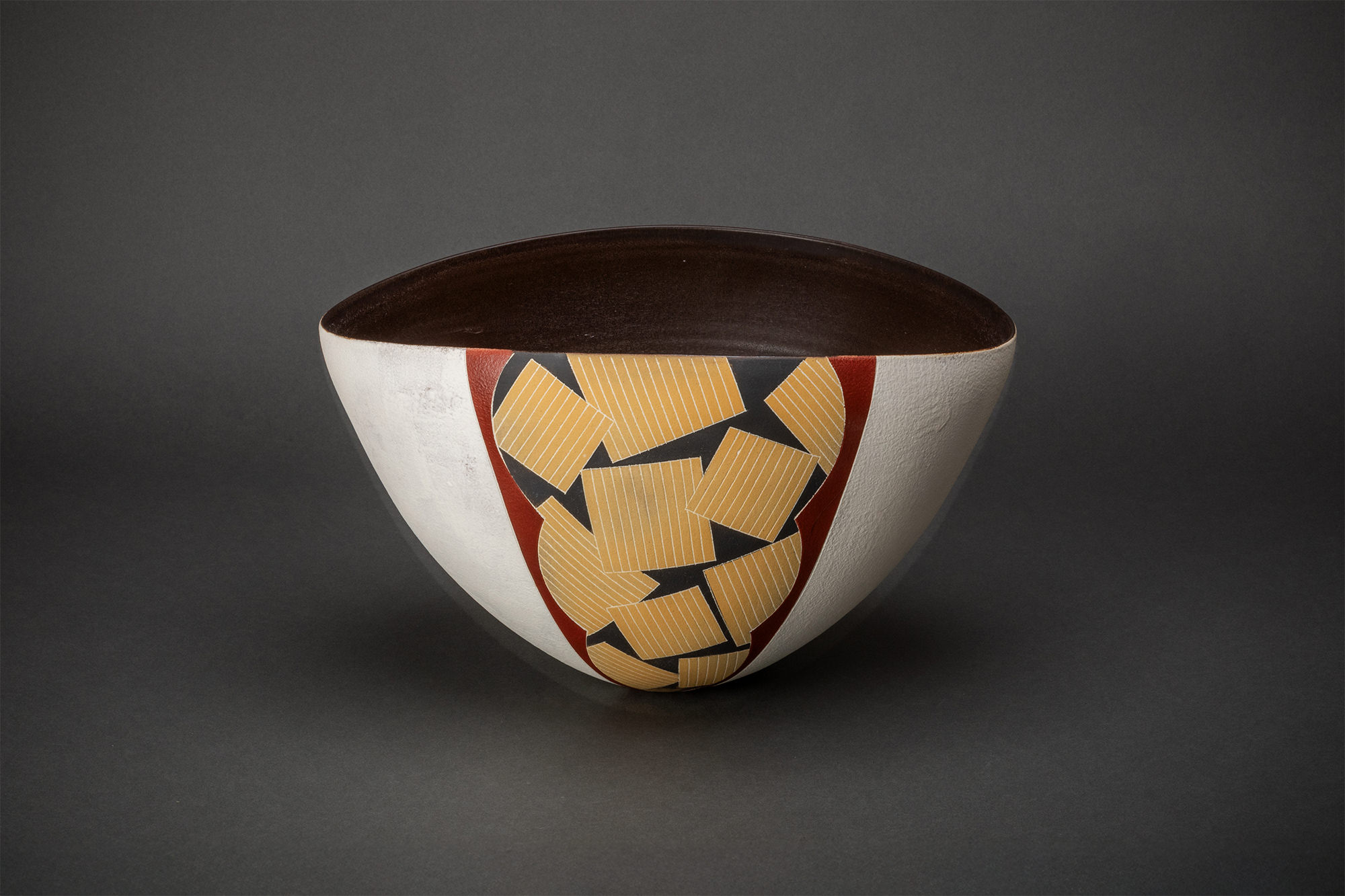
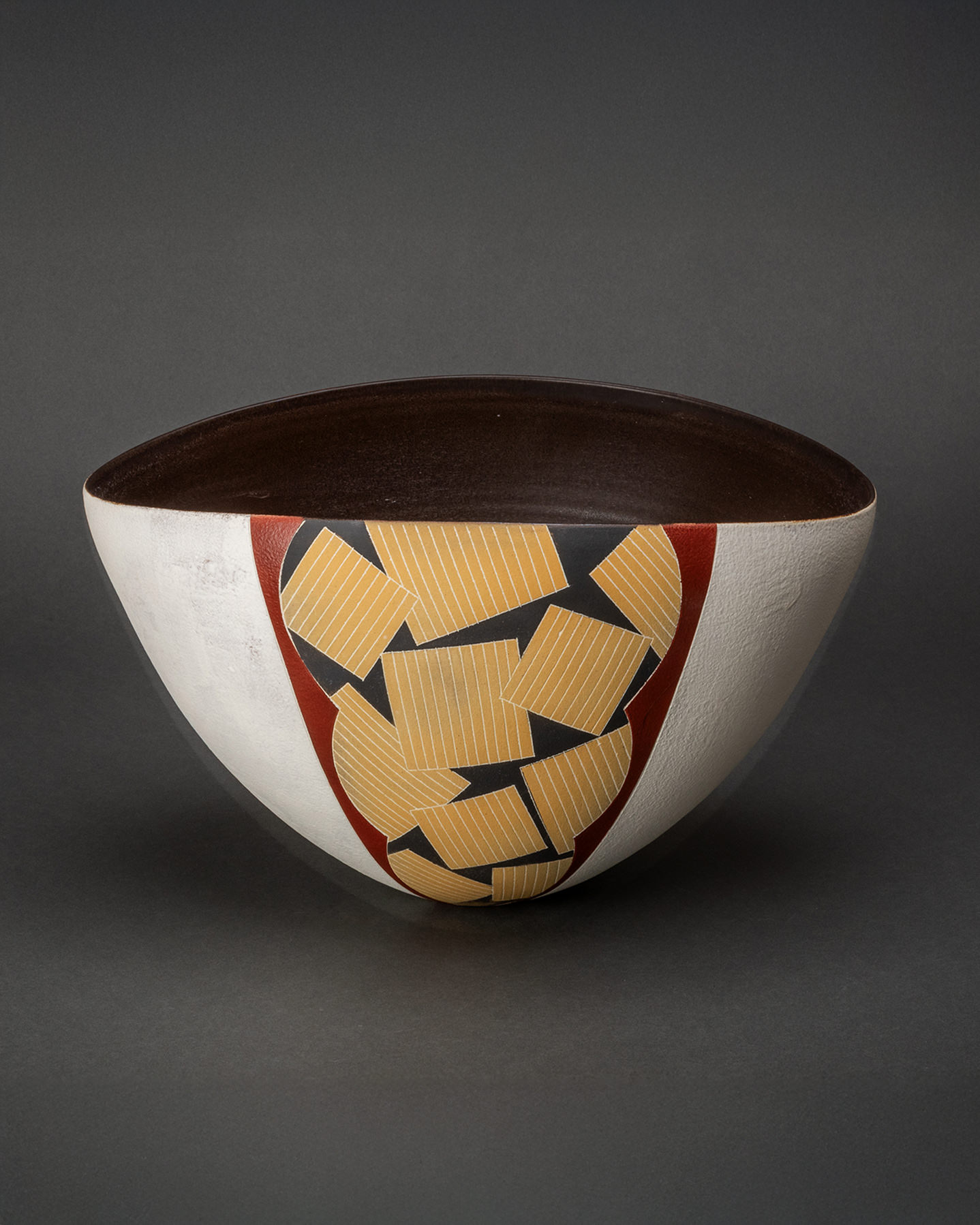
photo:AOTANI Takeru
Interview
“GAHO Blue,” born from tradition.
The pride of Ichino Hideyuki of GAHO-GAMA, an idea-driven artisan who continues to “reform” for the needs of the times
Lighting new color from a foundation of tradition: “contemporary mingei” for modern living
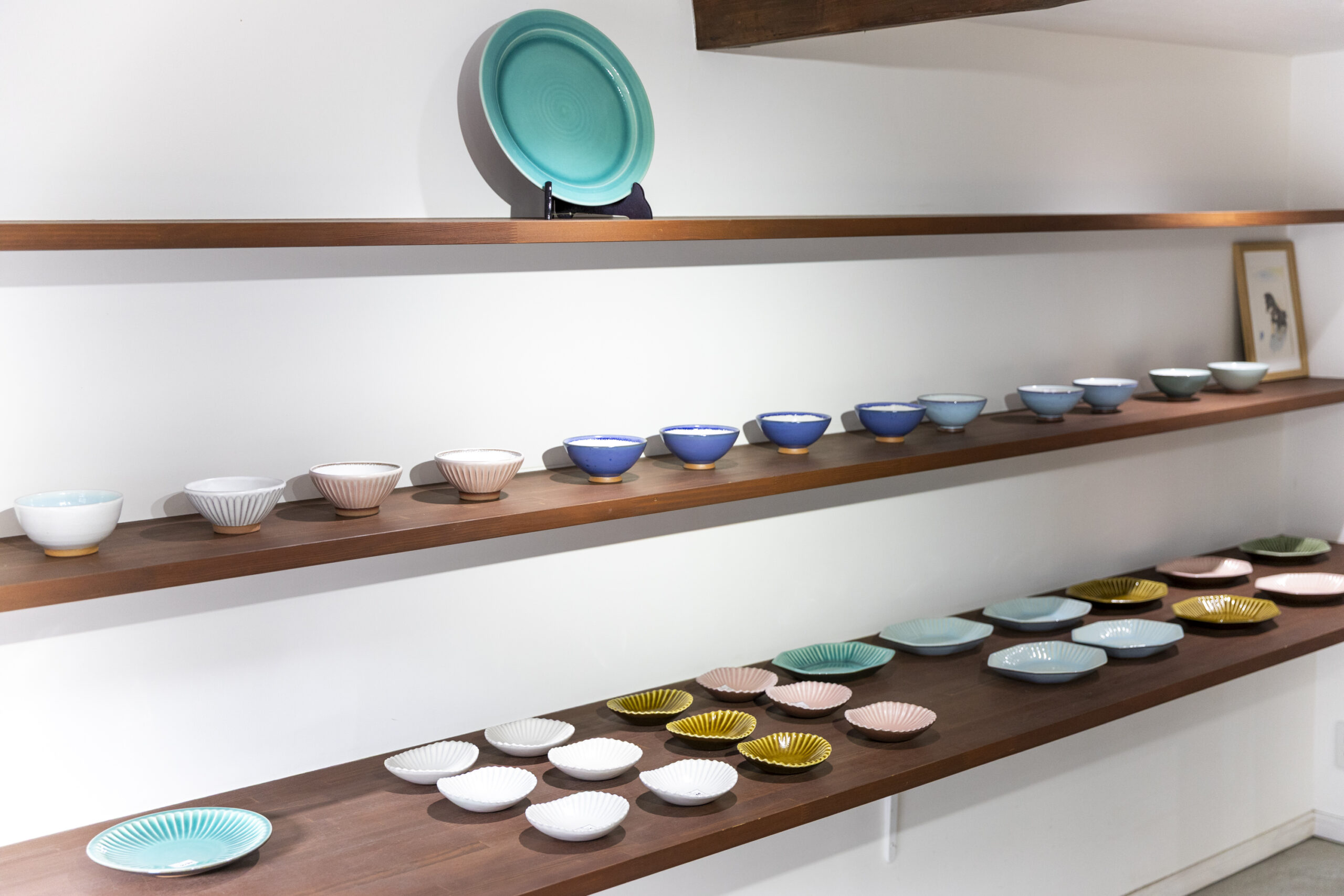
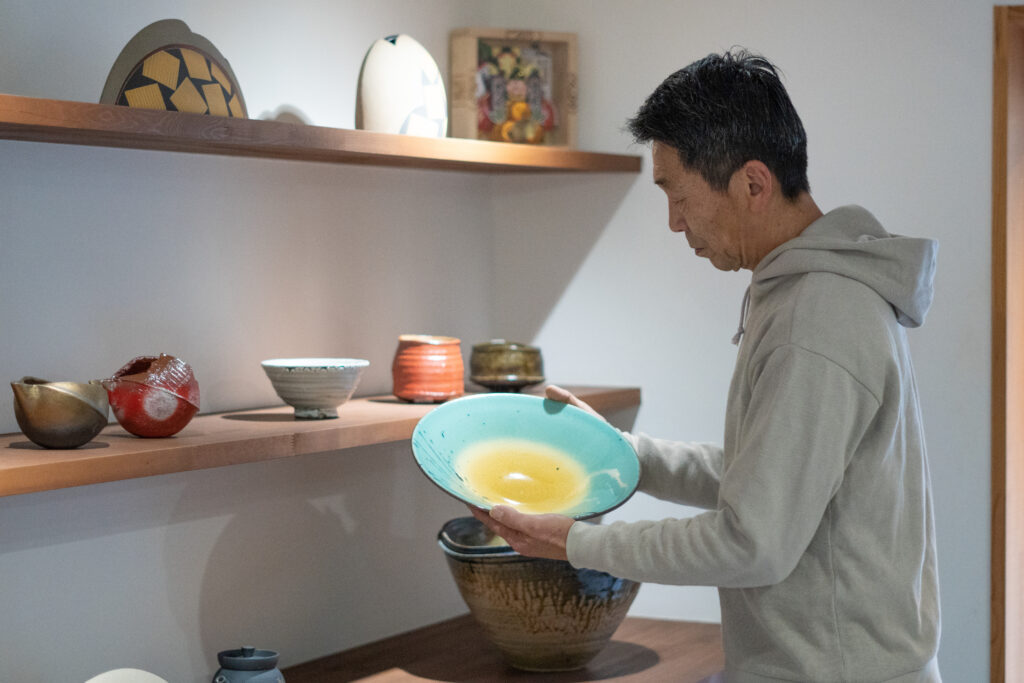
Inside the gallery of GAHO-GAMA, forms clad in vivid blue—quietly challenging conventional images of Tamba ware—stand alongside sculptural jars and vases. Plates featuring shinogi, the traditional technique of carving rhythmic grooves across the surface, are also displayed.
“When I finished my training at 23, most Tamba ware was brown or black. But I’ve always loved blue, so I thought I’d try making it.”
So recalls Ichino Hideyuki, fourth-generation head of GAHO-GAMA. At the time, glazes using minerals such as cobalt were still rare. Through self-study and mentorship from a university professor, he mastered these materials and established his signature “GAHO Blue.”
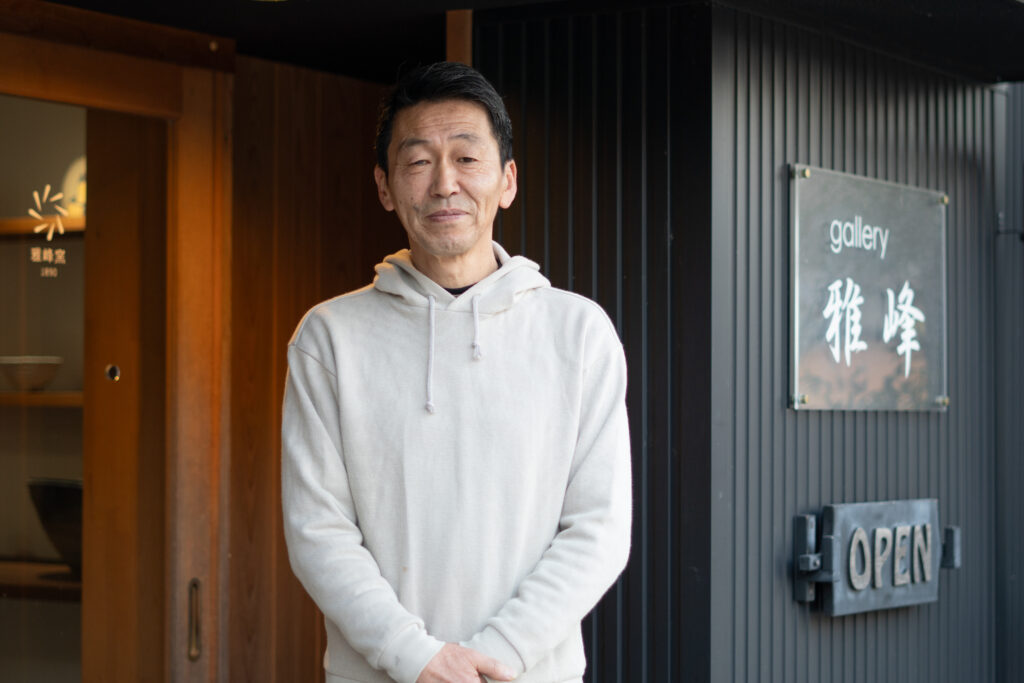
Yet the early years were met with harsh criticism. When his father suddenly fell ill, Hideyuki took over the potter and began selling GAHO Blue pieces. Longtime mingei collectors who had supported the potter since his grandfather’s era turned away, saying, “This isn’t mingei.” For a time, customers nearly disappeared.
“I was desperate to support my family. That’s when I returned to the shinogi technique my mentor taught me. I believed that combining traditional skills with colors and forms suited to modern life would create new value.”
From this decision emerged a style he calls “contemporary mingei,” which attracted a new generation of admirers. Rather than preserving tradition unchanged, he “reforms” it for today’s lifestyles. This flexible mindset is the essence of Hideyuki’s craft.
Raised as the “seed of livelihood”: a resolve to live by skill alone
From childhood, Hideyuki was lovingly raised by his grandmother as the heir—“the seed that would sustain our meals,” as she put it. The workshop then was a lively place where live-in artisans gathered, and he naturally came to understand that this craft was one that drew people together.
Accompanying his grandfather to solo exhibitions across Japan from the age of three or four also left a deep impression. He experienced not only the making of forms but also the moment they were chosen and purchased by customers.
“Since I was little, customers would say, ‘Are you the fourth generation?’ Taking over the family potter felt like the most natural path for me.”
After high school, instead of pursuing further academic study, he chose to train under a relative’s potter nearby.
“I hated studying. I wanted to get into the field quickly and become fully independent. The idea of living by my own skill as an artisan really appealed to me.”
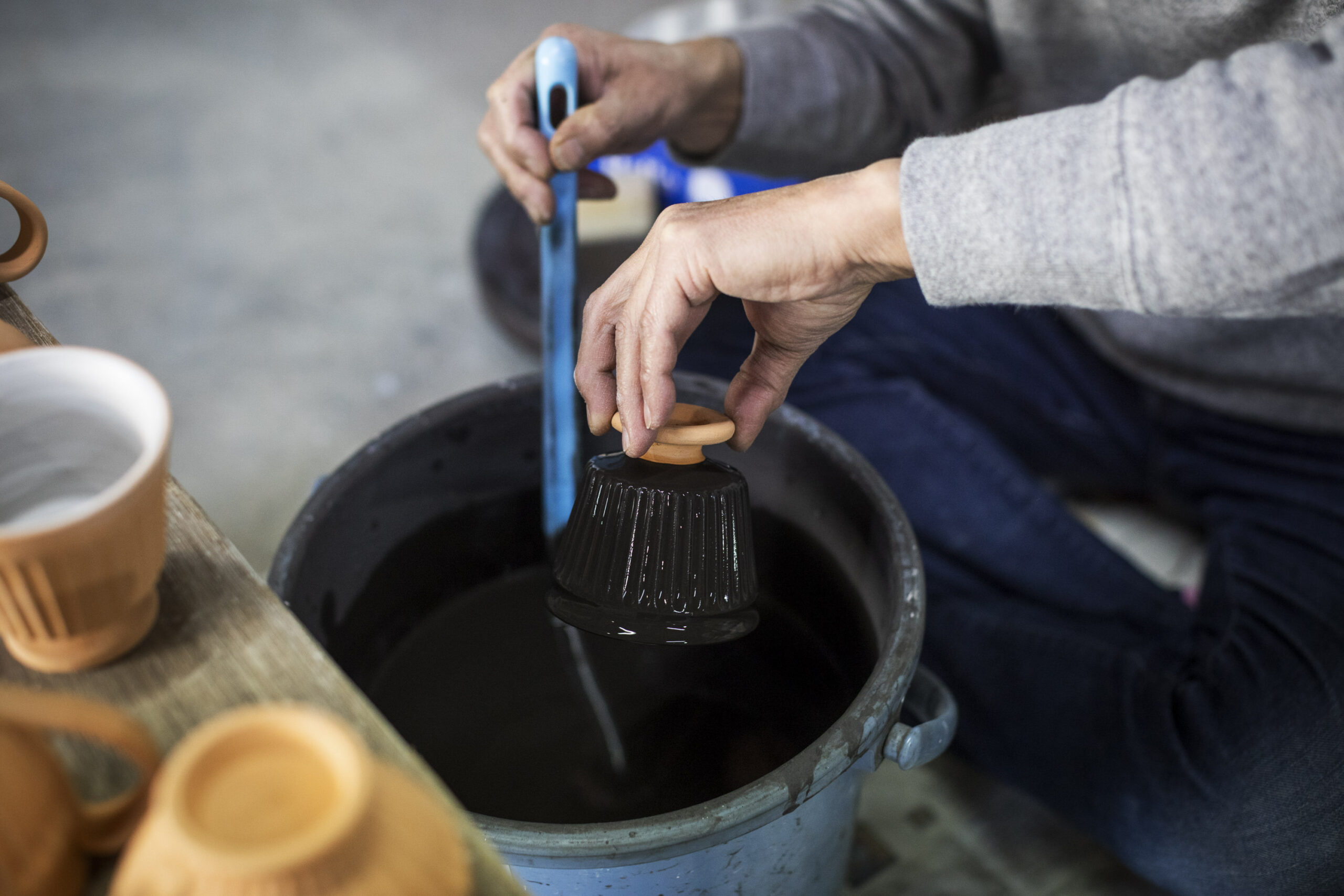
Following his grandfather’s belief that mastering the wheel was essential, he spent four and a half rigorous years training under his uncle, Shimizu Tadayoshi of Tōhō-gama, absorbing technique through demanding instruction that, in hindsight, he now treasures.
After completing his apprenticeship, he began submitting works to juried exhibitions. As his pieces were repeatedly selected, he learned a crucial lesson: originality was essential. If a work resembled something already existing, he would not release it. Through this process, he honed a discerning eye for what only he could create.
Creativity drawn from everyday life: connecting with fans as he is
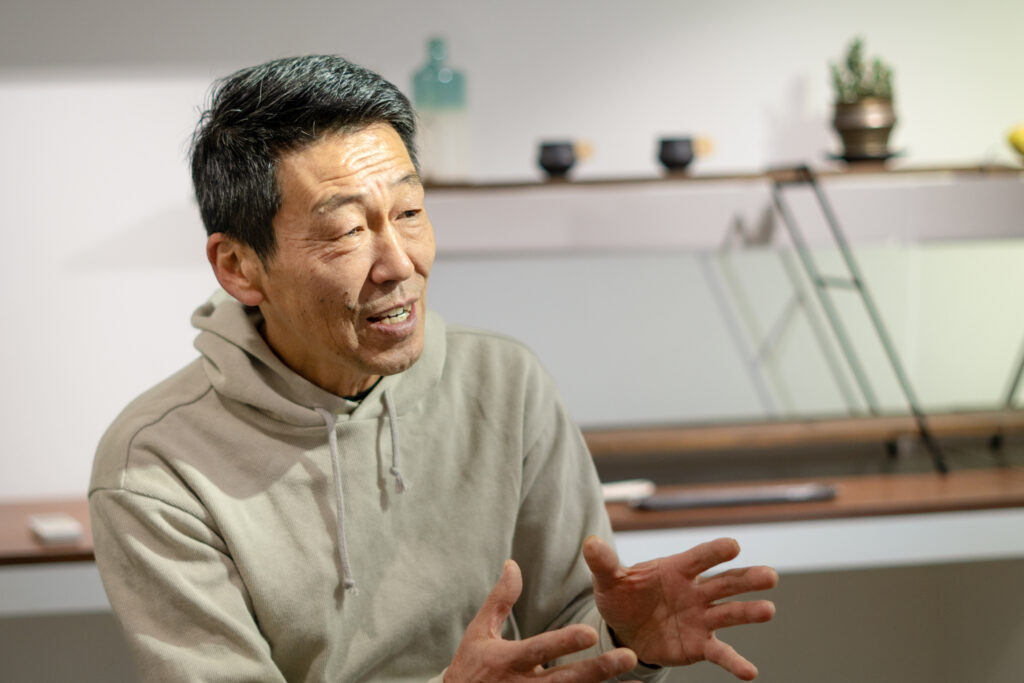
Hideyuki describes himself as “an artisan with ideas rather than form-making skill.” Inspiration comes not from special places but from everyday scenes: café wallpapers, restroom tiles, or fleeting views that catch his eye. These impressions are stored in his mind and later combined with traditional forms and motifs to create new works.
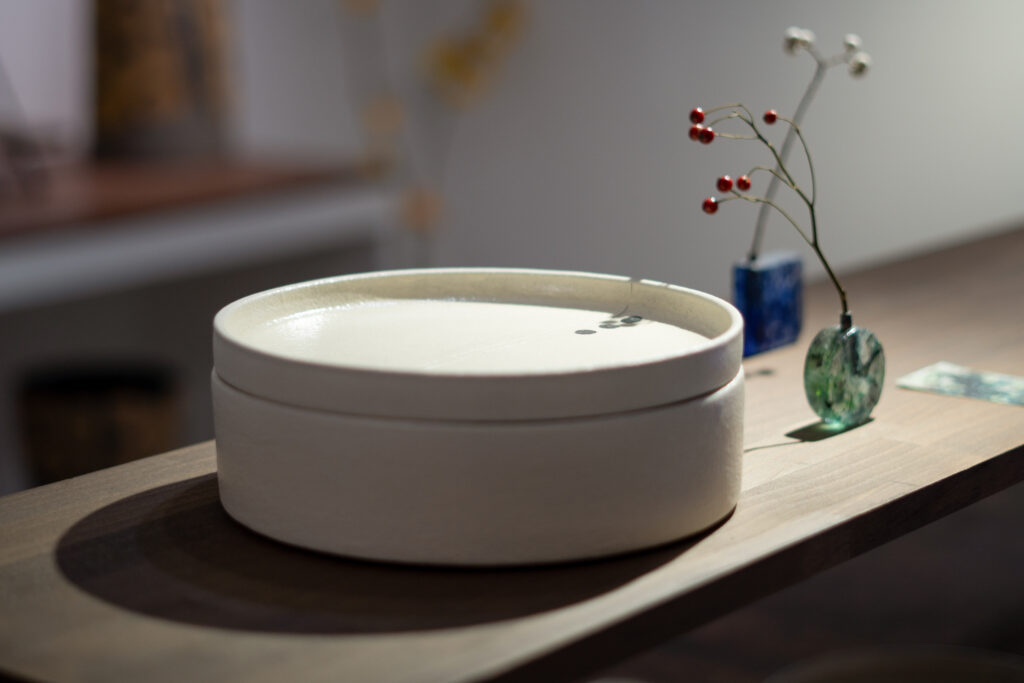
One example is his “Hitoe” series. In response to the rise of individual dining during the pandemic, he reimagined the traditional tiered jubako box so that even a single tier could function as a plate.
“Wouldn’t it be lovely to gift sekihan or chestnut rice in this instead of a plastic container?” he says with a smile, always envisioning how his forms will be used.
His personality also attracts many admirers through social media. On Instagram, which he describes as “almost a hobby,” he shares his thoughts in his own words. On the first day of every exhibition, he stands in the gallery from morning to night, drawing energy from conversations with visitors.
“It makes me genuinely happy when people show me photos of my pieces in use on social media. I’m enjoying this more than treating it as work, and maybe that feeling comes across to those who see it.”
While firmly rooted in the Tamba pottery village, Hideyuki actively engages with people from other industries and seeks new inspiration. The light, warm atmosphere that characterizes GAHO-GAMA’s works may well reflect his own unpretentious way of life.
Interview, Text, and Photography:NOUCHI Nana
Overview
of
GAHO-GAMA
Address
355 Kamitachikui, Konda-cho, Tambasasayama, Hyogo, Japan
TEL
FAX
Website