
TOC
SHOZO-GAMA
profile
Shusaku Ichino

profile
Shusaku Ichino
3rd generation
Year of Birth:1986
Year Began Pottery:2010
Education / Training Background
Sanda Gakuen High School
Ryukoku University
Kyoto Prefectural Advanced Technical School of Ceramics
Major Awards
Excellence Award, Chanoyu no Zokei Exhibition
Grand Prize, Kobe Biennale Contemporary Ceramics Competition
Honorable Mention, Hagi Grand Prize Exhibition of Contemporary Ceramics
Kinki Award, Japan Traditional Crafts Kinki Exhibition
Selected, Japan Traditional Crafts Exhibition, etc.

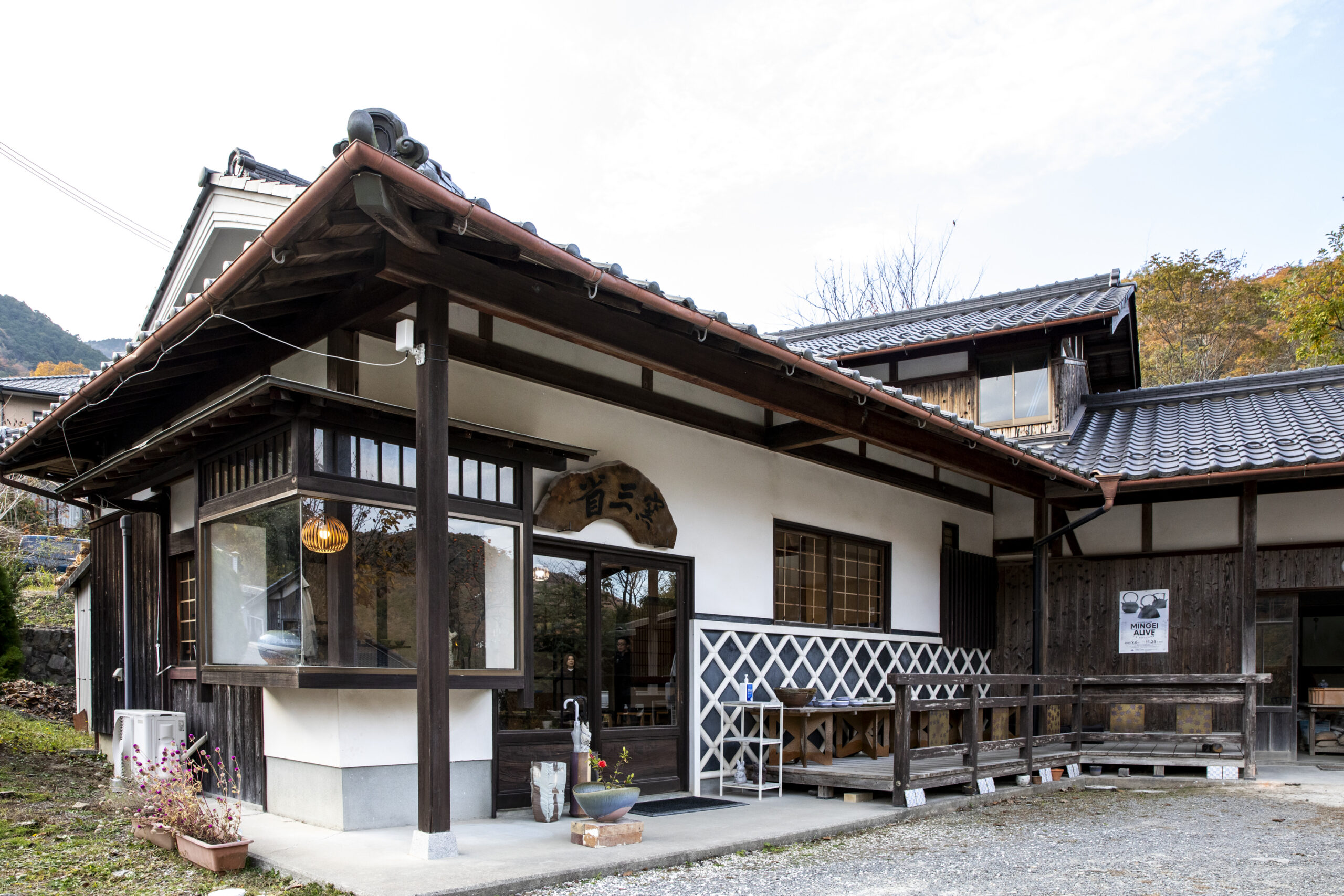
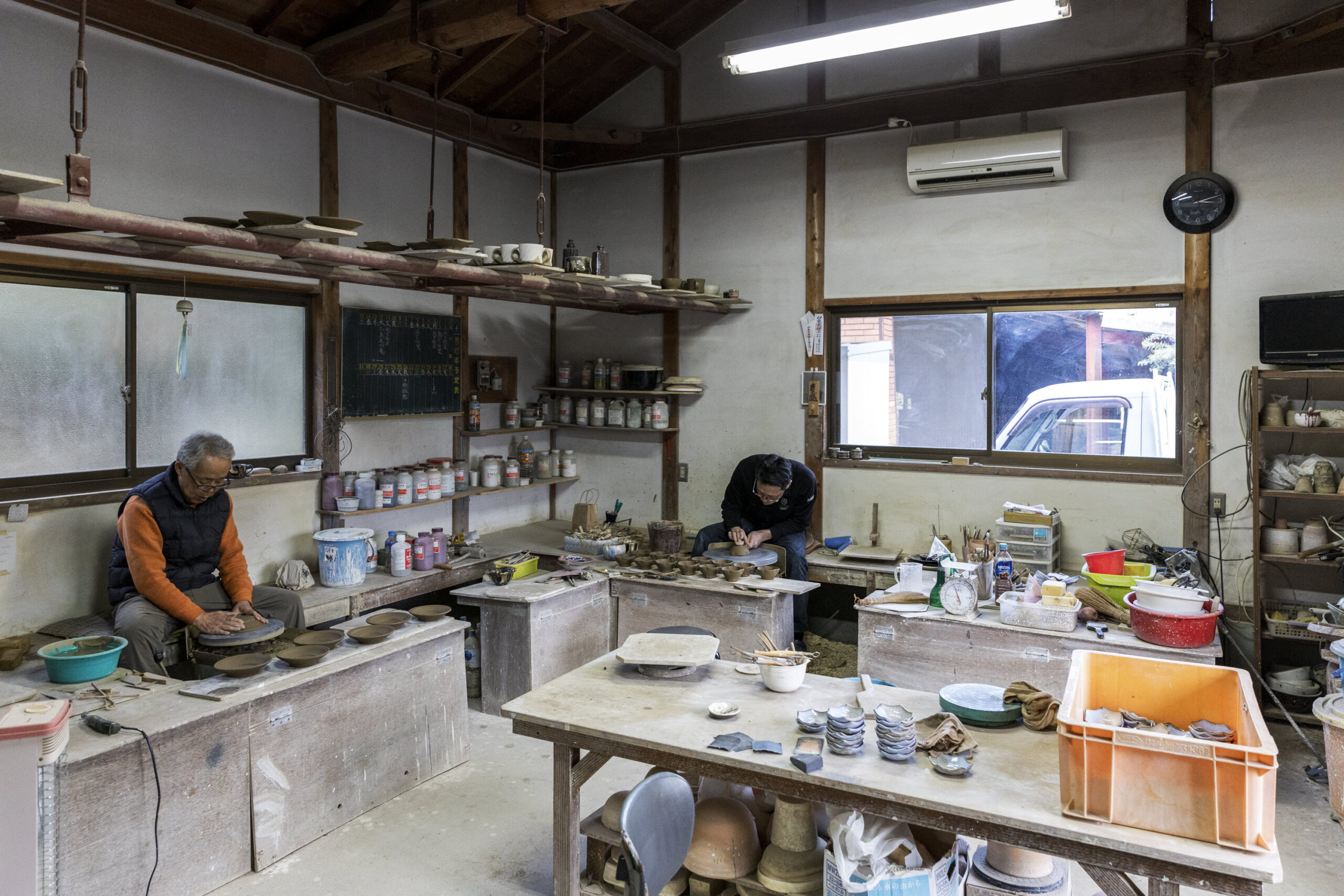
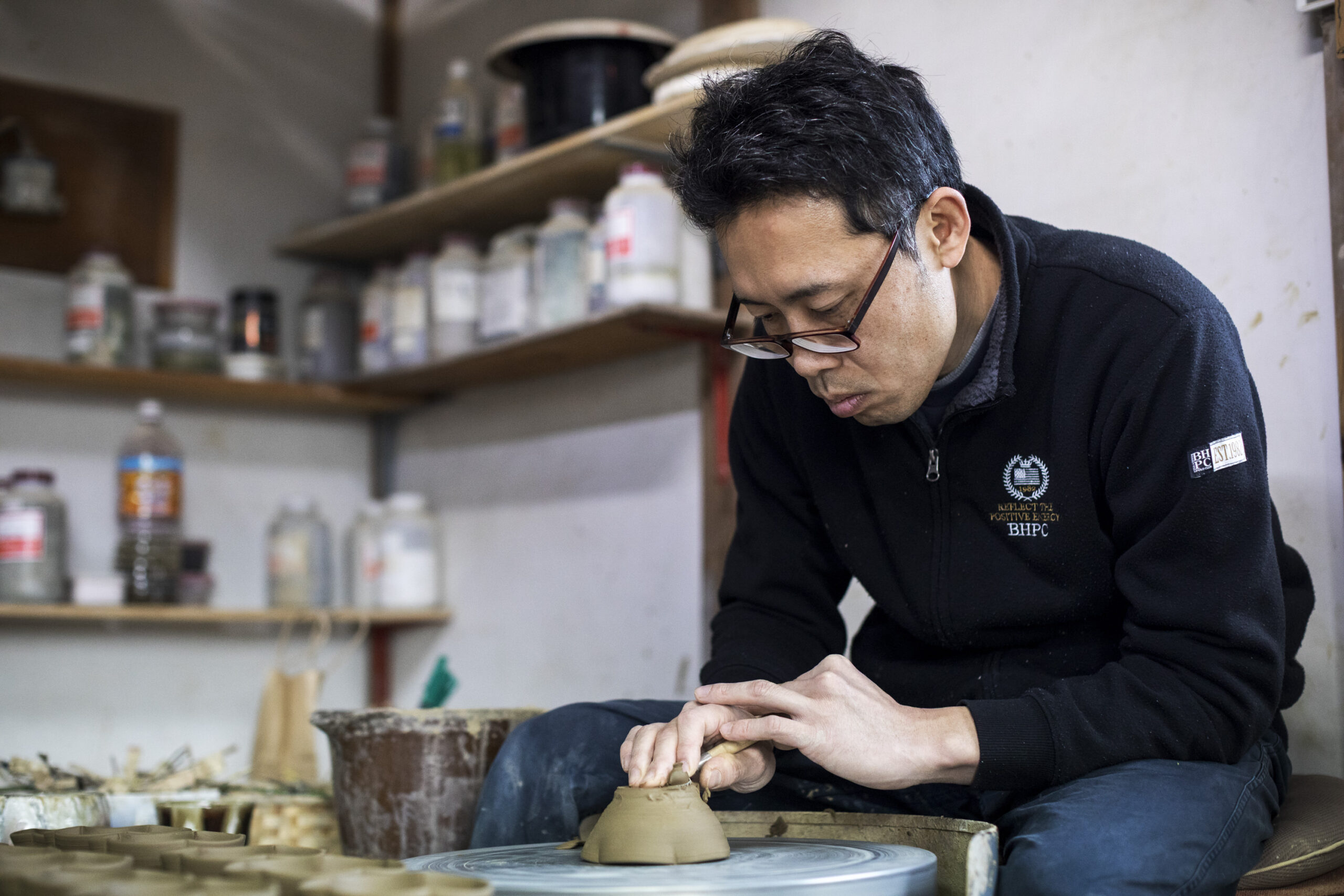
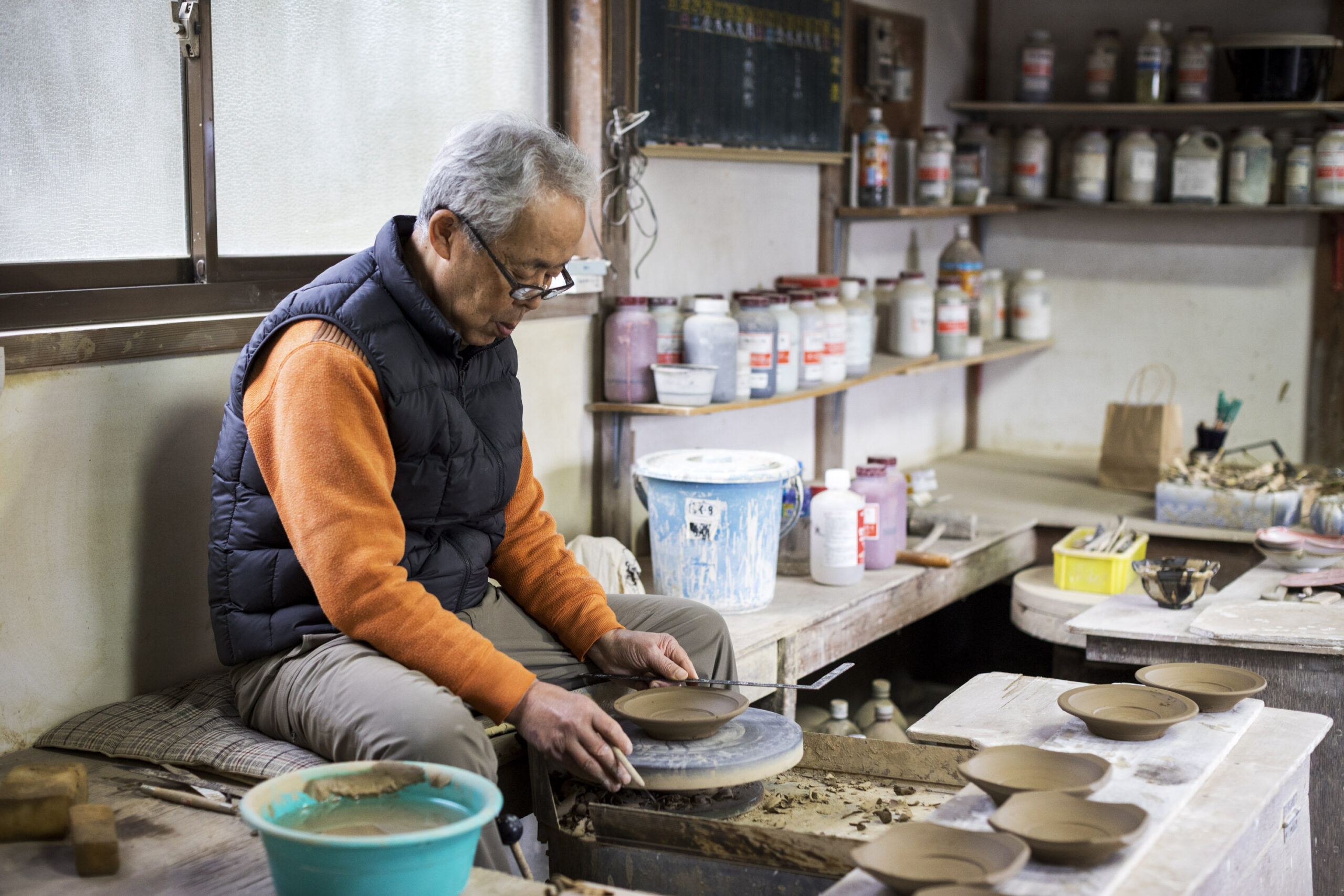
The state of the workshop
スクロールできます
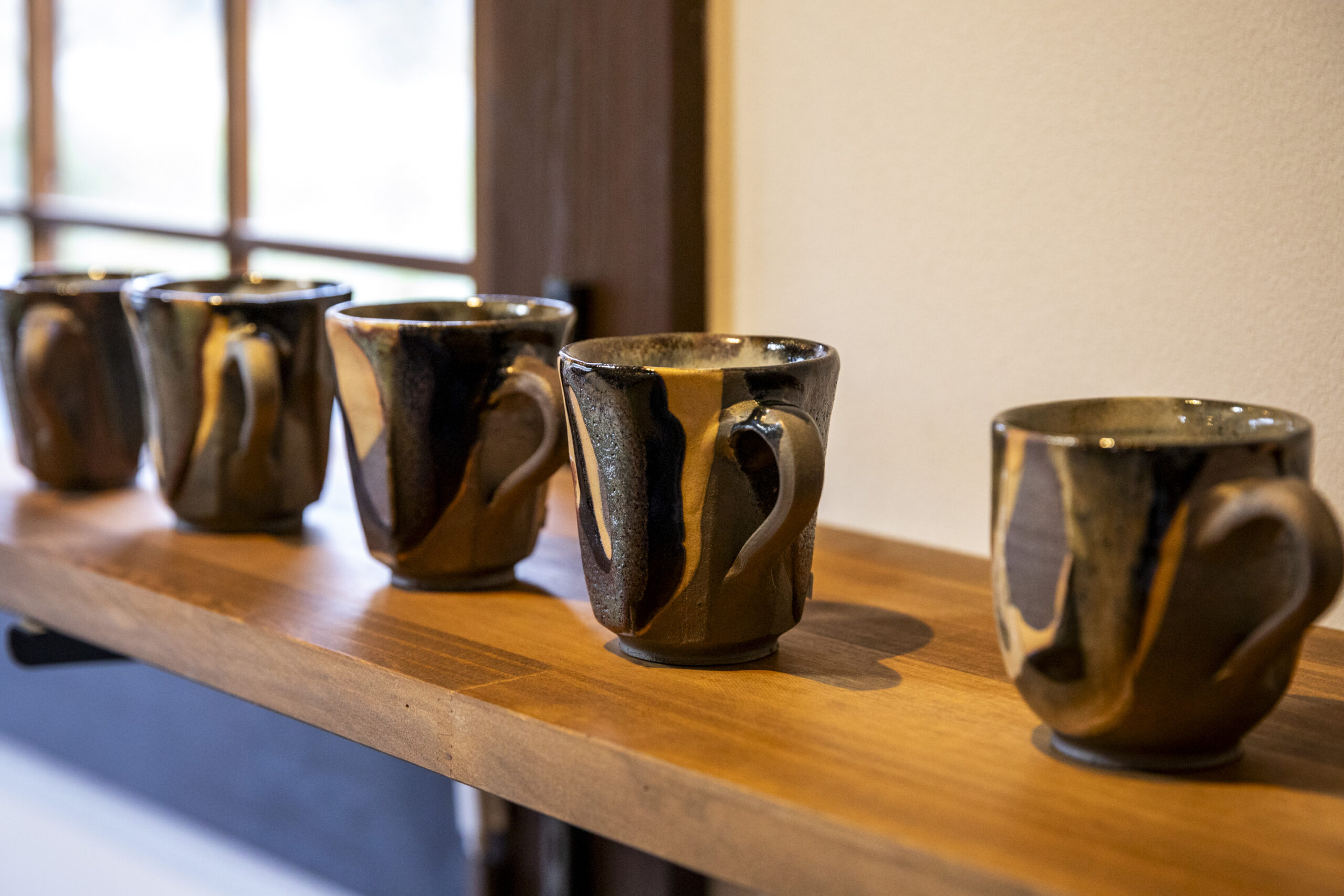
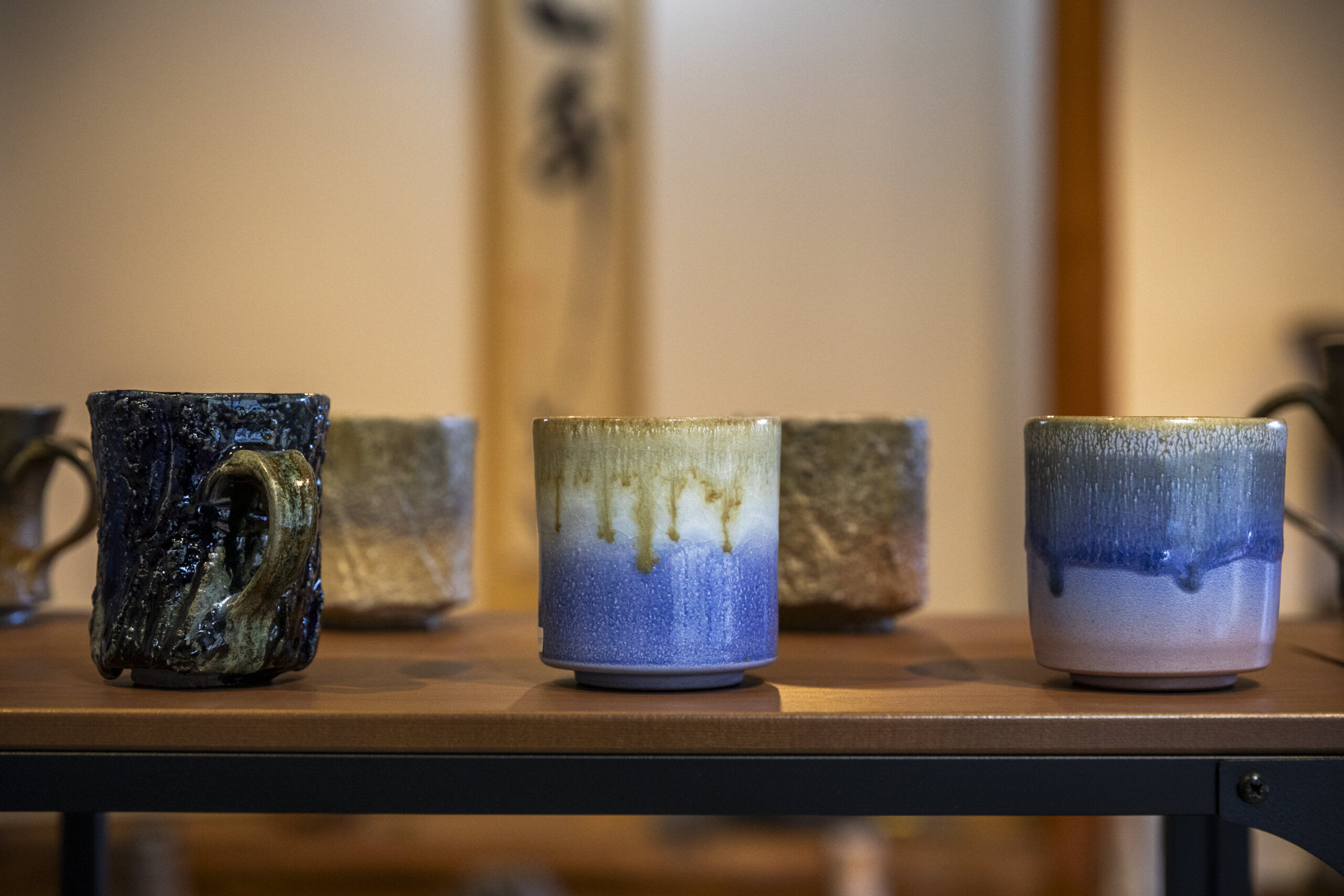



Works
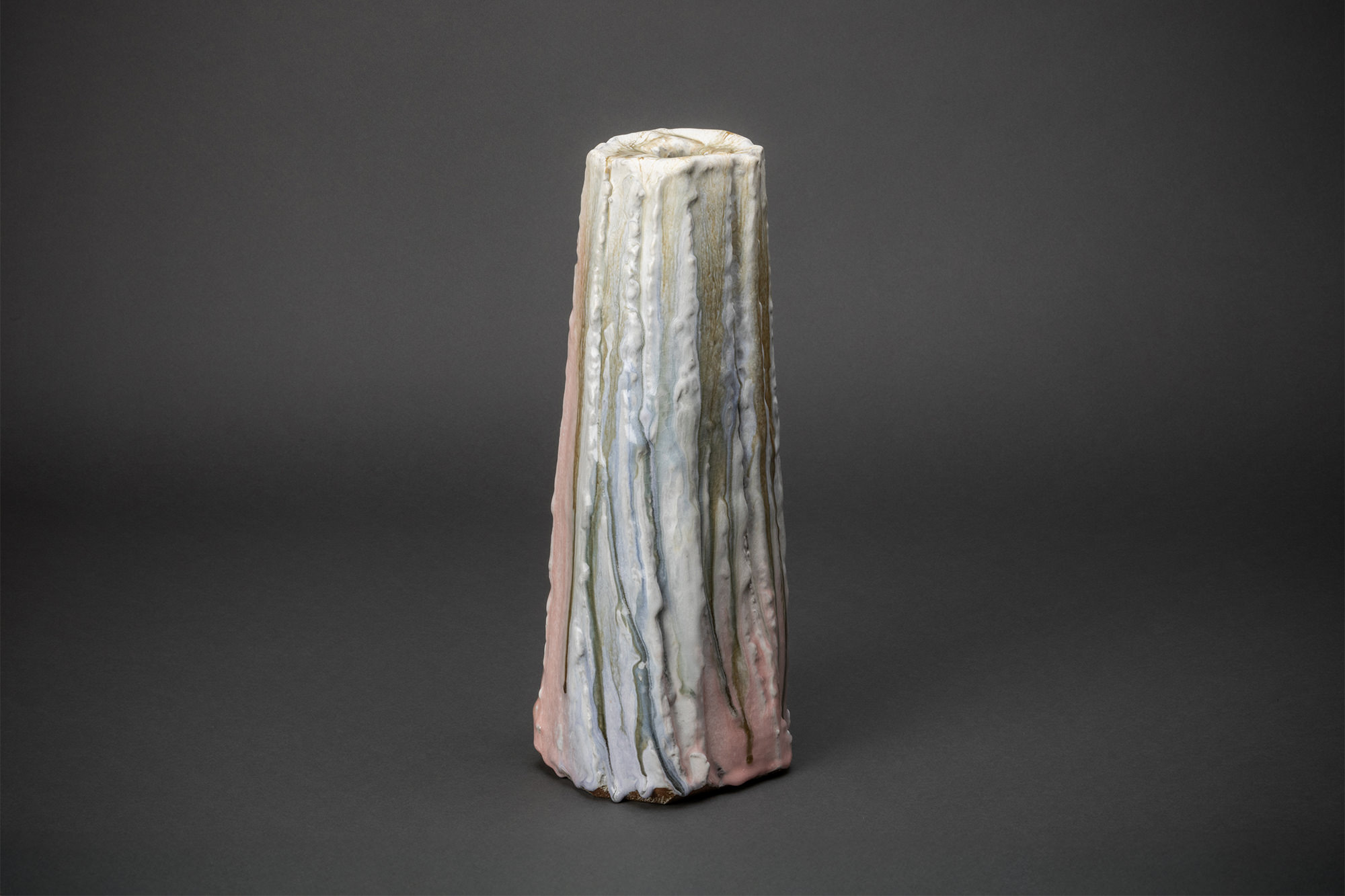
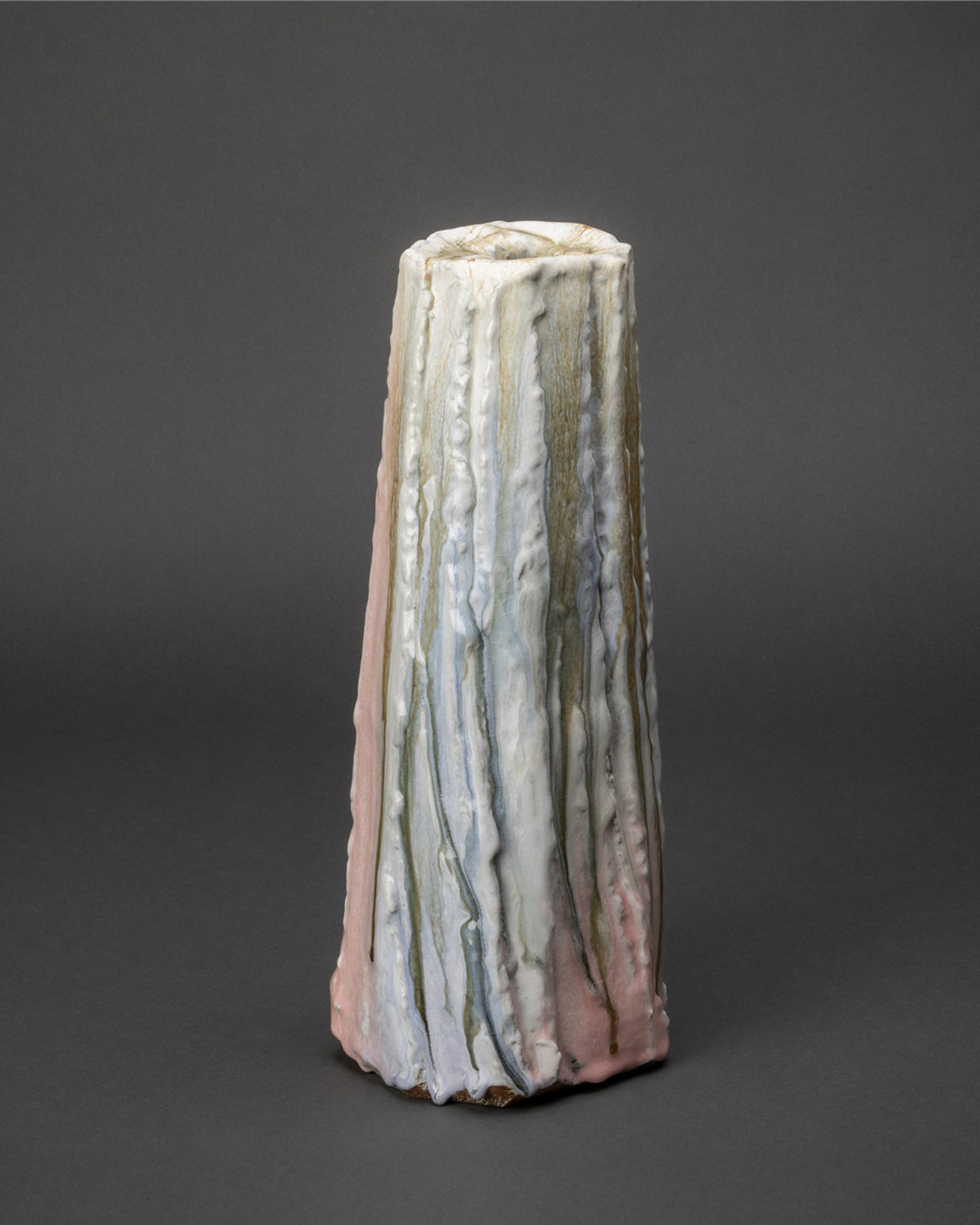
photo:AOTANI Takeru
Interview
Carrying graceful light onto Tamba’s traditional ash glaze. The new rhythm of “yūsai” envisioned by SHOZO-GAMA’s Shusaku Ichino
Building on Traditional Ash Glaze. The Depth of “Yūsai” Woven with Fresh Sensibility
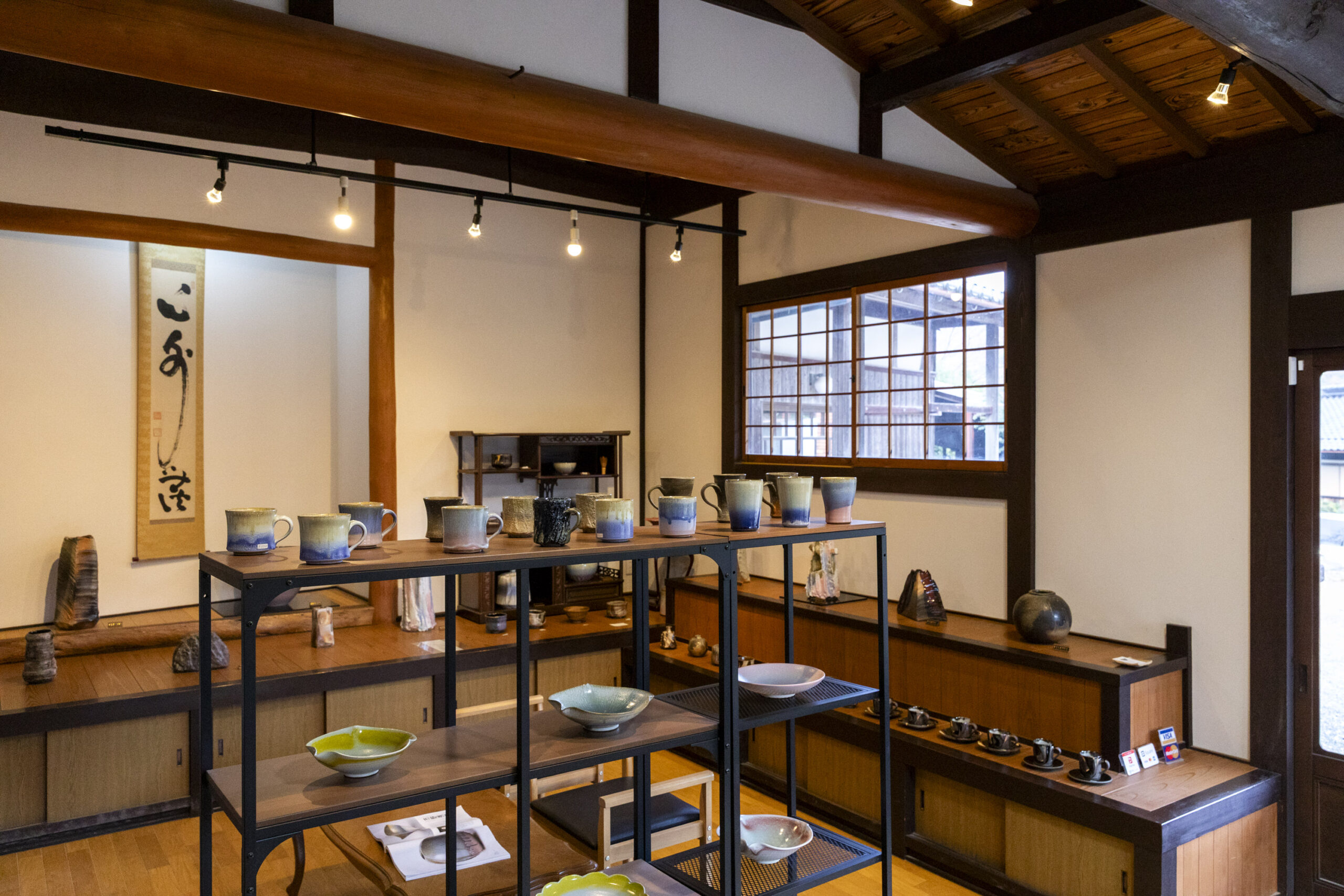
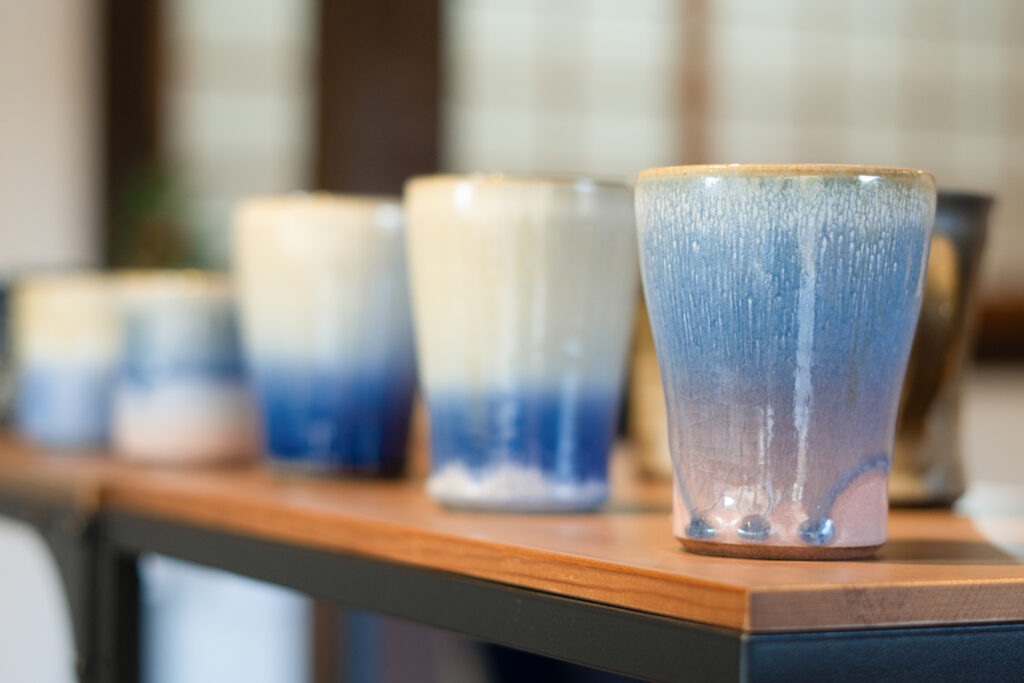
Browsing the works in the gallery of SHOZO-GAMA, one’s eyes are drawn to colors as moist and luminous as watercolor paintings. While rooted in the traditional ash glaze long preserved in Tamba ware, these pieces present light, multi-layered gradations that vividly refresh the conventional image of the region’s ceramics.
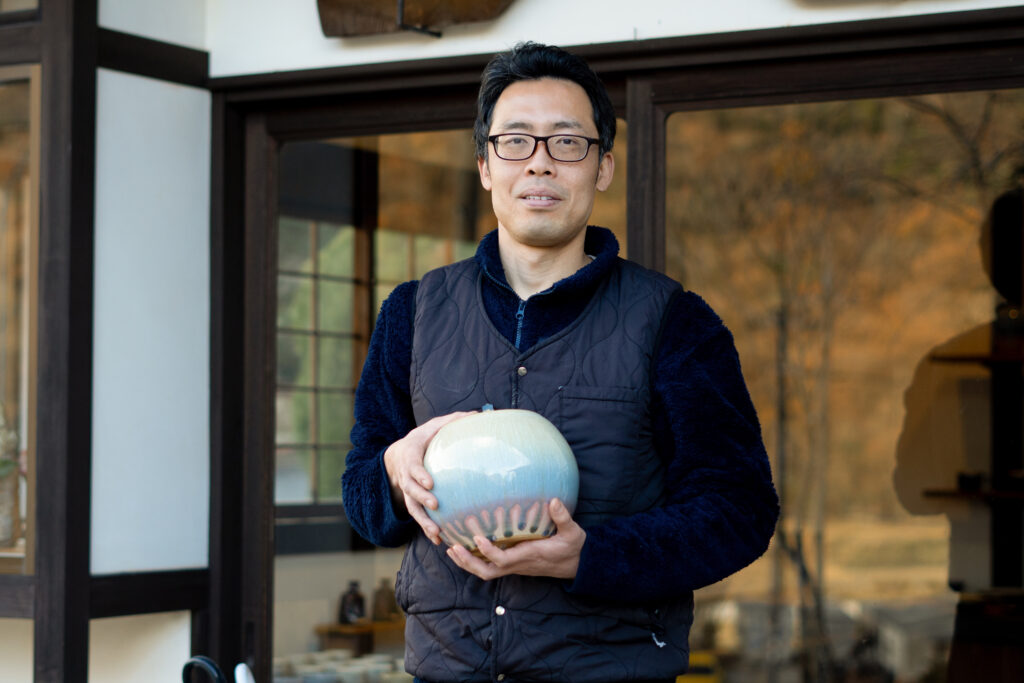
Shusaku, the third-generation head of the potter, employs his original technique known as yūsai to inscribe color onto forms as if they were canvases.
“Even while using materials from Tamba, I don’t want to stop at merely reproducing old works. With the resources found in this land, I want to see how far I can pursue new expressions.”
Shusaku’s forms, adorned with hues such as emerald green and soft pink, radiate a transparency reminiscent of fresh greenery captured in early summer. When shared on social media, their delicate and graceful colors draw considerable attention from restaurant owners and other professionals.
Yet behind these innovative color palettes lies the steady accumulation of traditional techniques—from clay preparation and forming to wood-firing. Beneath their modern appearance, which at first glance might seem to depart from conventional Tamba ware, resides a quiet depth of glaze and the craftsman’s unwavering dedication.
An Aesthetic Eye Cultivated in Kyoto, and a Youth Eager to Create
As the third-generation successor, Shusaku grew up surrounded by pottery. Watching clay being kneaded and forms formed on the wheel, he spent his childhood making small clay animals, catching beetles in the mountains, playing in rivers, and enjoying video games like Mario and Donkey Kong—an ordinary boyhood.
In high school, he began to consider his future. Several classmates also came from potter families, and all naturally planned to take over their family businesses. Likewise, he gradually came to assume that he too would one day follow the same path.
After graduation, he deliberately chose not to attend a ceramics school and instead enrolled in the Faculty of Sociology at Ryukoku University. There, he sought to cultivate his sensibility by observing not only pottery but also sculpture, glass, and crafts. He visited historic temples, shrines, and cultural sites throughout Kyoto whenever possible.
He also traveled across Japan to visit pottery regions such as Onta in Oita, Seto in Aichi, Shigaraki in Shiga, and Iga in Mie. Among these, he found himself particularly drawn to wood-fired works produced in climbing kilns and anagama kilns—pieces that celebrated the natural qualities of clay itself. These works resonated with the roots of Tamba ware he had encountered since childhood.
“As I saw more and more ceramics, I realized that wood-fired, unglazed ware might be what I truly wanted to make. You never know how it will turn out until it’s fired. Perhaps I was drawn to that natural beauty created by the kiln.”
He recalls that this realization strengthened his desire to create. After studying ceramics for a year at a training school, he returned to the family potter and devoted himself fully to making.
By day he worked for the family business; by night he focused on his own creations and glaze research. Determined to develop original glazes, he repeatedly experimented—mixing one glaze with another to see what colors might emerge. Through this endless process of trial and error, the foundation of his current yūsai technique gradually took shape.
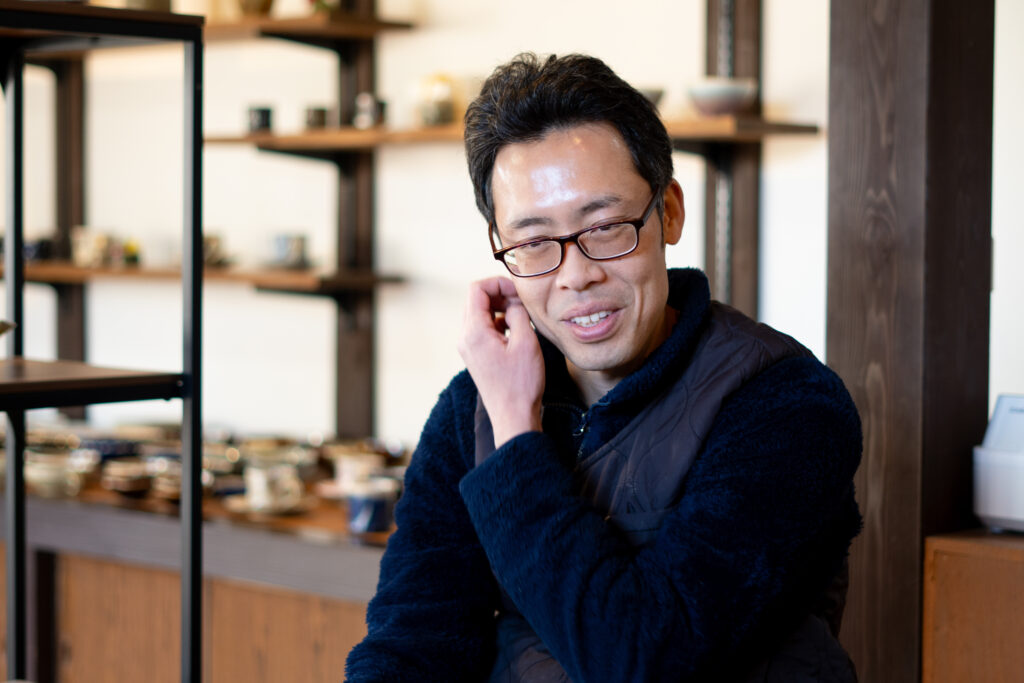
Keeping the Kiln Smoke Alive. Refining Functional Beauty with Form Lovers
What continually motivates Shusaku is the support of those who encounter his forms—fans and chefs who discover them in the Tamba pottery village or at exhibitions.
“When someone told me they were opening a new restaurant and wanted to entrust all their tableware to me, I was so happy I trembled. My forms aren’t meant to be displayed as art pieces—they’re meant to be used every day and to enhance food. Knowing they exist in those everyday scenes gives me confidence.”
As vibrant dishes are served on his forms and shared around the world, he discovers new possibilities: “When professional cuisine is paired with my work, I see expressions I never imagined.” These moments become the energy that drives his next creations.
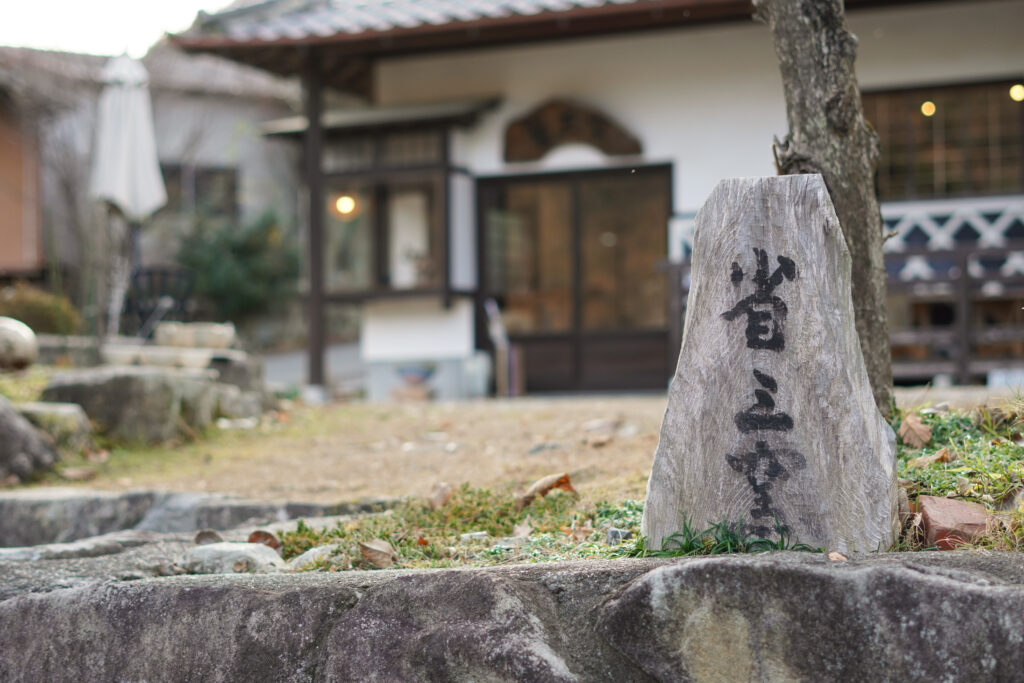
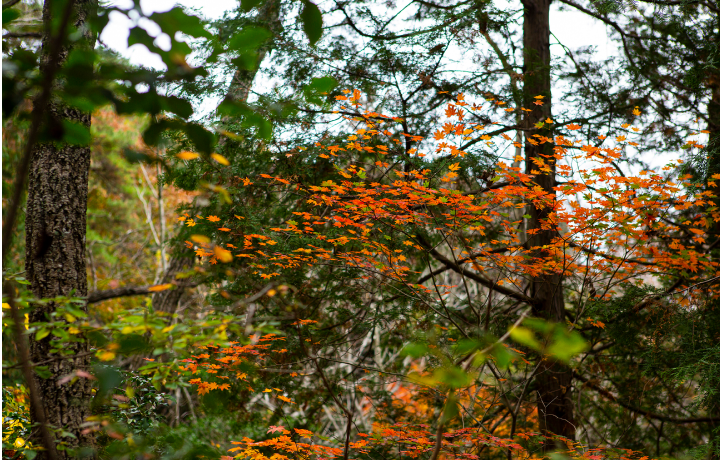
If there is one season he recommends visitors experience in Tachikui, it is May, when the mountains are lush with fresh greenery.
“The mountains feel incredibly close then, and the gradations of green carve out the ridgelines. Those overlapping colors can only be seen here in Tamba. Perhaps the depth of color in my forms was taught to me by that scenery.”
With his feet firmly planted in tradition while breathing in new sensibilities, Shusaku fires colors that feel distinctly of the Reiwa era. Beyond the wheel he turns lies a vision of future Tamba ware—pieces that will gently brighten the everyday lives of those who use them.
Interview, Text, and Photography:NOUCHI Nana
Overview
of
SHOZO-GAMA
Address
2-2 Kamitachikui, Konda-cho, Tambasasayama, Hyogo, Japan
TEL
FAX
Website
Pottery Classes
You can enjoy pottery making at a relaxed pace in a small group. Careful instruction is provided.
Available Dates: Open year-round (irregular holidays)
Reception Hours: 10:00–17:00
Reservation: Required
Walk-ins: Not available
<Clay Modeling Class>
90 minutes / ¥2,750 per person
・Maximum Participants: 6
・Completion Time: Approx. 1 month
Notes:
Choose from three glaze colors: white, black, or amber.