

TOC
YUMEKOUBOU
profile
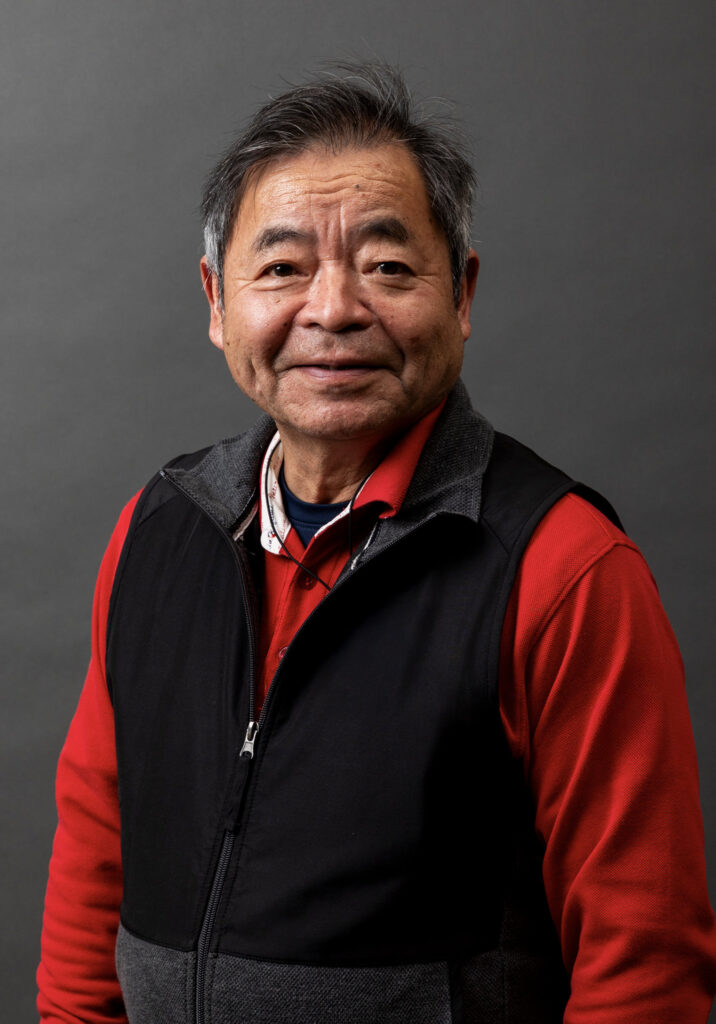
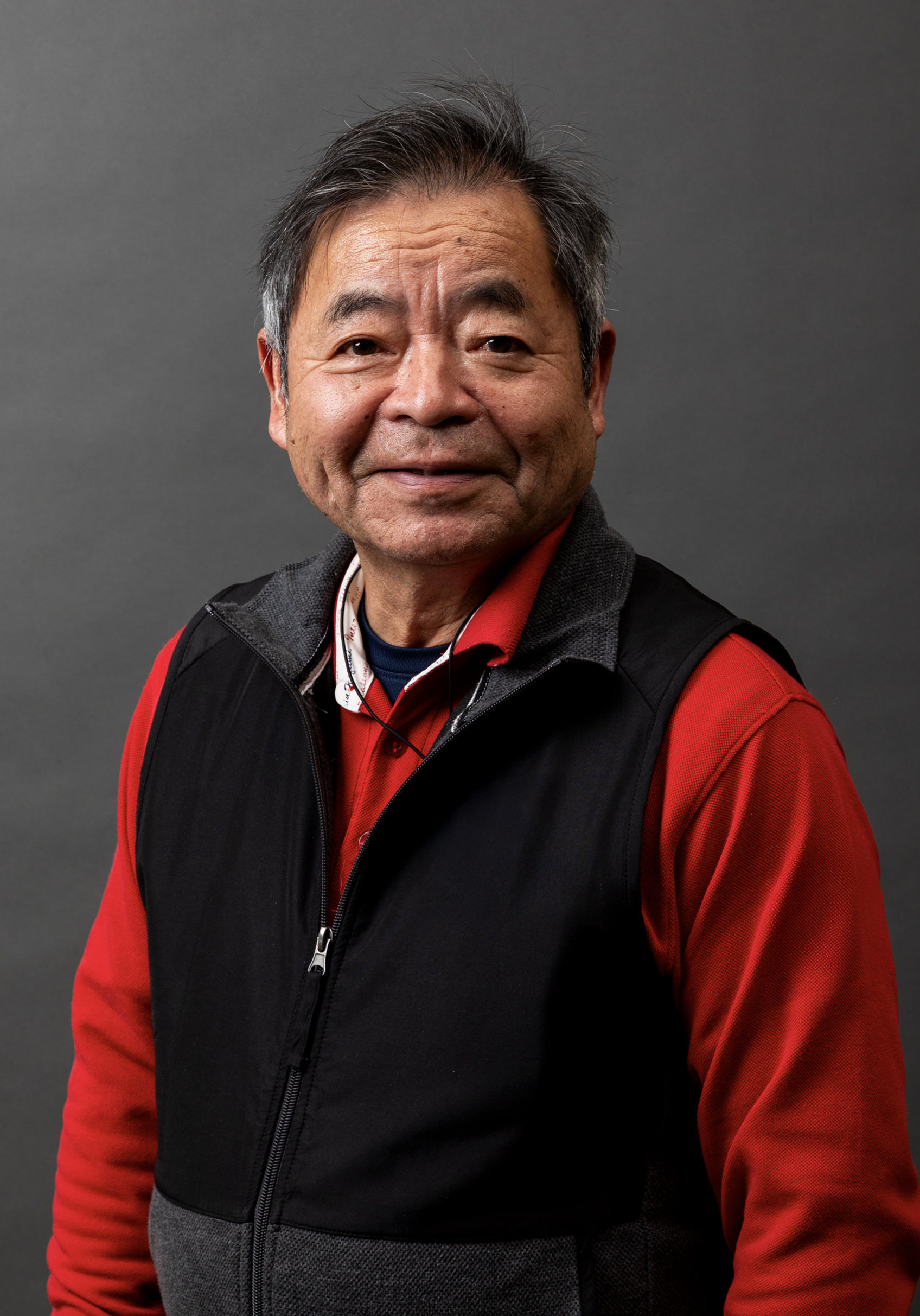
Isomatsu Ogami
profile
Isomatsu Ogami
13th generation of the Oue Family
5th generation since Isoemon
Year of Birth:1955
Year Began Pottery:1978
Education / Training Background
Graduated from Reitaku University, Faculty of Foreign Studies, Department of Chinese
Studied under Noboru Oue (Shoyo gama)
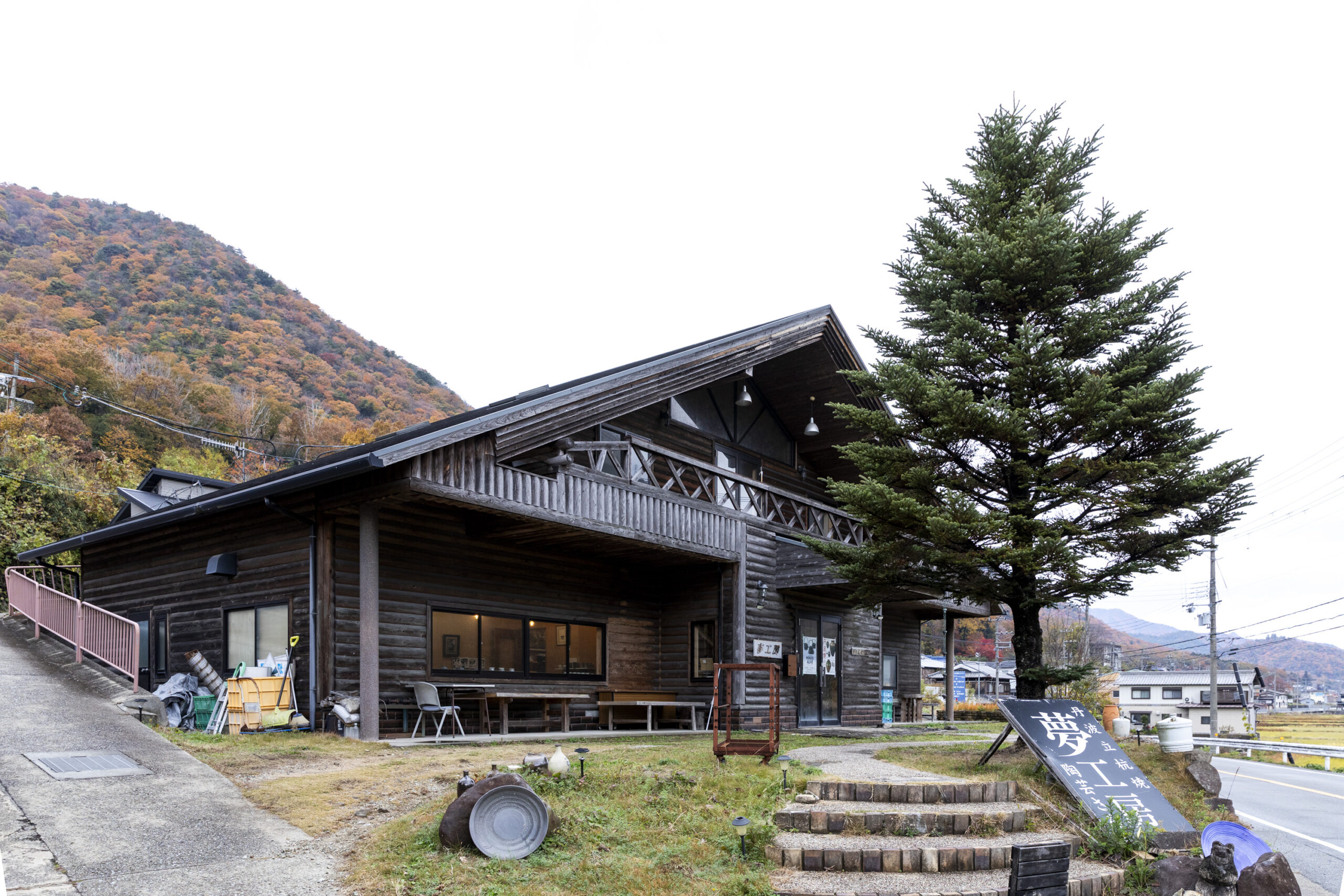
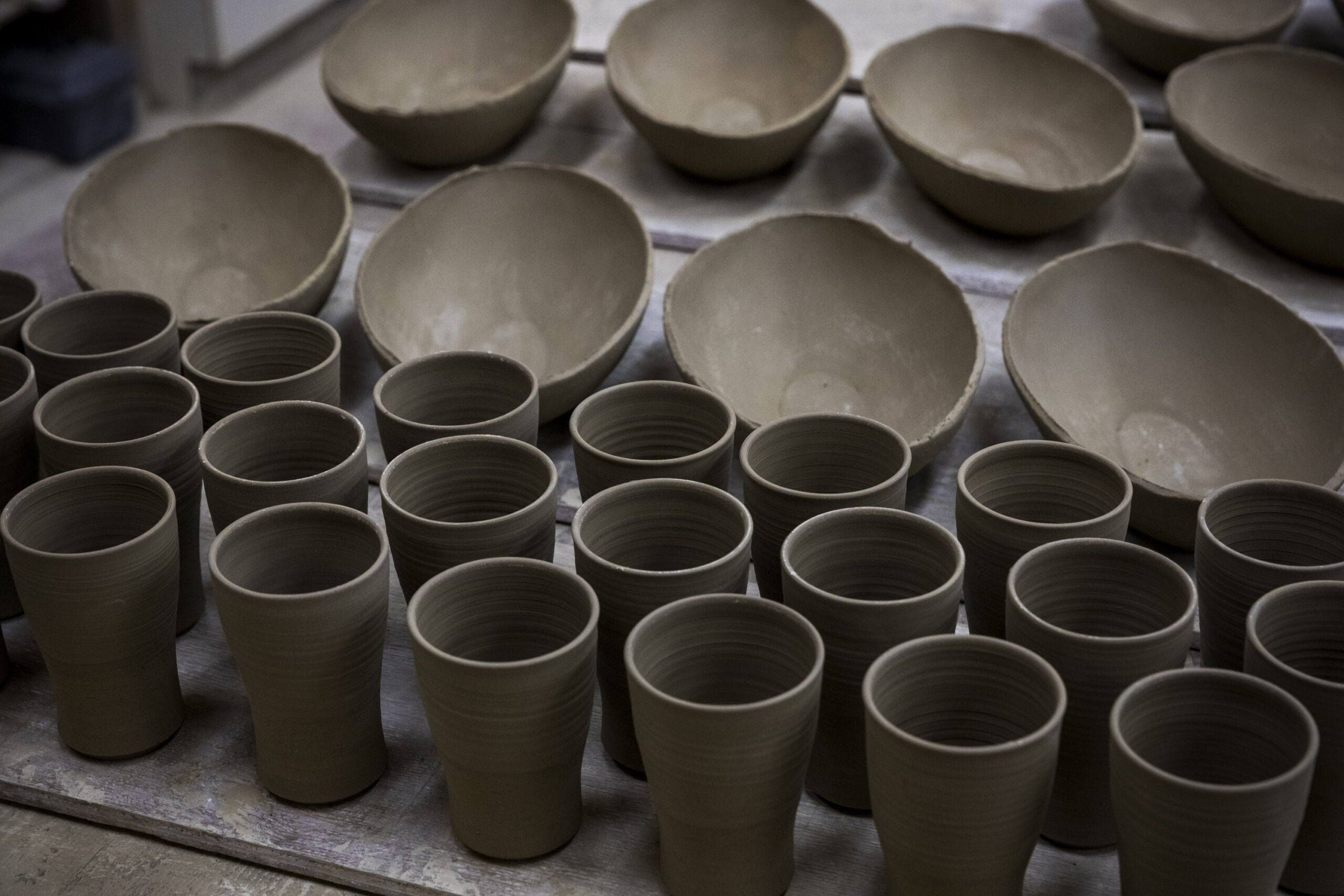
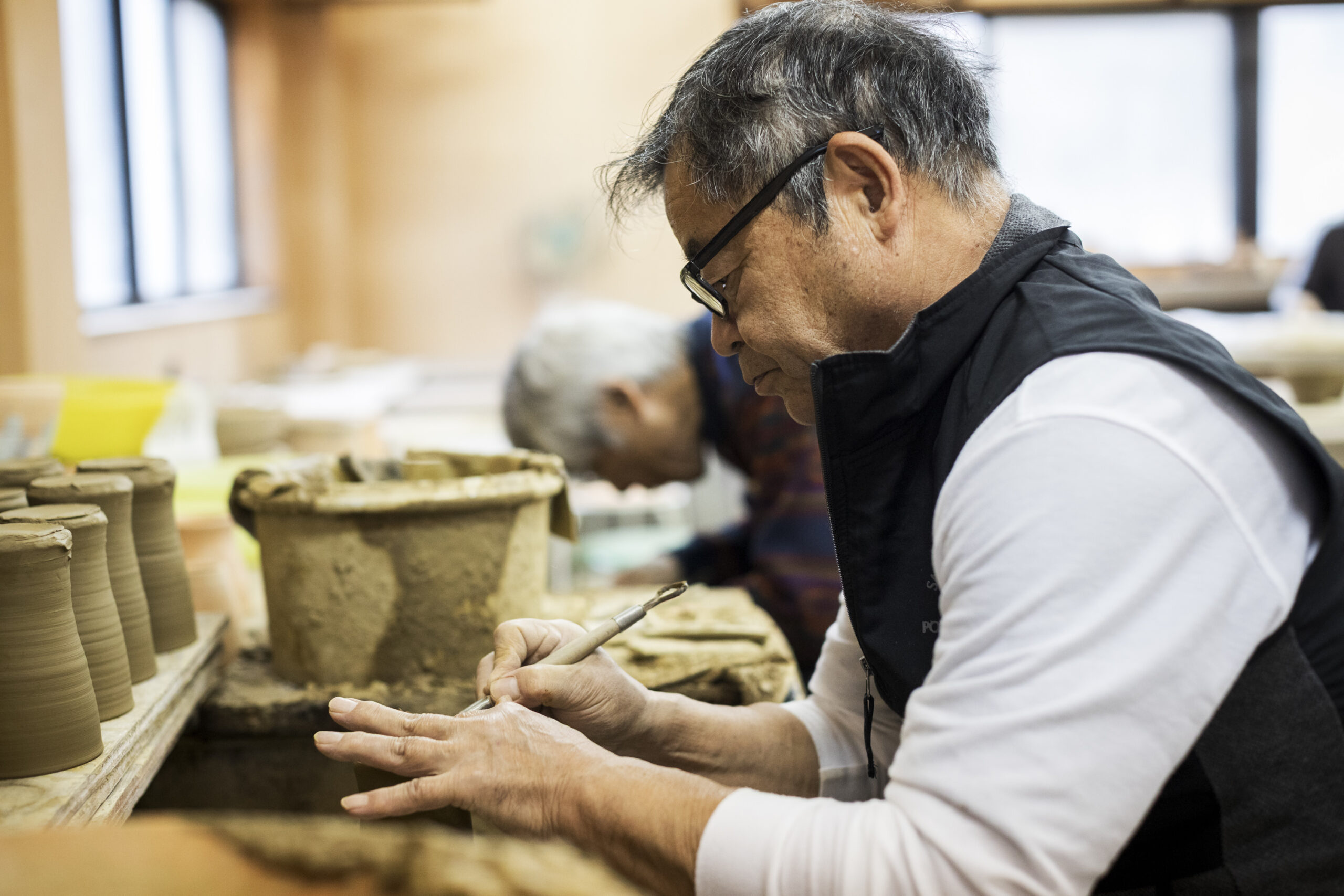
The state of the workshop
スクロールできます
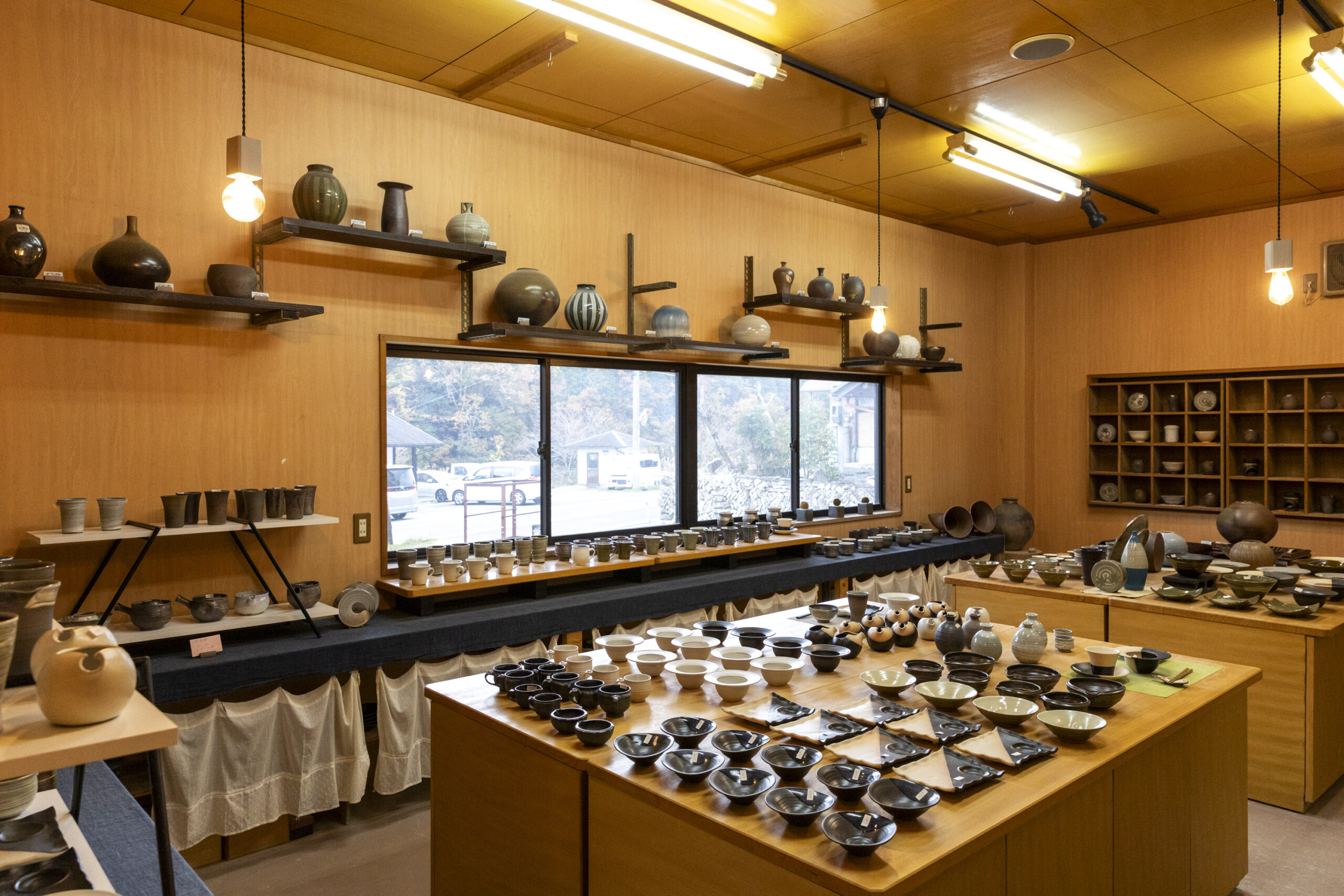
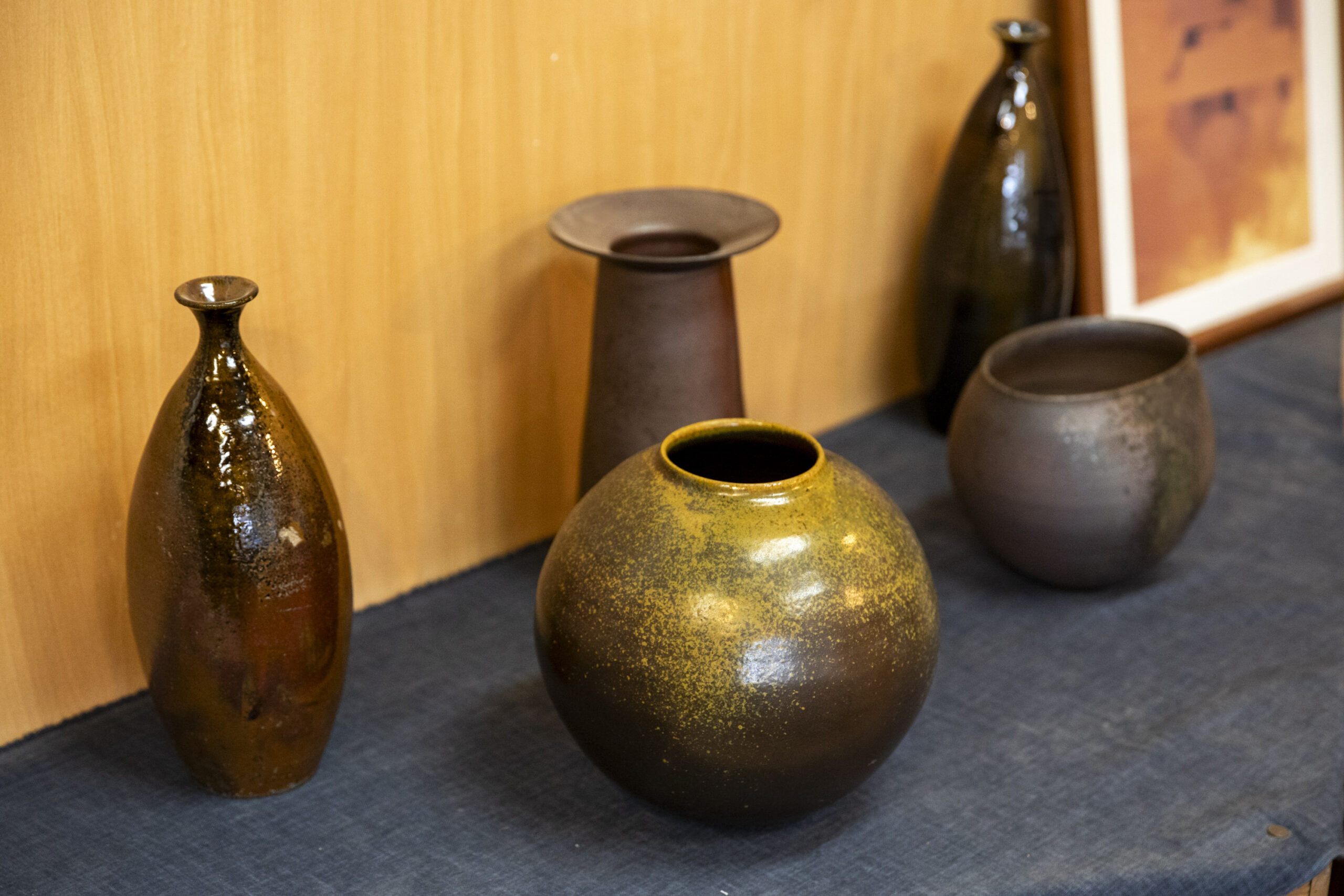
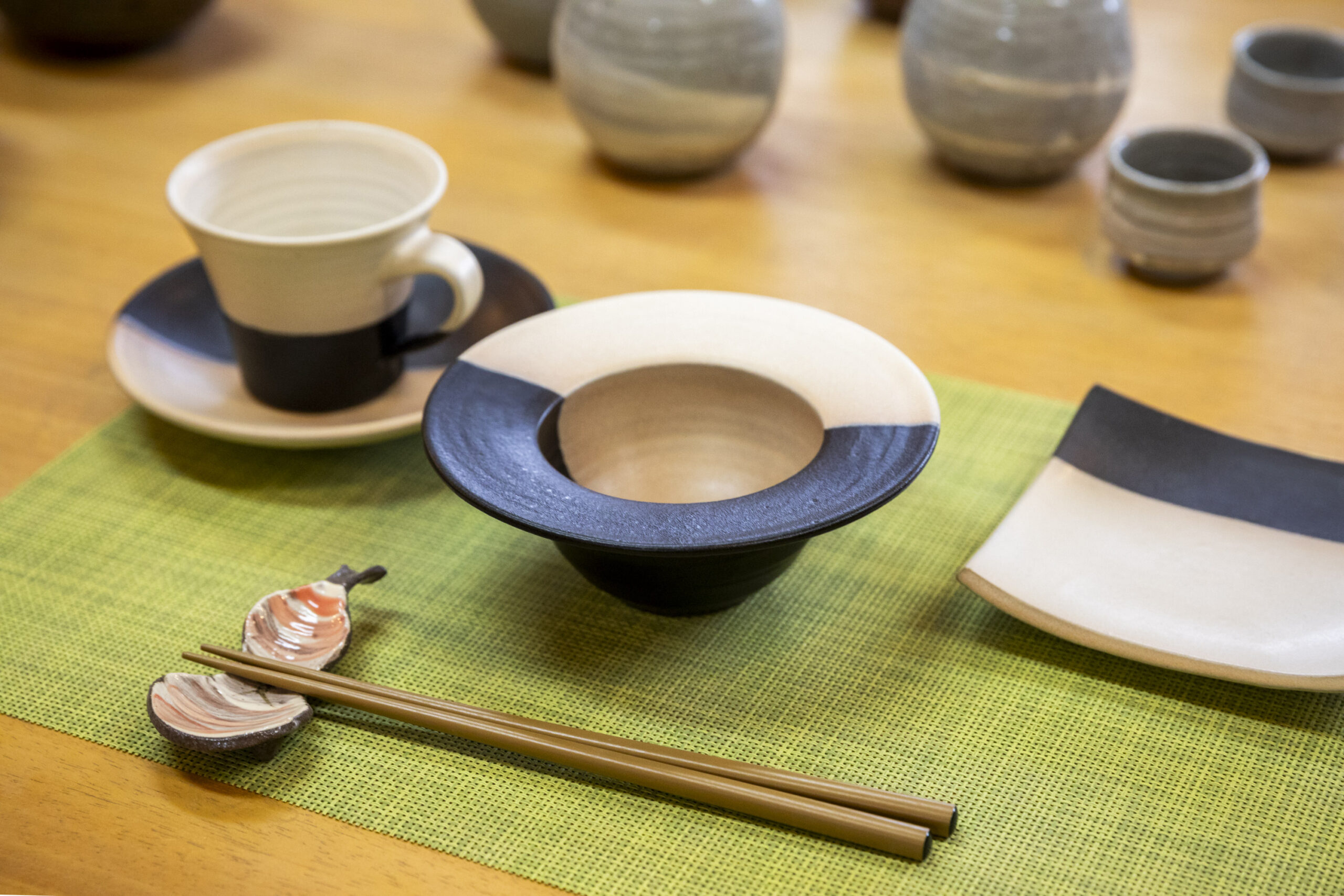


Works
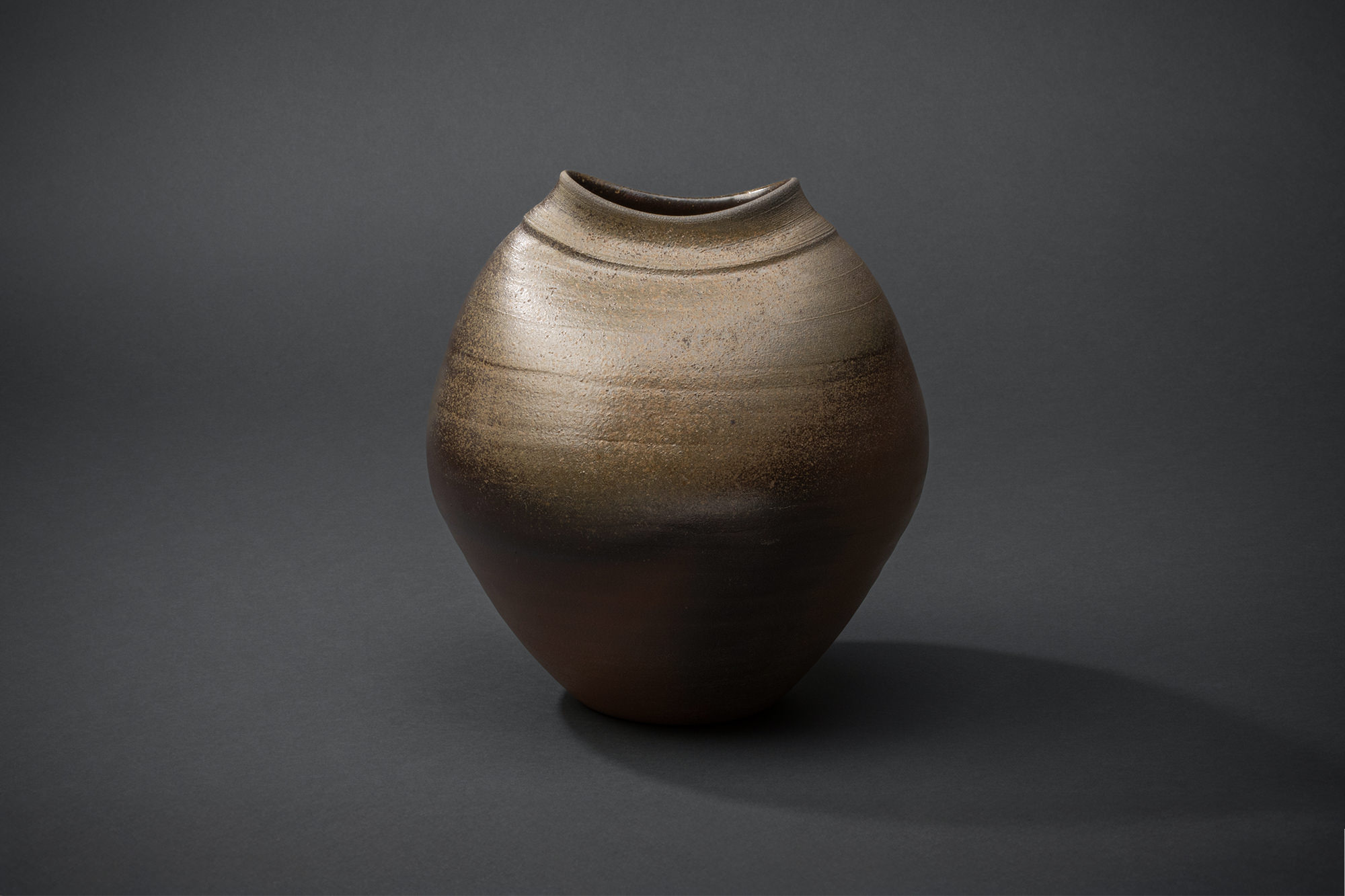
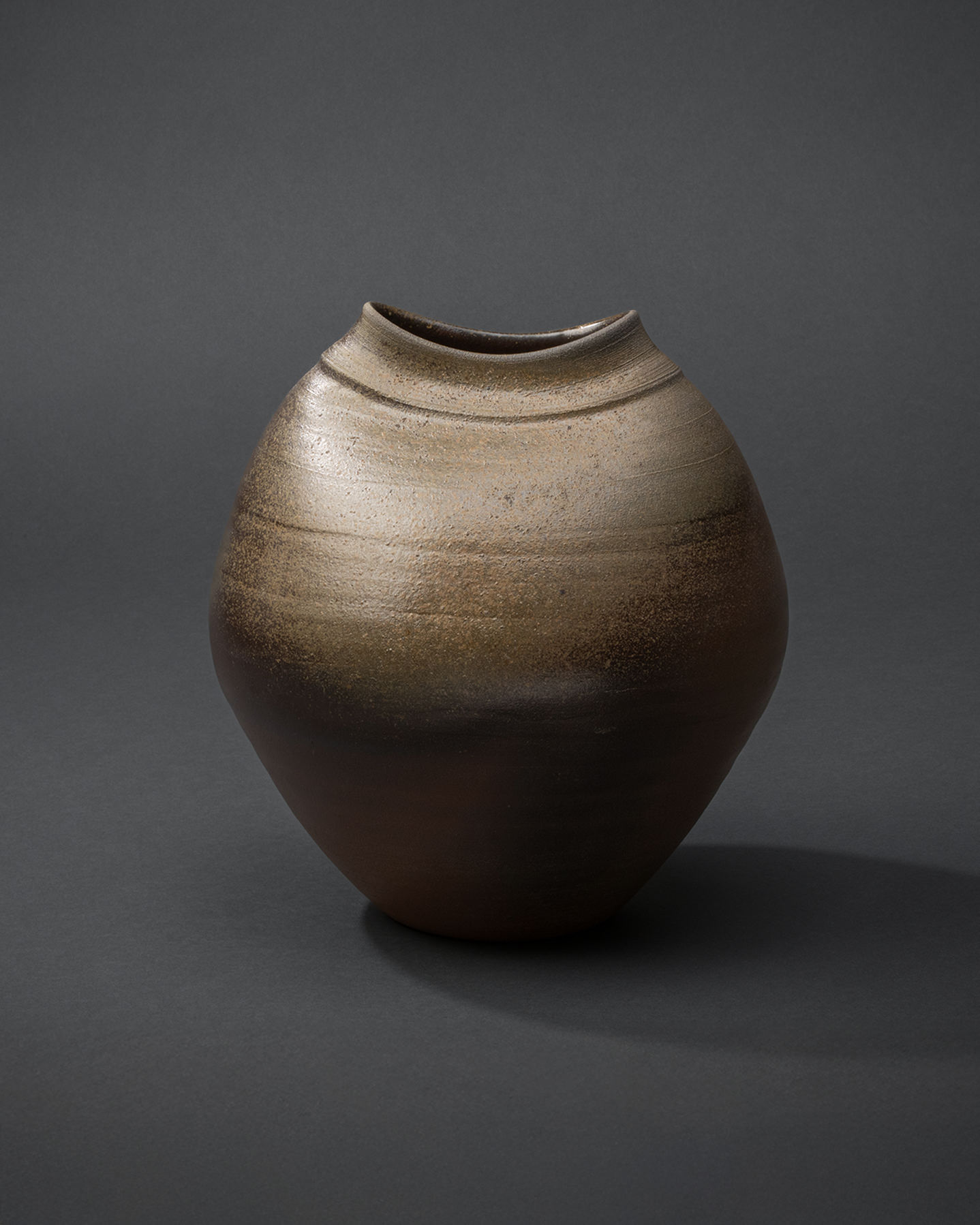
photo:AOTANI Takeru
Interview
From Closing the Family Factory to a Log-Cabin Pottery Studio: Isoamatsu Ogami of YUMEKOUBOU Keeps Reimagining What Tamba Ware Can Be
slow days, gentle wares
Pottery that accompanies a gentle morning and a calming night
Along Prefectural Route 292, a warmly inviting log house immediately catches the eye. This is YUME-KOBO, led by Isomatsu Ogami (hereafter, Isomatsu). He is the 13th-generation head of the Ogami family, whose lineage dates back to the Edo period, and the 9th-generation successor in the potter line that began with the 5th-generation Isouemon. Safeguarding that long history, he continues to carry it forward in his own way.
“I see myself more as a craftsman than an artist,” he says with a quiet smile.
Isomatsu creates his pottery with a strong focus on everyday usability. In the past, he worked with climbing kilns and anagama kilns, striving to recreate the spirit of old Tamba ware, moved by the unpredictable expressions born from flame and ash. Today, he centers his work on tableware, flower forms, and sake forms that blend naturally into daily life. His goal is simple yet exacting: to craft pieces that feel “easy to use” and “durable” in the hands of those who choose them.
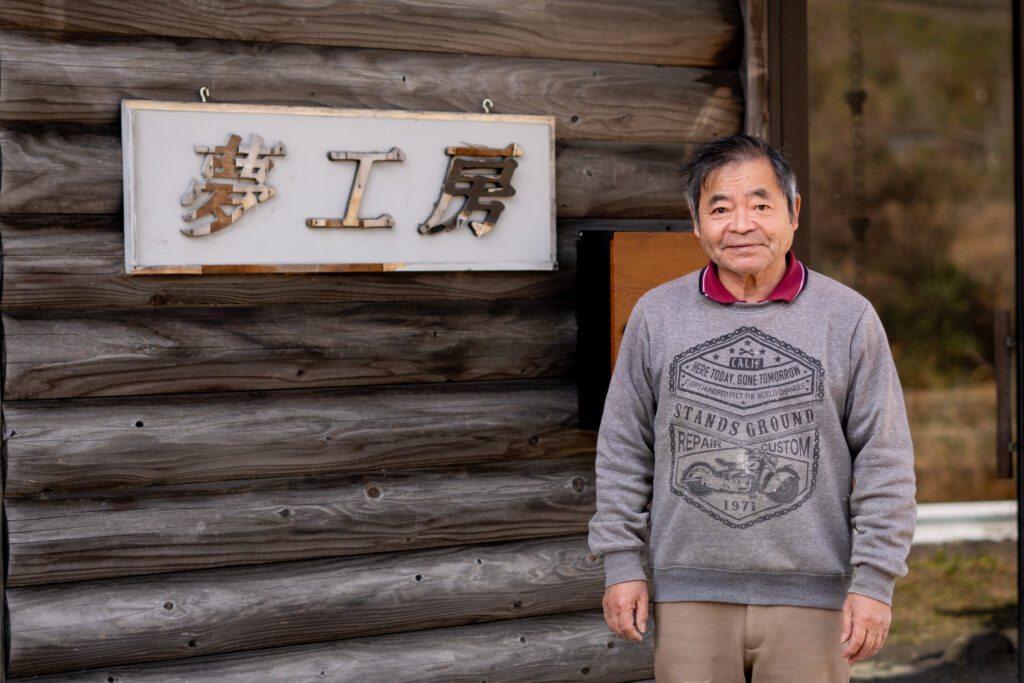
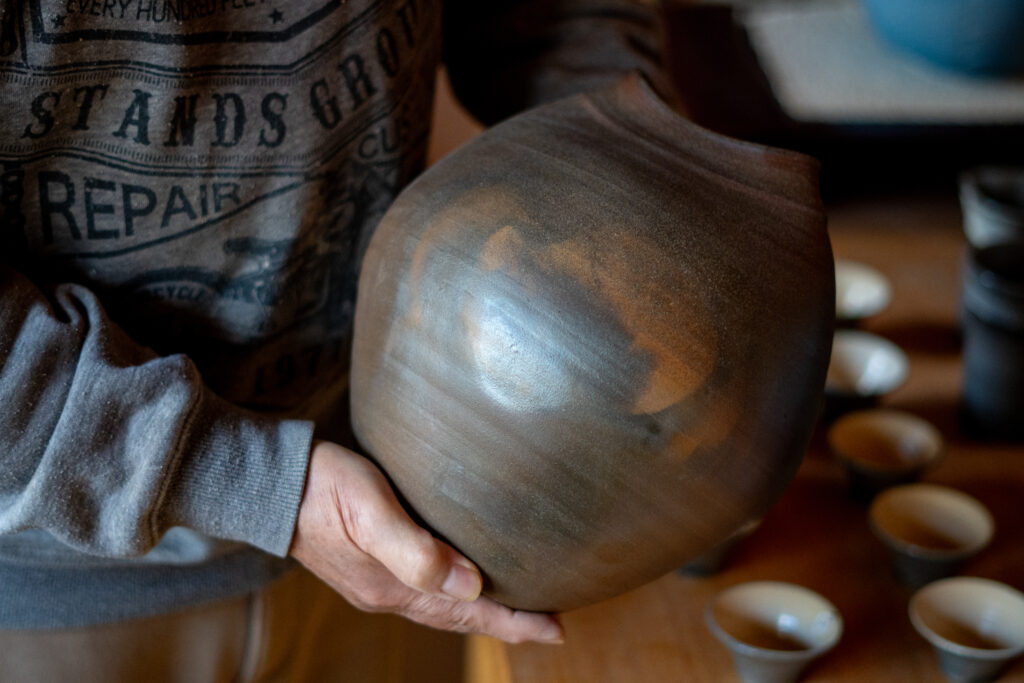
“A well-balanced, beautiful form—that matters. But above all, it has to be practical. Even with something as simple as a teacup, I think carefully about how it feels in the hand and the balance of its weight. No matter how good the form looks, if it’s difficult to use, it has no meaning.”
He speaks with the quiet pride of a true craftsman. Tamba clay has a high shrinkage rate and is prone to warping, yet Isomatsu faces it head-on. While honoring tradition, he continues to refine what the Japanese call yo no bi—the beauty of function—creating pieces that fit seamlessly into modern life.
Memories of the Mass-Production Factory That Supported the Family. Reforming the Family Business with the Times
One of Isomatsu’s most vivid childhood memories is the scene at Ōgami Pottery Works, the factory his father ran. At its peak, it employed nearly twenty workers. What left the strongest impression on him was the sight of forms laid out to dry under the sun. Identical pieces—sake barrels and other forms shaped in plaster molds—were lined up across the wide grounds in perfectly ordered rows, without a single gap between them.
Whenever he saw that landscape, young Isomatsu would make sure to keep his distance. At the same time, it was a rare sight in Tamba Tachikui—a true “mass-production factory” in a region known for small-scale kilns.
“After school, the people working at the factory would often play with me. In winter, during breaks, we’d place sake lees on top of the stove, sprinkle them with sugar, toast them, and eat together while chatting and laughing.”
After graduating from junior high school, Isomatsu moved to Chiba Prefecture to attend a boarding high school. Including his years studying in the Faculty of Foreign Languages at university, he spent a total of seven years away from Tachikui. When he returned to the family business, he found it struggling, battered by the changing tides of the times.
Facing reality head-on, Isomatsu chose to succeed the family business. At the same time, in order to master techniques beyond mass production—wheel-throwing, slip decoration, and other fundamental skills—he apprenticed for three years at Shōyō-gama. Afterward, he established Tōsen-gama, where he could create his own works independently from Ōgami Pottery Works.
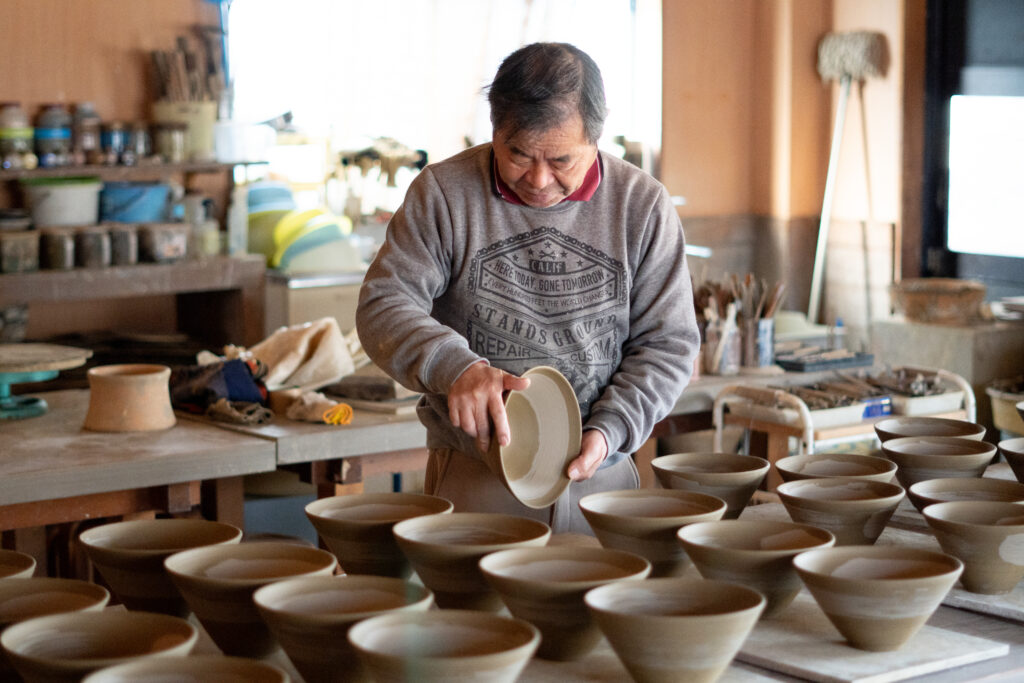
Meanwhile, he also worked as an instructor at a ceramics class in a commercial complex in Takarazuka City. Seeing the joy on students’ faces as they touched clay inspired him to open a ceramics studio in the pottery village itself.
“We downsized the company and carried out two major reforms. In 2000, we closed the factory and built a log house, opening ‘Yume Kobo’ as a salon centered on ceramics classes. At first, we had around 200 students.”
From a management standpoint, he shifted the focus from a “mass-production factory” to a model centered on his own creative work and hands-on ceramics experiences—an approach suited to the times.
He has also served as a city council member, making him a rare figure who has contributed to the community beyond the field of ceramics.
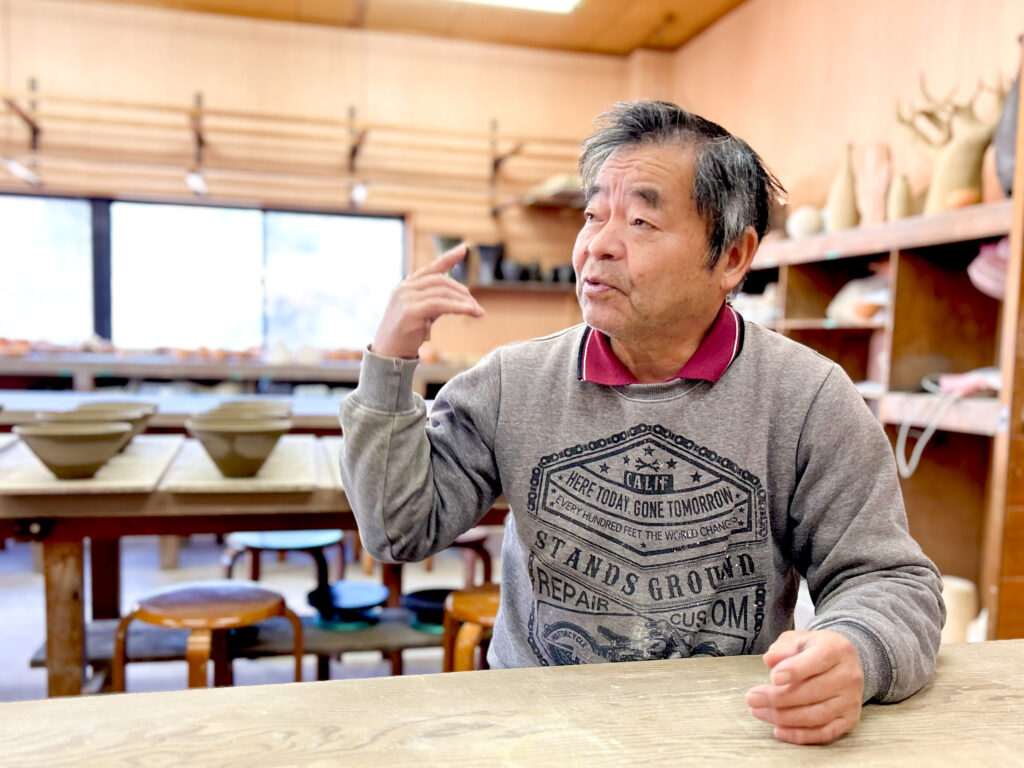
Passing On the Tamba Ware He Sustained Through Trial and Error to the Next Generation
“In fact, my son—who had been working as a company employee for ten years—suddenly said he wanted to take over the business. It was completely unexpected, like a bolt from the blue.”
Isomatsu had intended to close the chapter of the family business with his own generation. He had refrained from making major investments and was prepared to maintain things quietly with his wife. Then came his son’s decision. After resigning in his thirties, his son began studying ceramics from scratch in Kyoto. He already has many ideas for the future, and Isomatsu says he intends to watch over the activities of his son and daughter-in-law with care.
“To be honest, as a parent I do worry. But everyone around us says, ‘How wonderful that he came back.’ He even gave our grandchild a name that includes the character ‘Iso,’ which has been passed down through generations in our family. It made me feel that he truly values the history of our house.”
These days, alongside running the ceramics classes and creating pieces that blend gently into everyday life, Isomatsu refreshes himself with a round of golf whenever he can.
To those visiting Tachikui, he says, “I hope you’ll visit the Museum of Ceramic Art, Hyogo, and then take time to tour the potters in this area as well.” He wishes for a warm, close-knit pottery community—one where each potter has its own character and artisans gladly introduce visitors to one another.
Interview, Text, and Photography:NOUCHI Nana
Overview
of
YUMEKOUBOU
Address
172 Shimotachikui, Konda-cho, Tambasasayama, Hyogo, Japan
TEL
079-597-2002
FAX
079-597-3212
Website
Pottery Classes
Let’s create your work together according to your preferences.
We offer a wide variety of glazes.
Available Dates: Closed on Wednesdays and Thursdays (experience available with reservation)
Reception Hours: 10:00–16:00
Reservation: Required
Walk-ins: Available
<Clay Modeling Class>
60 minutes / ¥2,000 per person (per 1 kg of clay)
・Maximum Participants: 10
・Completion Time: Approx. 40 days
Notes:
・Choose from 10 sample glaze colors.
<Wheel Throwing Class>
60 minutes / ¥3,000 per person (per 1 kg of clay)
・Maximum Participants: 5
・Completion Time: Approx. 40 days
Notes:
・Choose from 10 sample glaze colors.