

TOC
MARUMATSU-GAMA
profile
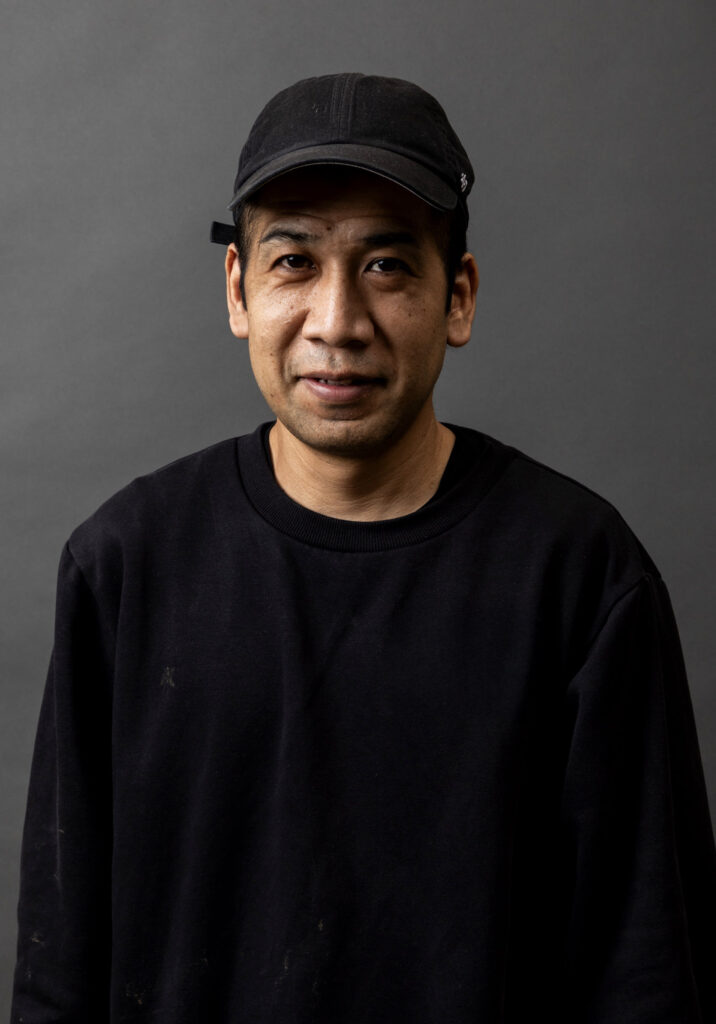
Tadashi Matsumoto
profile
Tadashi Matsumoto
10th generation
Year of Birth:1987
Year Began Pottery:2000
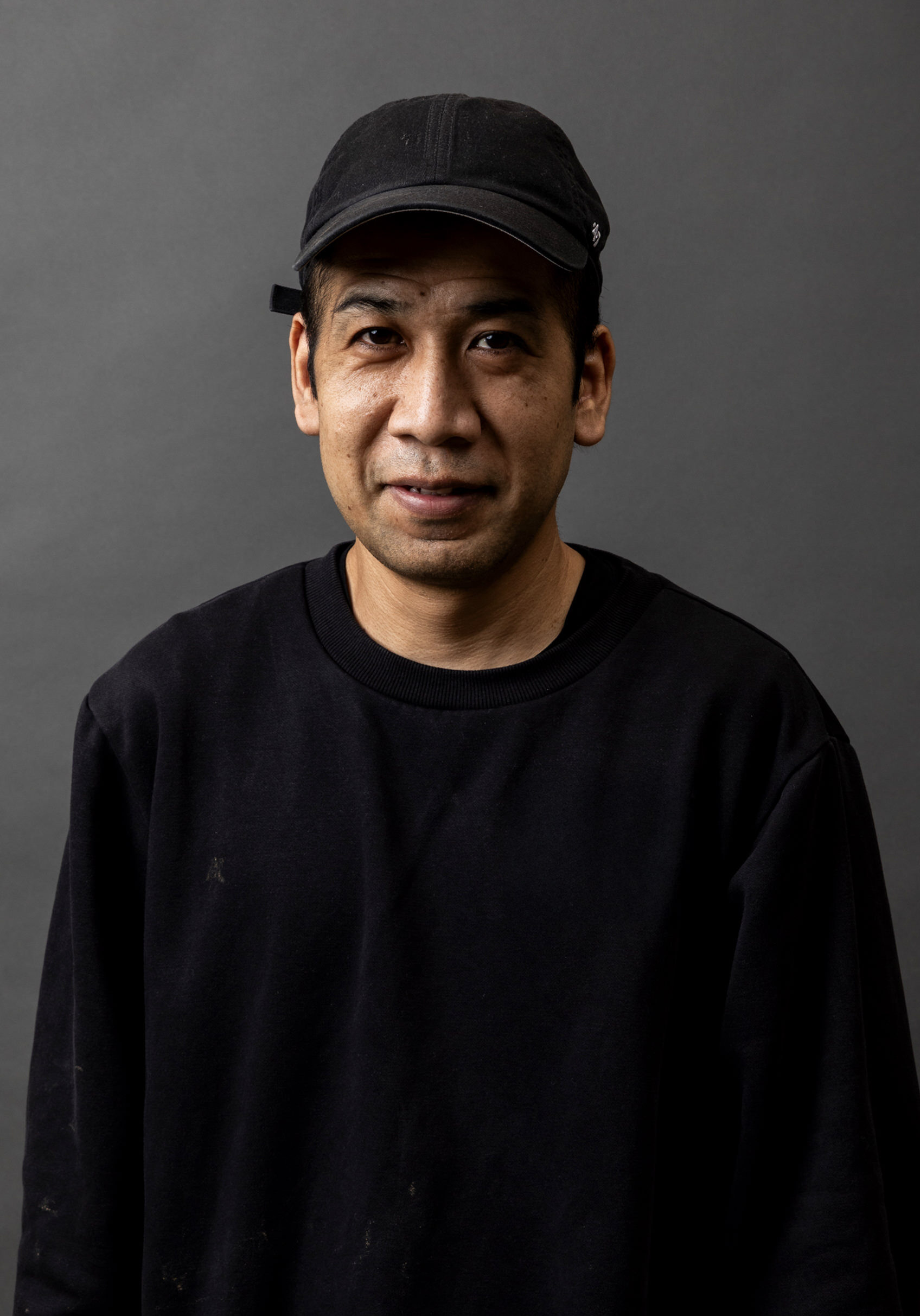
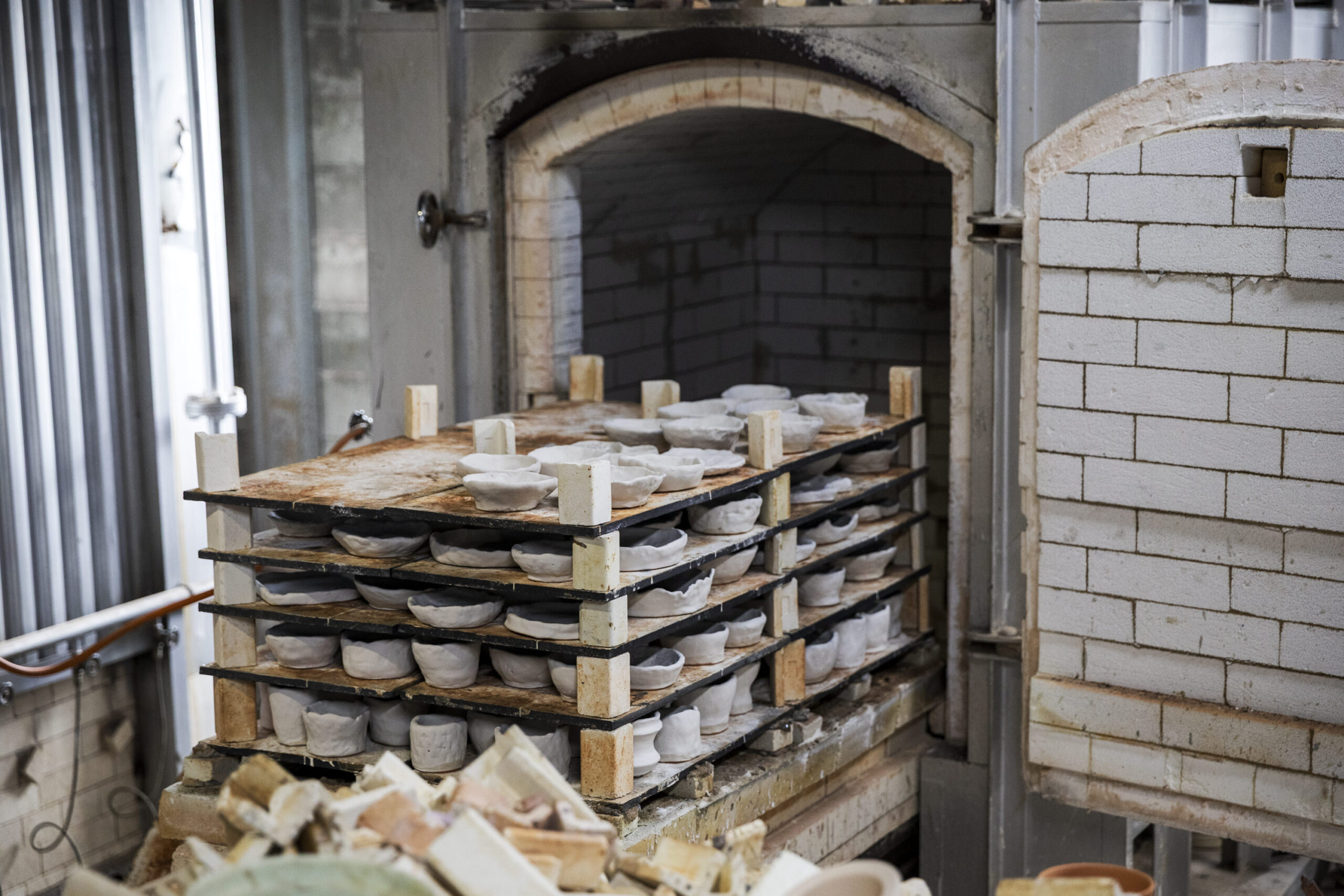
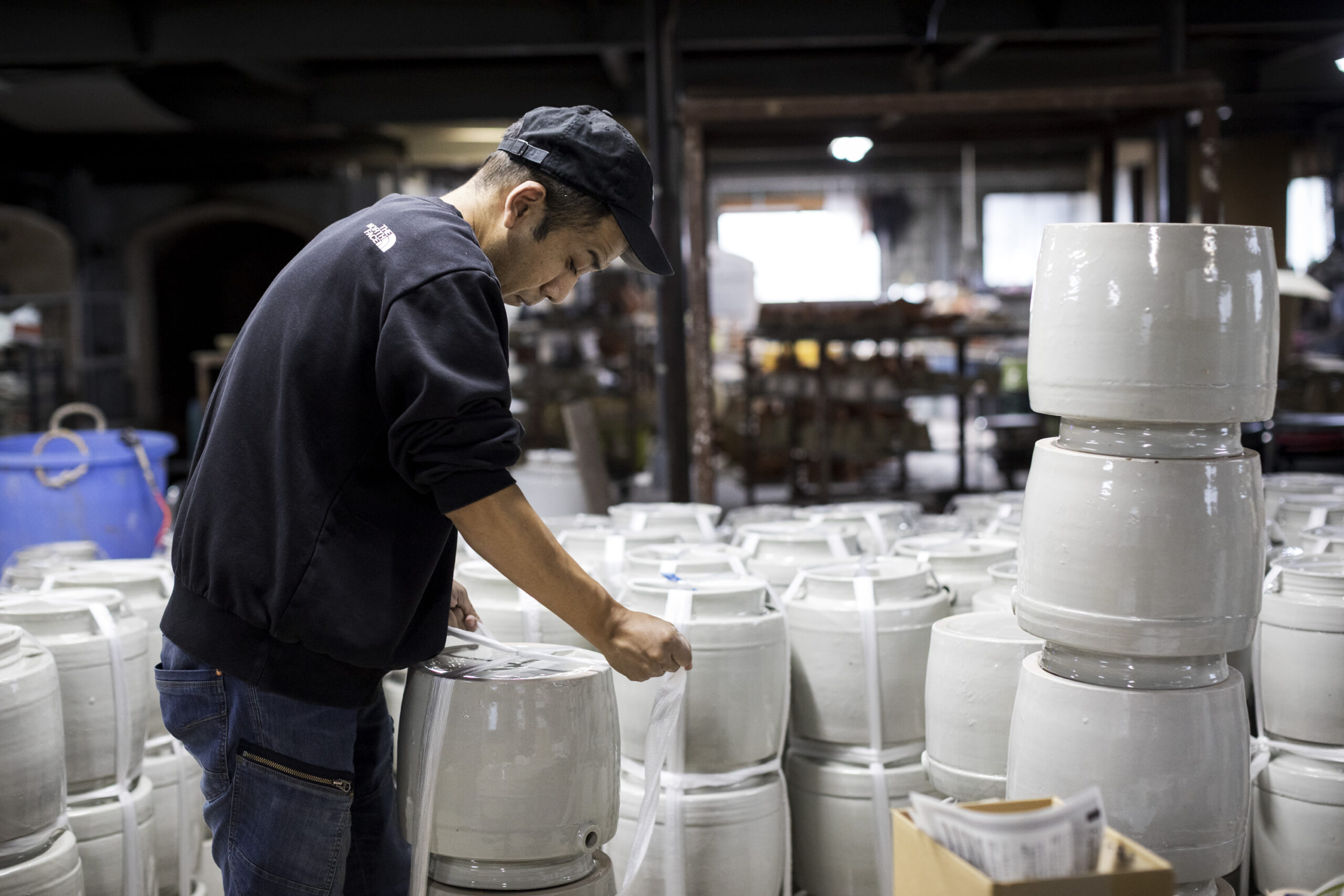
The state of the workshop
スクロールできます
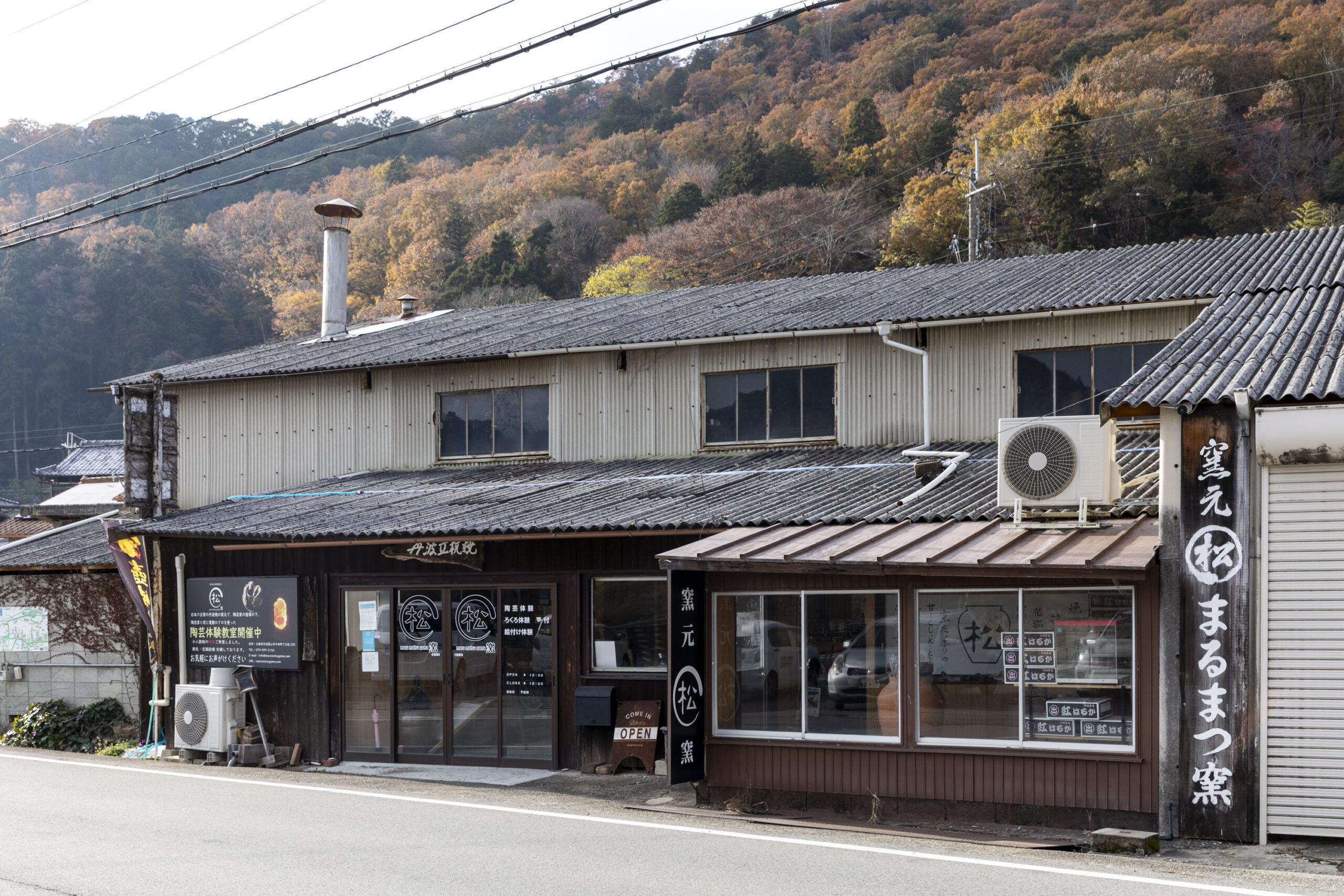
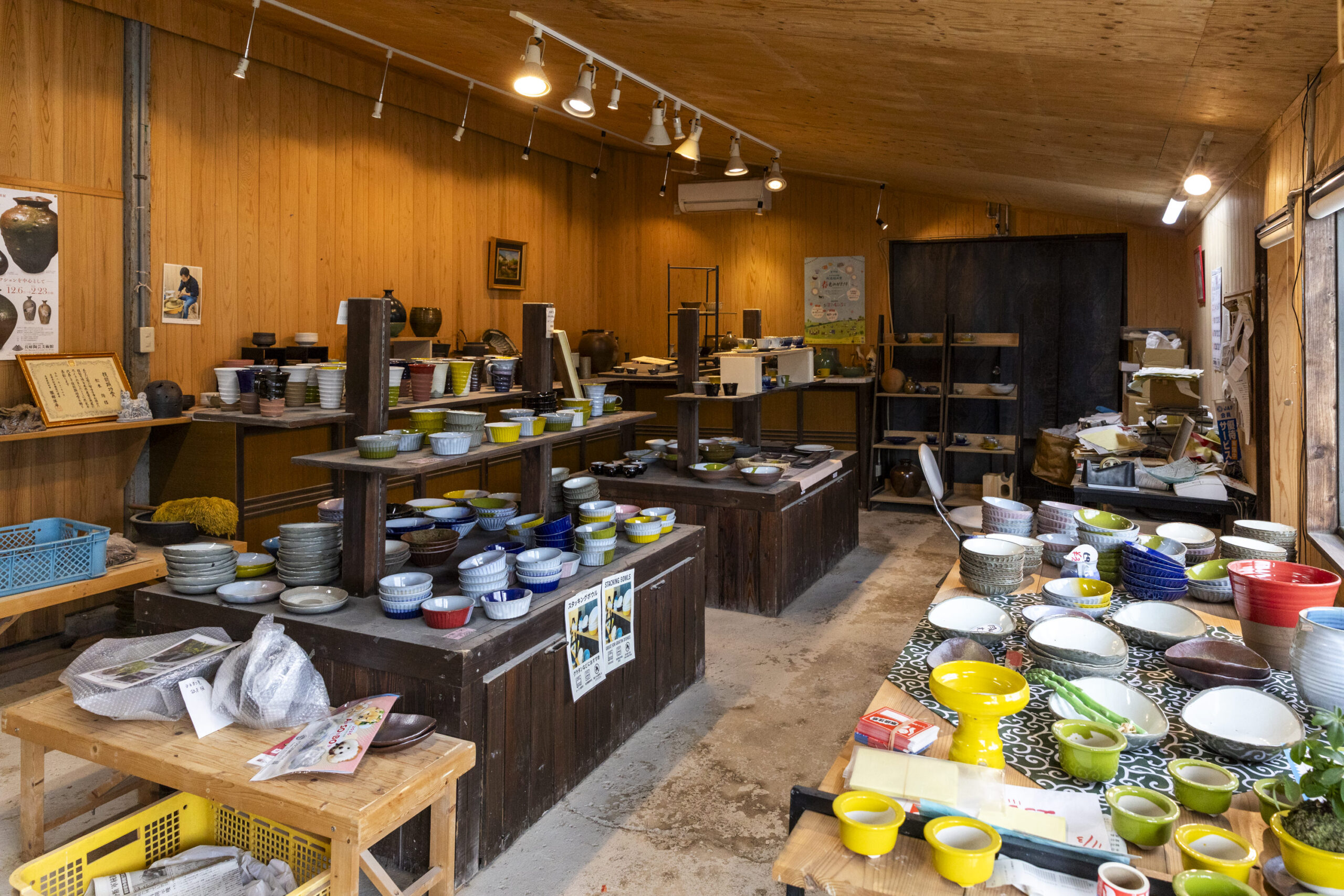


Works
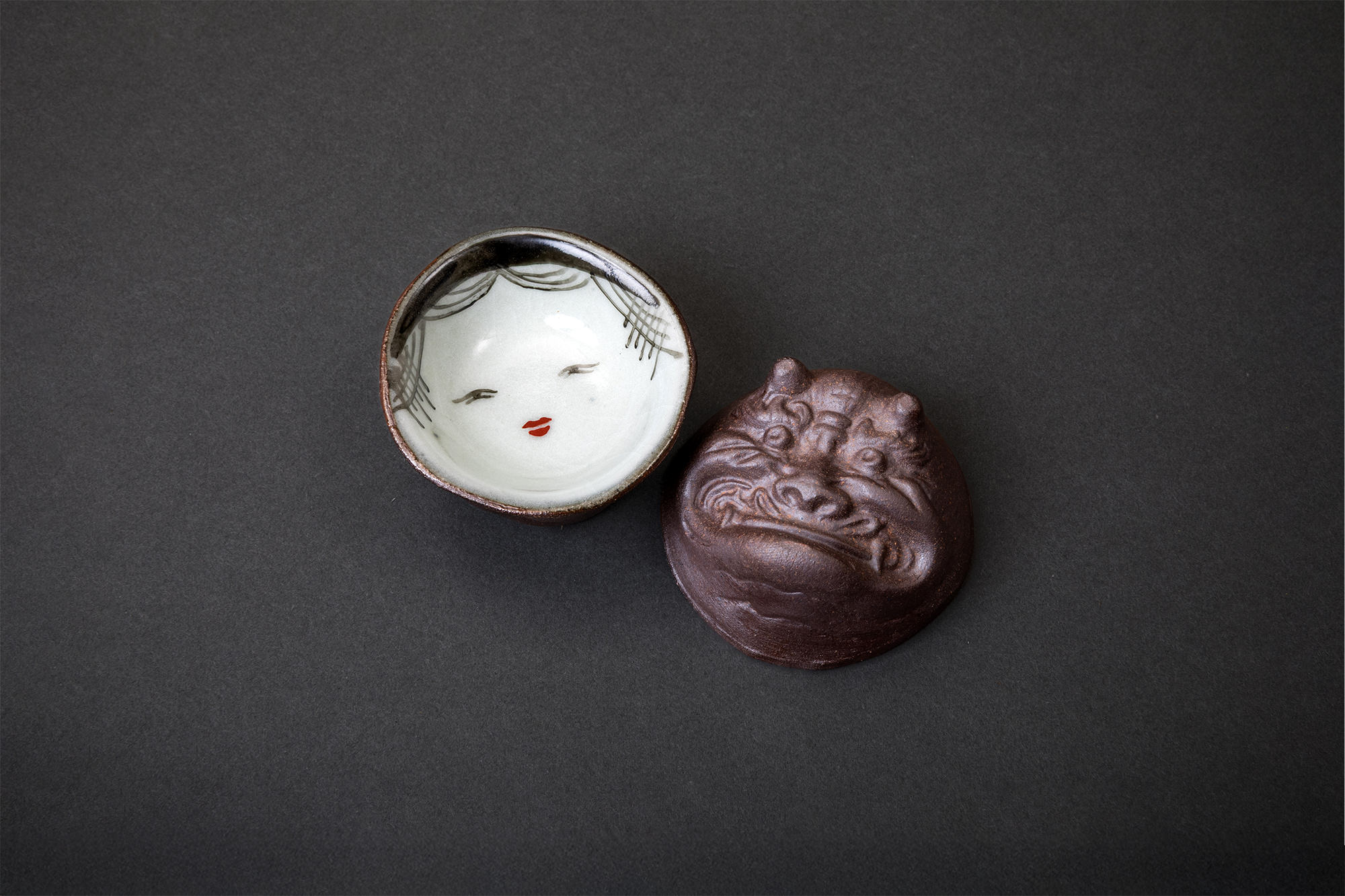
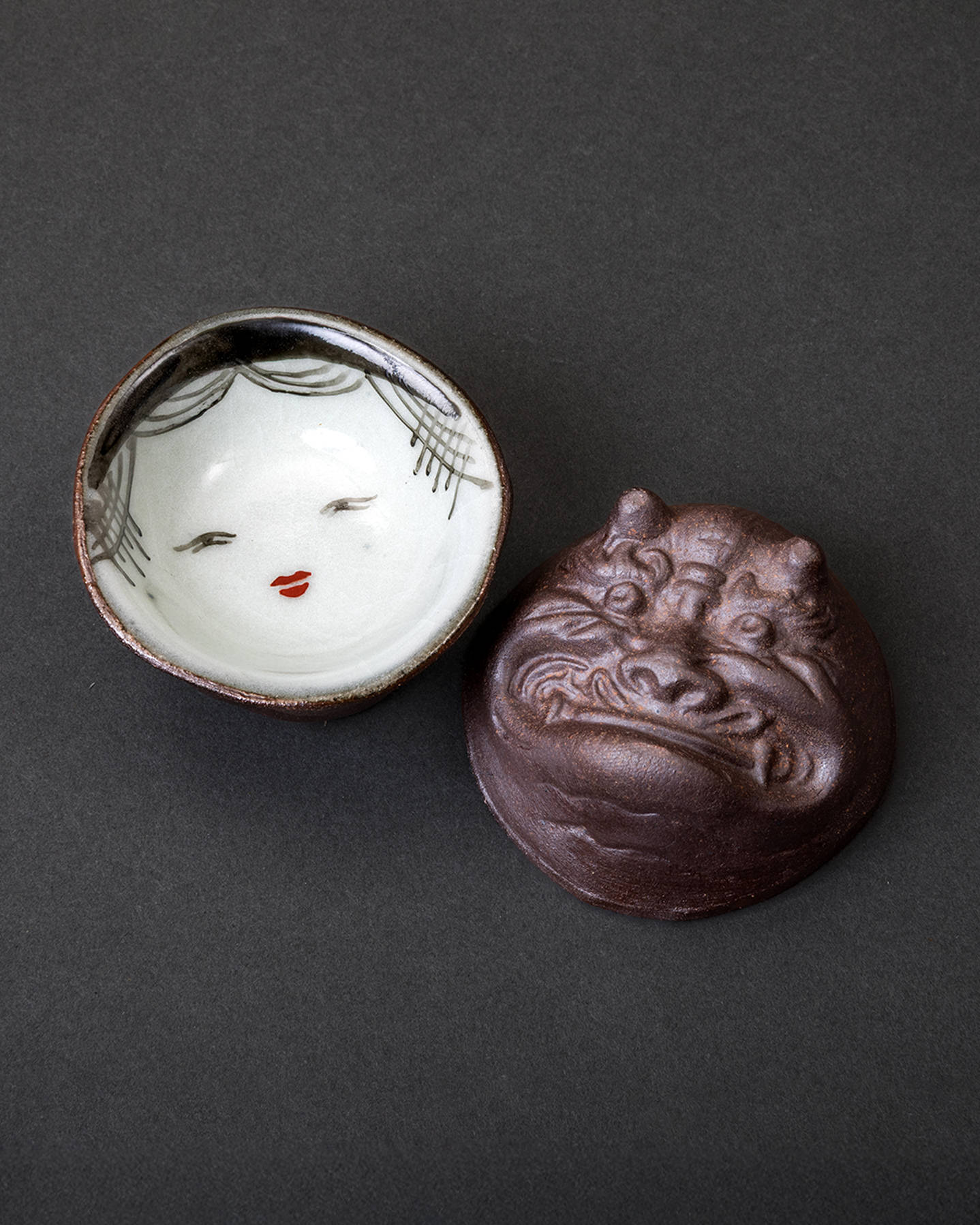
photo:AOTANI Takeru


Interview
Crafting Forms that Connect the Family’s Sake Barrel Trade and the Dining Table. At MARUMATSU-GAMA, Tadashi Matsumoto Preserves the Spirit of Tamba Ware While Reading the Times
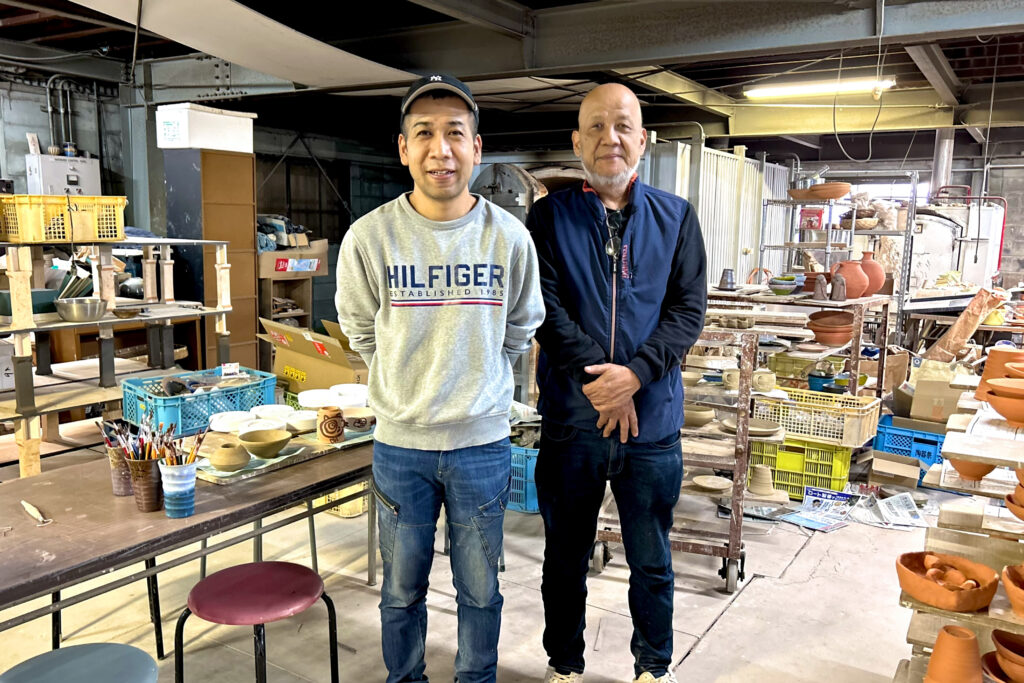
Preserving Tamba’s Traditional Red Clay—Creating Forms for Both Japanese and Western Tables
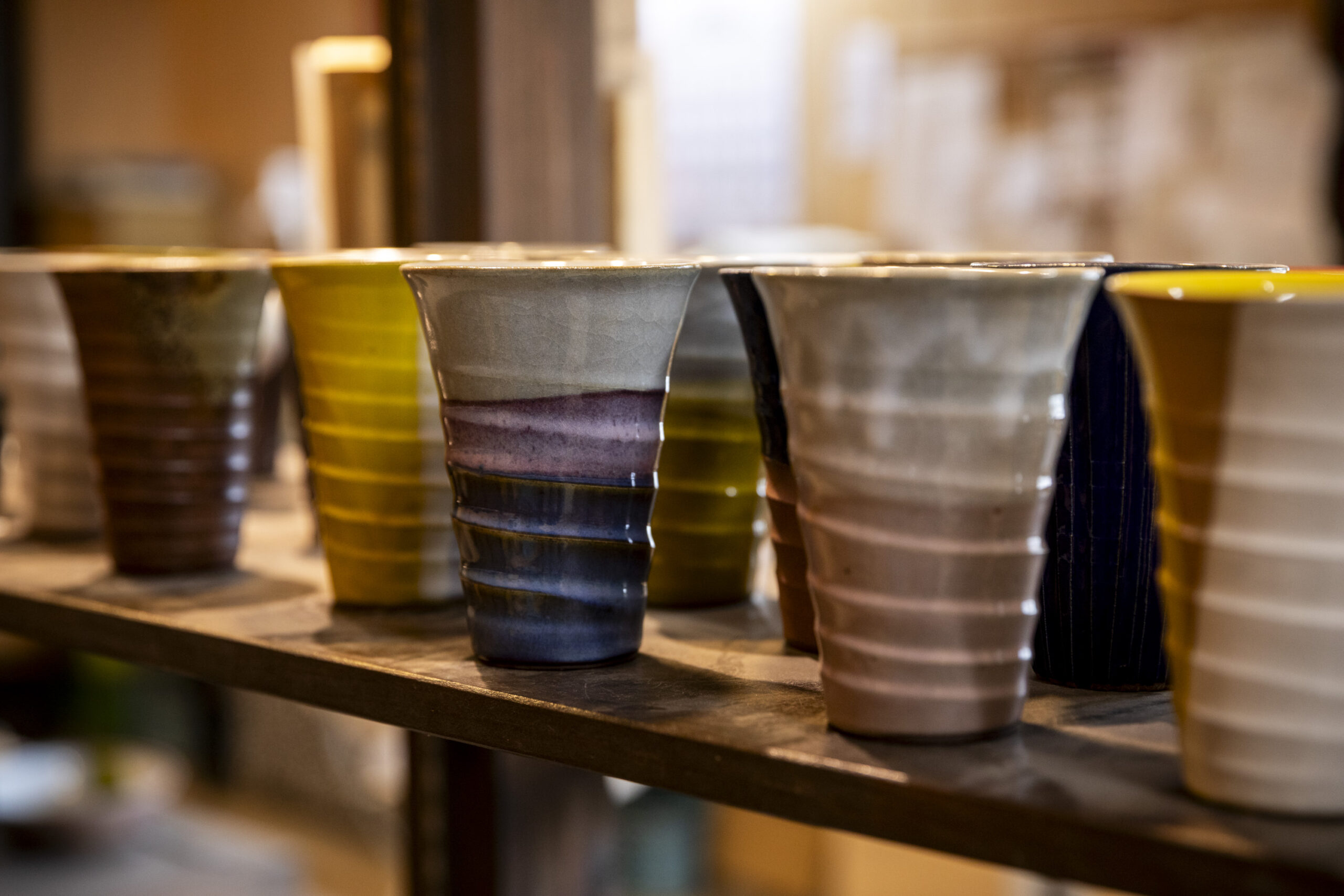
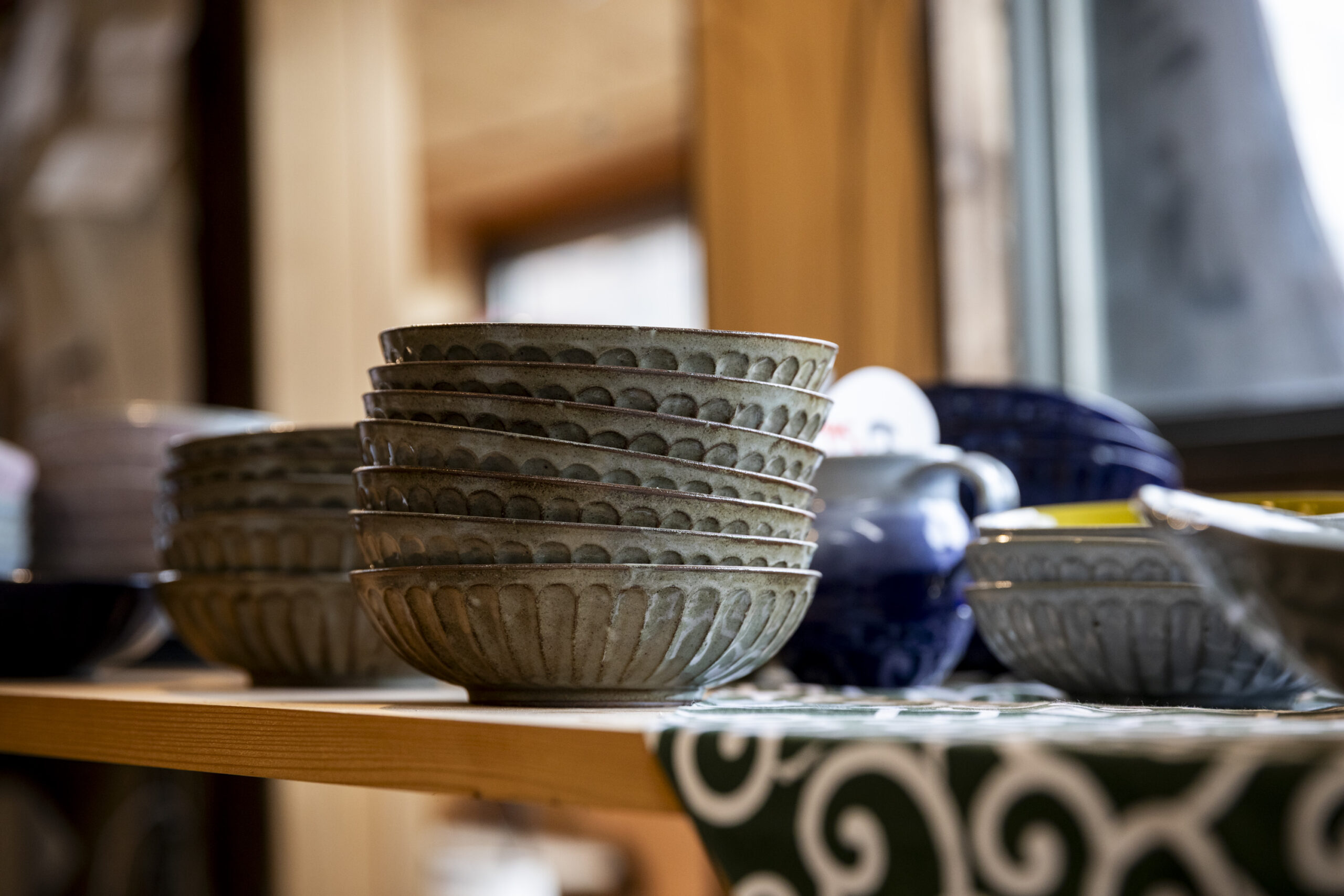
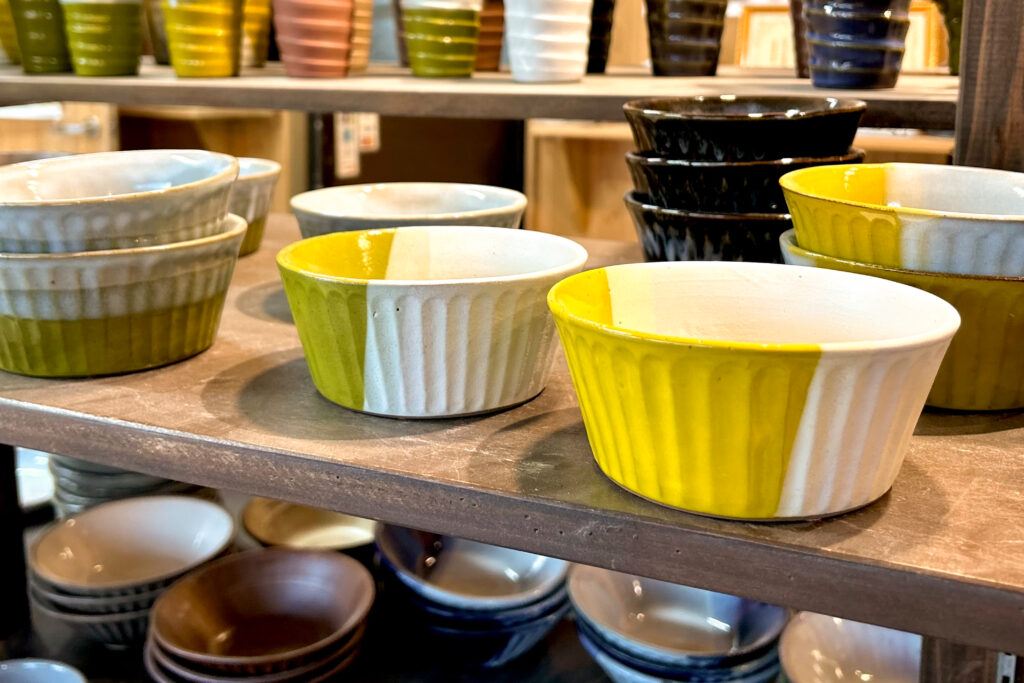
Inside the workshop, forms of all shapes and sizes are carefully arranged. Some highlight the warm brown tones of Tamba’s distinctive red clay, while others feature youthful two-tone color combinations designed to appeal to a younger generation. At MARUMATSU-GAMA – Tadashi Matsumoto, Tadashi (hereafter, Matsumoto) centers his work on creating pieces that retain the character of Tamba ware while gently adapting to contemporary lifestyles.
“I want to preserve what makes Tamba ware unmistakably Tamba. Keeping the character of the red clay, but shaping it in ways that fit today’s life. They’re Japanese tableware, of course—but people like pieces that also work beautifully with Western dishes.”
What matters most to Matsumoto is making pieces that are affordable and easy to use—forms meant to become part of everyday life.
When he sees photos on social media of unexpected dishes served in MARUMATSU-GAMA pieces, he’s often surprised at how differently the same bowl or plate can look depending on the person using it.
“When I see people enjoying and using them, it makes me happy. I feel a form is only truly complete once it reaches someone’s hands.”
Unlike porcelain centers such as Arita or Mino, Tamba ware has never operated on a large-scale mass-production system. Each kiln is relatively small. That’s precisely why the handmade quality and the warmth of the clay remain its greatest strengths.
“I’d love for more people to know the name ‘Tamba ware’ and to actually use it in their daily lives. I think that’s what’s best for Tamba ware itself,” Matsumoto says gently.
Growing Up Through the Era of Ceramic Sake Barrels
Matsumoto is the successor to a potter with a long and proud history. Yet he carries that role without pressure or pretense.
“If your father runs a greengrocer, then being a greengrocer feels normal, right? It’s the same for me. It’s nothing special.”
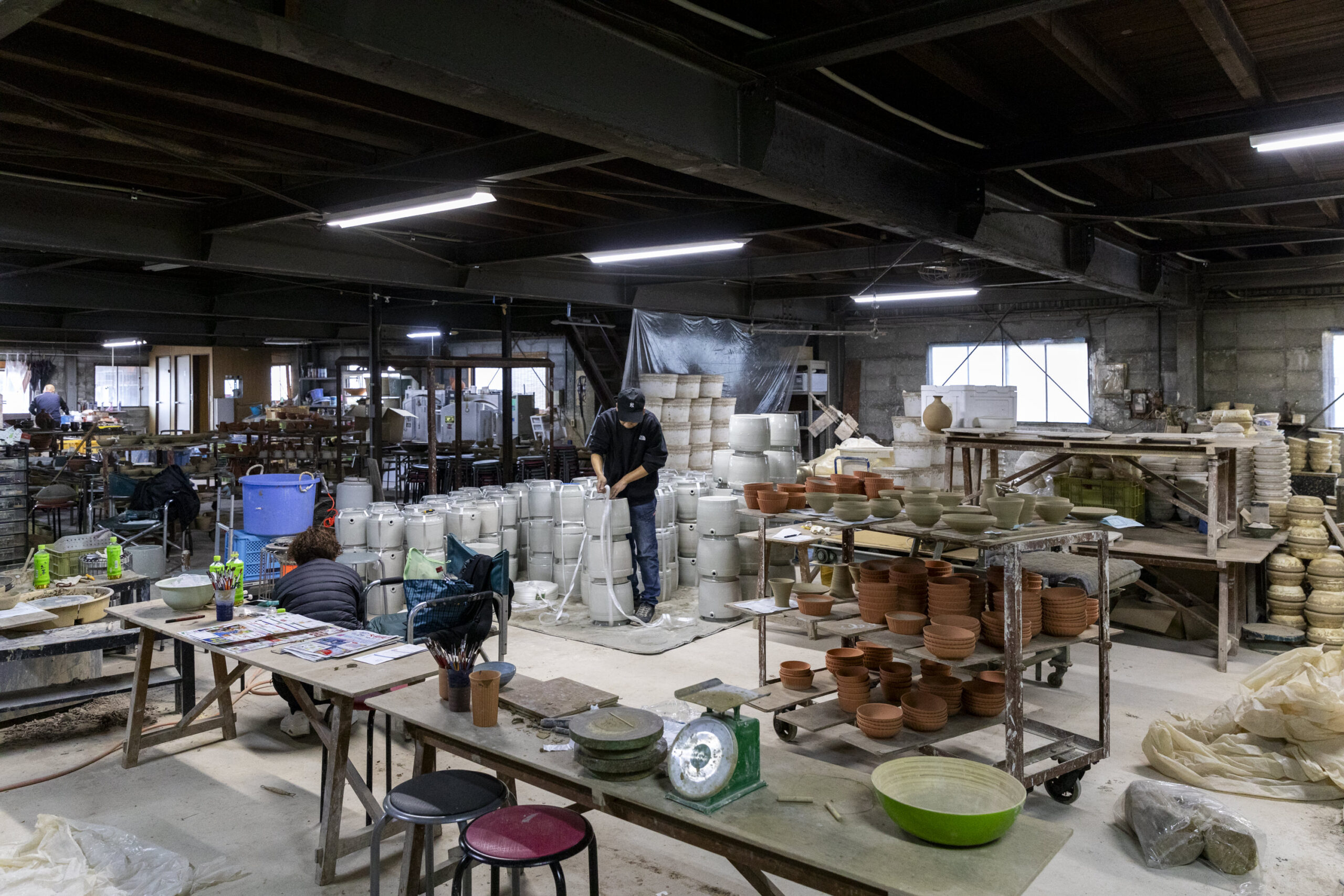
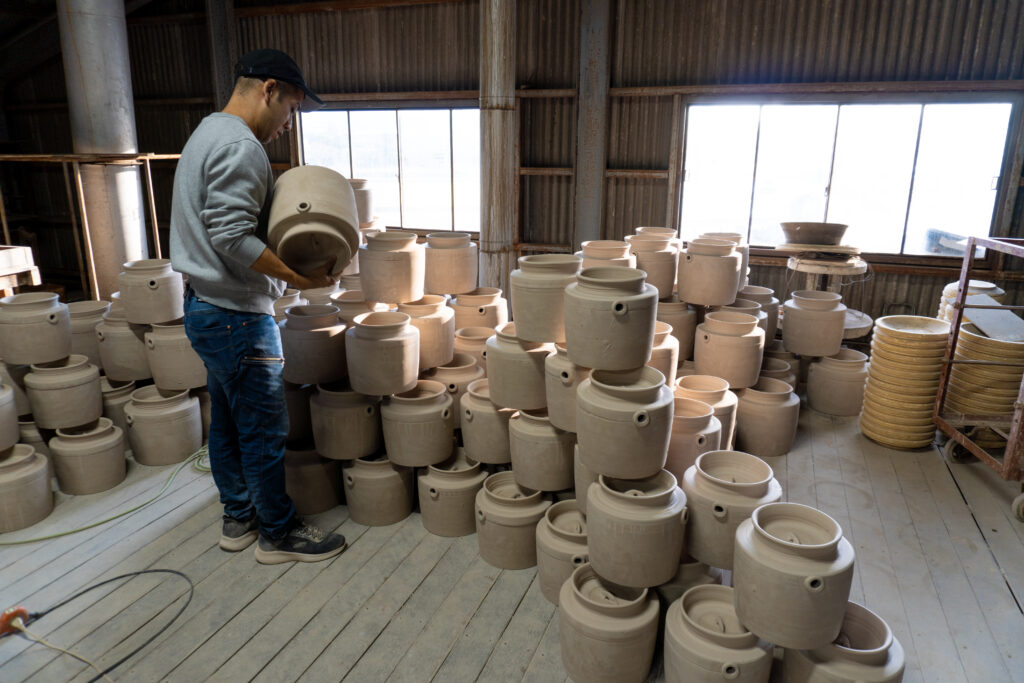
During Japan’s period of rapid economic growth, MARUMATSU-GAMA’s main product was ceramic sake barrels. The workshop was once filled with plaster molds in various sizes, and tens of thousands of barrels were produced during its peak. As a child, Matsumoto naturally began helping out—starting with simple tasks like attaching plastic covers to the mouths of the barrels.
But as the economic boom slowed, demand for ceramic sake barrels declined as well. One by one, neighboring potters stopped making them. Today, MARUMATSU-GAMA is said to be the only potter in the Kansai region still producing the standard 5.4-liter and 9-liter ceramic sake barrels. Because the large kiln remains, production continues steadily and quietly.
“Watching what was being made in the workshop, even as a child I could sense that the times were changing.”
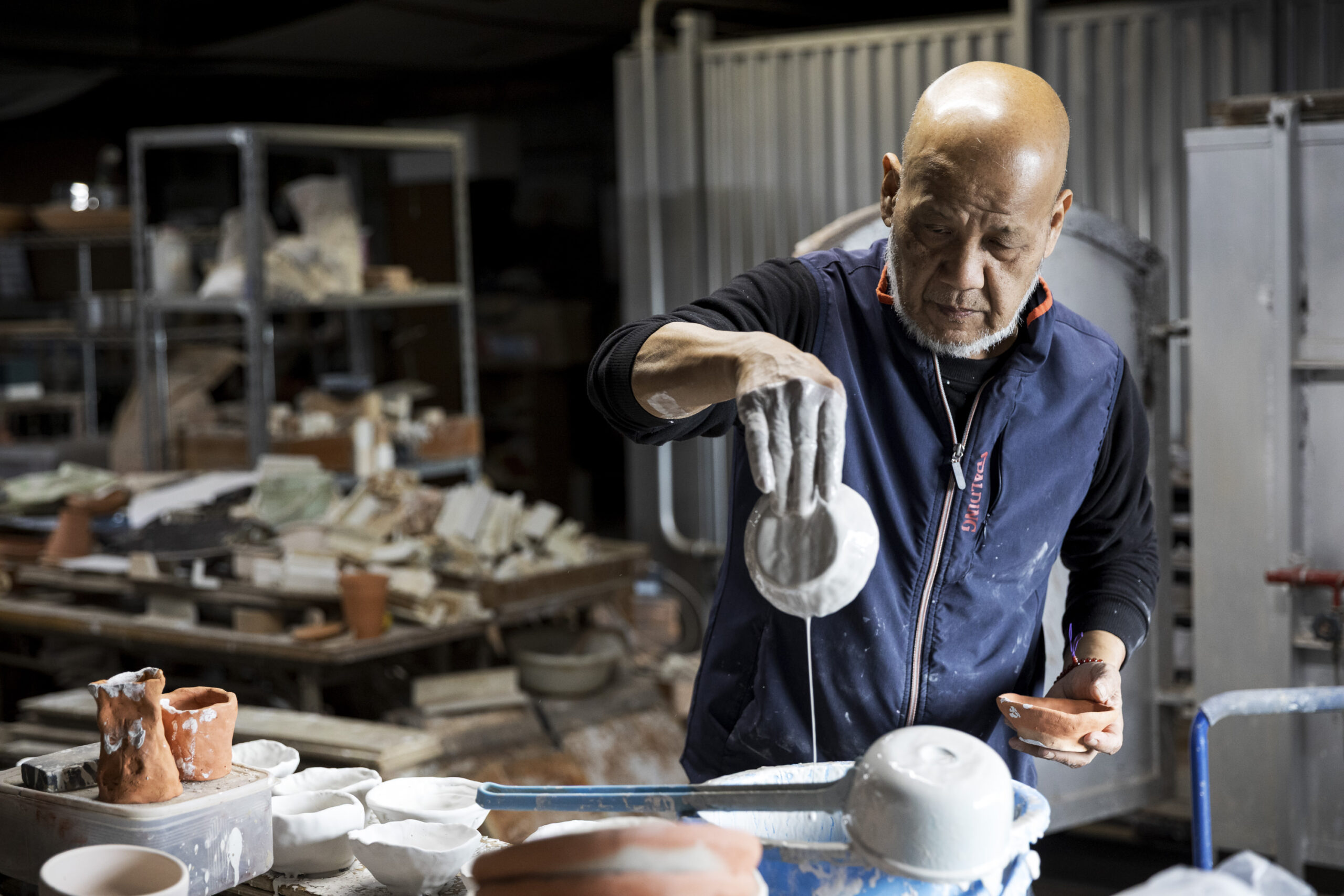
For Matsumoto, taking over the family business felt entirely natural. After high school, he did not attend a ceramic school but entered directly into the family workshop, learning from his father. In the beginning, making sake barrels was especially difficult.
“The lid and the body are separate pieces. When joining them, they have to fit together perfectly—absolutely precisely. If there’s even the slightest gap, the barrel will leak after firing. That was really hard.”
Through many failures, he kept moving forward. “No one can do it perfectly from the start. I just believed that eventually I would get there and kept working.” His lack of tension may reflect the quiet strength of someone who accepted apprenticeship as part of everyday life.
Gradually, he began making more tableware for daily meals, expanding the lineup and broadening the color palette.
“If we only stick to the traditional black and brown tones of old Tamba ware, people won’t choose it. We have to preserve tradition while also creating contemporary designs people want to use.”
Balancing the colors built by past generations with the colors demanded by the present day, Matsumoto continues shaping his forms.
The Joy of Touching Clay—Electric Wheel Experiences Gain Popularity
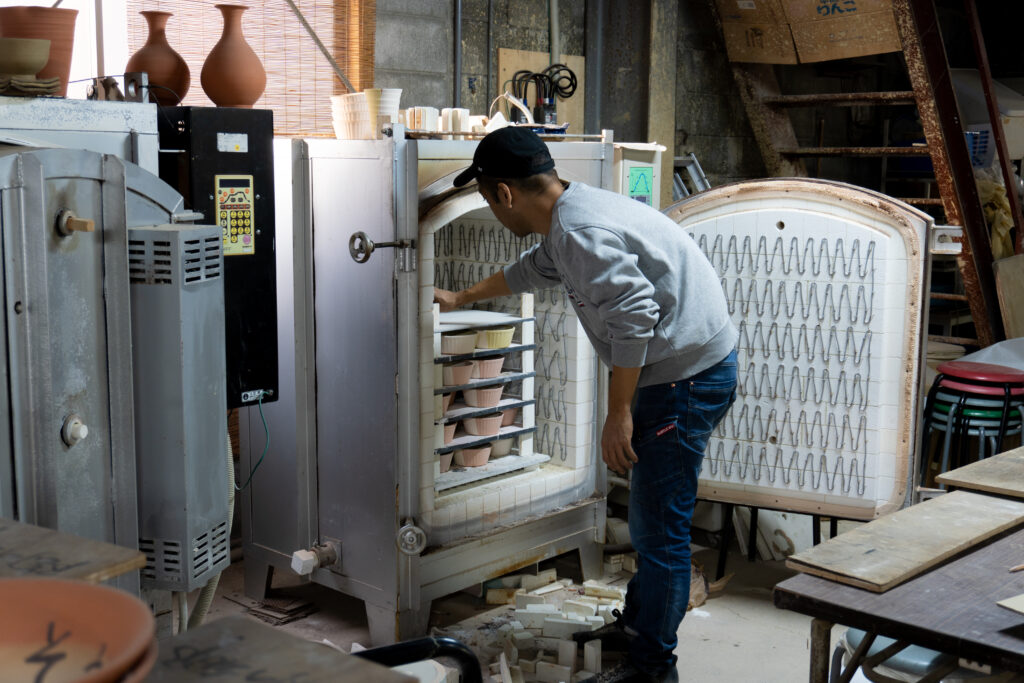
In recent years, Matsumoto has been focusing on pottery workshops. During the COVID period, part of the workshop was renovated into a private space equipped with electric wheels.
“In the past, most people tried hand-turned wheels, but now electric wheels are overwhelmingly popular.”
While buyers of finished pieces tend to be in their 40s and 50s, pottery workshops attract many visitors in their 20s. Guests now come not only from across Japan but also from the United States, Canada, Australia, and beyond.
“The moment they touch the clay, they say, ‘This feels amazing!’ It’s true—most people never get to touch clay in their everyday lives. If they can experience it once and become interested in pottery, that’s the best outcome.”
As for how to enjoy Tachikui, he recommends: “You can really feel the changing seasons here. The air is clean, the summer rice fields are beautiful. Start at Sue-no-Sato’s Kiln Row to find a potter you like, then visit that workshop in person.”
Natural and easygoing to the core, Matsumoto shares the charm of Tamba ware without affectation—lightly, sincerely, and always grounded in the clay.
Interview, Text, and Photography:NOUCHI Nana
Overview
of
MARUMATSU-GAMA
Address
46 Shimotachikui, Konda-cho, Tambasasayama, Hyogo, Japan
TEL
FAX
Website
Pottery Classes
A private room for the wheel-throwing experience has been newly renovated and reopened.
Air conditioning and heating are available, and parking is also provided.
Available Dates: Generally open year-round
Reception Hours: 10:00–17:00
Reservation: Required
Walk-ins: Available
<Clay Modeling Class>
Approx. 60 minutes / ¥1,800
・Maximum Participants: 100
・Completion Time: 1–2 months
Notes:
Available for individuals as well as groups.
<Wheel Throwing Class>
Approx. 30–40 minutes / ¥3,000
・Maximum Participants: 20
・Completion Time: 1–2 months
Notes:
・Choose from more than 10 glaze color samples.
・A private room dedicated to the wheel-throwing experience is available.
<Painting Class>
Approx. 30 minutes / ¥1,000
・Maximum Participants: 100
・Completion Time: 15 days
Notes:
・You can paint designs on teacups or plates.